Lifan: History, Landmark Models and What Became of the Brand
Lifan is a private Chinese manufacturer of motorcycles, engines and cars, founded in 1992 by Yin Mingshan as a motorcycle repair shop with nine employees. It started building cars in 2005 and sold budget saloons and SUVs in dozens of emerging markets. After heavy debts it entered bankruptcy restructuring in 2020, Geely became its strategic investor, and the company was renamed Qianli Technology in 2025.
Key takeaways
- Founded in 1992 as Chongqing Hongda Auto Fittings Research Centre; renamed Lifan Industry Group in 1997.
- Cars from 2005: first the LF6361 minivan and LF1010 pickup, then the 520, Lifan's first own design.
- In 2013 Lifan sold about 370,800 cars, 1.49 million motorcycles and 3.56 million engines.
- 2020 bankruptcy reorganisation; Geely-linked investors took control in 2021, and Lifan's car business later fed into the Livan brand.

Lifan at a glance: key facts
| Fact | Value |
|---|---|
| Founded | 1992 |
| Founder | Yin Mingshan |
| Headquarters | Chongqing, China |
| Original business | Motorcycle repair, then motorcycles and engines |
| First cars | 2005 (LF6361 minivan, LF1010 pickup, 520 saloon) |
| Stock listing | Shanghai Stock Exchange, late 2010 |
| Restructuring | Bankruptcy reorganisation from August 2020 |
| Current name | Chongqing Qianli Technology (since March 2025) |
| Car brand partner | Livan, a joint venture with Geely |
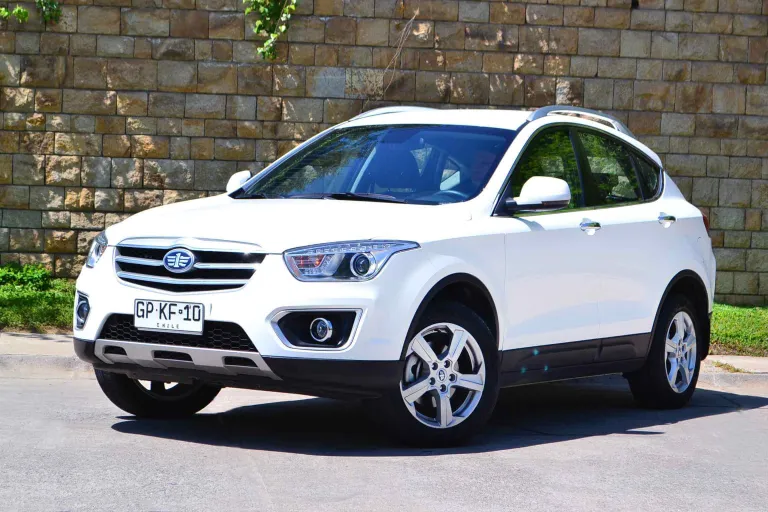
The company's best-known cars on 1cars are the Lifan X60 SUV and the Lifan Solano saloon; the full range is in the Lifan catalogue.

Origins and founder
Yin Mingshan founded the business in 1992 in Chongqing as a motorcycle repair shop with nine staff, under the name Chongqing Hongda Auto Fittings Research Centre. It quickly moved into motorcycle and engine production and was renamed Lifan Industry Group in 1997. By 2004 it was described as China's largest private motorcycle maker. The early "Hongda" name led to a lawsuit from Honda, which won the case, and a second Honda suit followed over similar badges.

Lifan expanded abroad early: it set up motorcycle and parts operations in Vietnam in 1999, sold motorcycles in Japan from 2001 and in 18 European countries from 2003.
History by era
1992–2004: the motorcycle years
The 1990s turned Lifan from a workshop into a major motorcycle and engine manufacturer. Its range grew from small street bikes and scooters to dual-sport models, mini bikes and V-twin cruisers, and its engines were supplied to other makers. In 2003 Lifan entered bus building by acquiring Chongqing Special Purpose Use Vehicle Manufacturing.

2005–2013: cars and rapid growth
Car production began in 2005 with the LF6361 minivan and LF1010 pickup, both based on the Daihatsu Atrai. In December 2005 the 520 (Breez) saloon followed, Lifan's first independently developed car, powered by a Brazilian-built Tritec engine. The 320 (Smily) city car, the 620 (Solano) saloon and the X60, Lifan's first SUV, followed, along with the Foison minivan and Xingshun light trucks.
Overseas assembly spread to Azerbaijan, Egypt, Ethiopia, Iran, Uruguay and Vietnam, where the 520 was assembled from March 2007, and later the 320, 520i and 620. Lifan listed on the Shanghai Stock Exchange in late 2010, and the listed company remained profitable in 2011. In 2013 it sold about 370,800 cars, 1,488,900 motorcycles and 3,563,100 engines.
2014–2020: debt and decline
From 2014 Lifan distributed MV Agusta motorcycles in China, but its finances weakened. Its cash reserves fell by almost 90% between the end of 2017 and 2018. Lifan sold land and its Lifan Motors unit to raise money, but by June 2019 its debts were reported at 31 billion yuan, 60% of them due within a year. On 6 August 2020 the controlling shareholder could not pay its debts, and Lifan applied for bankruptcy reorganisation.
2021 to today: Geely and Livan
In January 2021 the company was renamed Lifan Technology, Geely-linked investors joined and Xu Zhihao from Geely became chairman. The car business restarted in May 2021, and in December 2021 Geely and Lifan founded a joint venture that became the Livan brand, focused on battery-swap electric cars and, for export, rebadged Geely models. In March 2025 Lifan Technology was renamed Chongqing Qianli Technology. Lifan motorcycles continue under the new PFMoto brand.
| Year | Event |
|---|---|
| 1992 | Founded by Yin Mingshan as a motorcycle repair shop |
| 1997 | Renamed Lifan Industry Group |
| 1999 | Motorcycle operations in Vietnam |
| 2003 | Bus production; motorcycles sold in Europe |
| 2005 | First cars: LF6361, LF1010 and the 520 saloon |
| 2010 | Shanghai Stock Exchange listing; assembly in Uruguay and Azerbaijan |
| 2013 | About 370,800 cars sold |
| 2020 | Bankruptcy reorganisation from August |
| 2021 | Renamed Lifan Technology; Geely-linked control; joint venture with Geely |
| 2022 | Livan brand launched |
| 2025 | Renamed Chongqing Qianli Technology |
Landmark Lifan models
| Model | Years | Why it matters |
|---|---|---|
| LF6361 / LF1010 | 2005 | First Lifan cars, based on the Daihatsu Atrai |
| 520 (Breez) | 2006–2012 | First independently developed Lifan saloon |
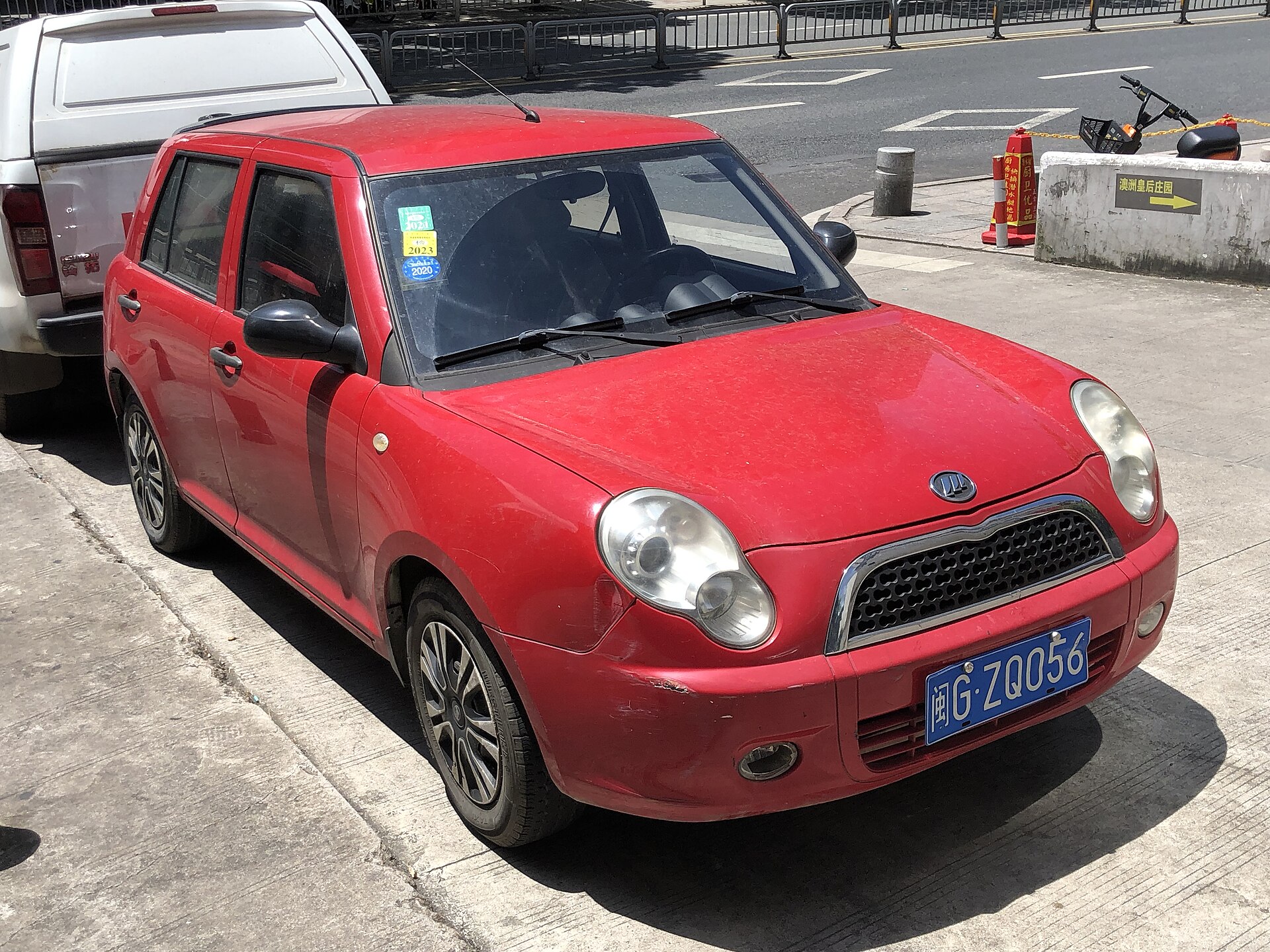
| 320 (Smily) | 2008–2016 | Budget city car |
| 620 (Solano) | 2008–2015 | Mid-size saloon, assembled abroad |
| X60 | – | Lifan's first SUV, widely exported |
| 530 (Celliya) | 2013–2018 | Compact saloon, base for the X50 |
| X50 | 2014–2019 | Subcompact crossover |
| 820 (Murman) | 2015–2020 | Largest Lifan saloon |
The raised Lifan X50 was built on the 530 platform, while the Lifan Smily 330 continued the city-car line.

Lifan cars on 1cars: the model line-up
Lifan's car range was built around affordable saloons, hatchbacks and SUVs for buyers moving up from motorcycles or used cars. The compact Lifan Celliya (530) and the mid-size Lifan Cebrium (720) covered the saloon market, while the Lifan X70 and the larger X80 extended the SUV range above the X60. Most models used naturally aspirated 1.3 to 1.8-litre petrol engines developed in-house, manual gearboxes or CVTs, and front-wheel drive. Commercial buyers had the Foison minivan (2011–2021) and the Xingshun light trucks (2011–2022), and the 650 saloon (2016–2020) completed the range.

The cars sold mainly on price and equipment, competing with other Chinese budget brands such as Geely, Chery and Great Wall.
Motorcycles and engines
Motorcycles remained Lifan's core business throughout. Its range covered entry-level street bikes, dual-sport models, mini bikes, scooters and V-twin cruisers, sold in China, Europe, Japan, Canada and Mexico, and built in Thailand, Iran, Turkey and Vietnam as well as Chongqing. In 2022 Lifan created the PFMoto brand, which introduced the Starship 3 and Starship 6 in 2023, the latter with a 573 cc V-twin, and the 398 cc V-twin Starship 4 in 2024.

Motorsport and sponsorship
Lifan's best-known sporting link is football rather than racing: it owned and has sponsored the Chongqing Lifan football club, a Chinese Super League team, since 2005.

Factories and production
Lifan's main plants are in Chongqing. Motorcycle production bases were set up in Thailand, Iran, Turkey and Vietnam, while cars were assembled in Azerbaijan from 2010, Egypt, Ethiopia, Iran, Uruguay (planned capacity 40,000 a year) and Vietnam, and sold in markets such as Laos, Syria, Brazil, Peru, Ecuador, Guatemala and the Philippines.

Lifan in numbers

- 1992: founded with nine employees.
- 2013: 370,800 cars, 1,488,900 motorcycles and 3,563,100 engines sold.
- December 2013: 8,607 domestic patents filed, 7,500 granted.
- 2019: debts reported at 31 billion yuan, 60% due within a year.
- Today: about 13,650 employees under Qianli Technology.
FAQ
Who owns Lifan today?
After bankruptcy reorganisation in 2020, Geely-linked investors took control in 2021, and Geely's Xu Zhihao became chairman. The company was renamed Lifan Technology and, in March 2025, Chongqing Qianli Technology.
When was Lifan founded and by whom?
Yin Mingshan founded Lifan in Chongqing in 1992 as a motorcycle repair shop with nine employees. It became Lifan Industry Group in 1997 and built its first cars in 2005.
Where were Lifan cars made?
Lifan cars were built in Chongqing, China, and assembled abroad in Azerbaijan, Egypt, Ethiopia, Iran, Uruguay and Vietnam, among other countries, mainly for emerging markets.
What happened to Lifan cars?
Lifan's car business suffered from falling sales and heavy debt and entered bankruptcy reorganisation in 2020. Its car activities continued through the Livan joint venture with Geely, launched in 2022.
What is the most famous Lifan model?
The Lifan X60 compact SUV and the 620 (Solano) saloon were the best-known Lifan cars abroad. The 520 Breez was the first car Lifan designed itself.
Photos (2)