
 Lifan Cebrium
Specs, engines and history
Updated Published Sources (3) Report an error
By Oleksandr Hnatiuk, Automotive Editor & Used Car Specialist Reviewed by Felix Hartmann
- Built
- 2012–2017
- Top power
- 98 kW (133 PS)
Our verdict on the Lifan Cebrium
Our verdict · Oleksandr Hnatiuk
The Cebrium suits a buyer who needs a big boot and a roomy back seat for little money and is happy with a manual gearbox. It is a poor choice for anyone who wants strong performance, an automatic or high resale value. Parts and dealer support are limited today, because the Lifan car brand was wound down after the company's 2020 restructuring. If you consider a used one, check the clutch and gearbox, which the old 1cars text named as a weak point, and confirm that spare parts are available locally. Other models of the brand are in the Lifan catalogue.
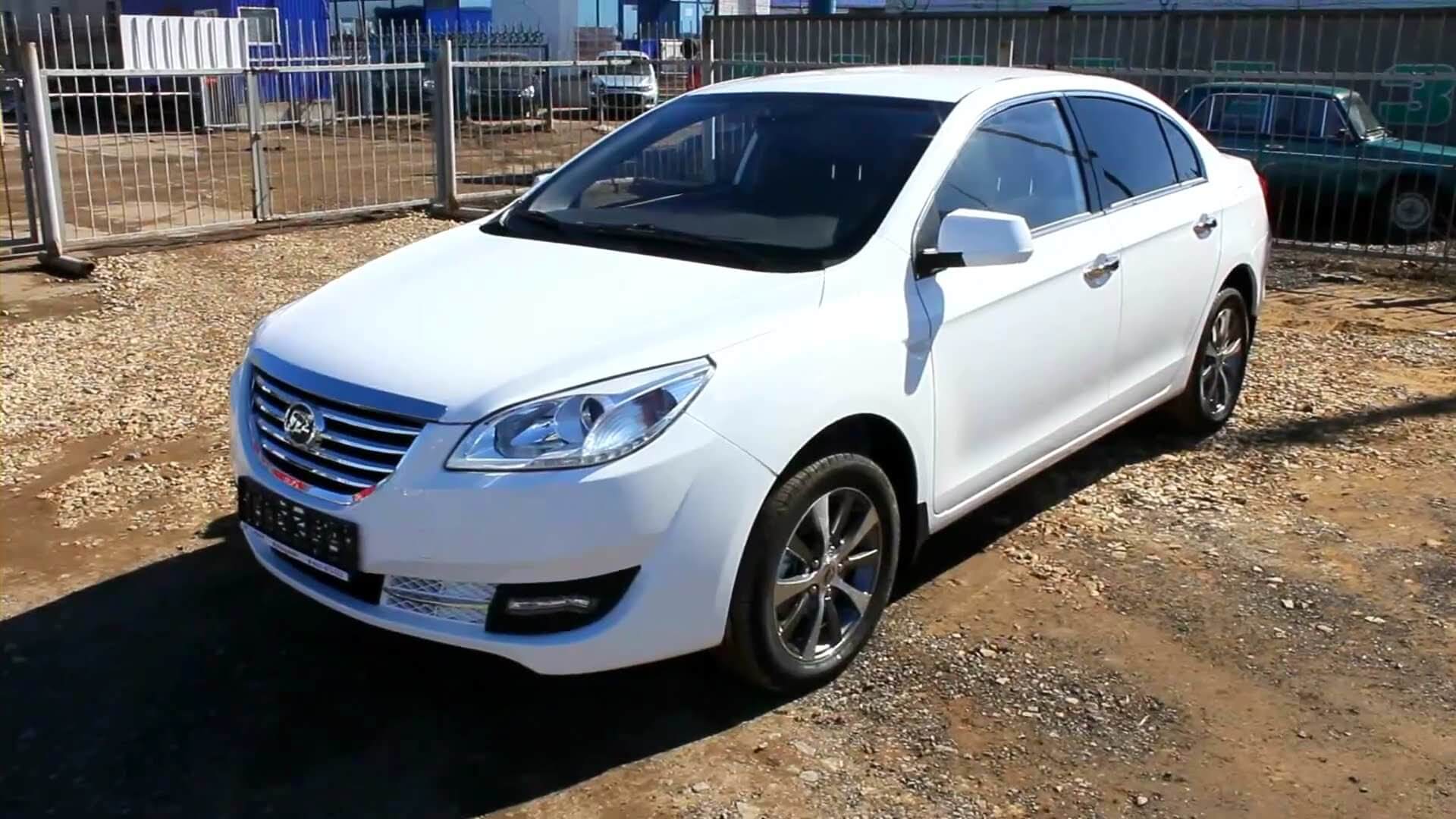
The Lifan Cebrium is the export name of the Lifan 720, a mid-size four-door saloon built in Chongqing, China, from 2012 to 2017. It has a 1.8-litre petrol engine with 95 kW (128 hp), a five-speed manual gearbox and front-wheel drive. At 4.7 metres long, it was the largest and best-equipped saloon of the Lifan range when it was launched.
In short
- Shown at the Beijing Auto Show in April 2012; sales in China began late in 2012 at 79,800 yuan (about €9,800 at the time).
- Engines: 1.8-litre with 95 kW and, from 2013, a 1.5-litre with 81 kW; manual gearbox only.
- Body: 4,700 mm long with a 2,700 mm wheelbase and, according to launch data, a 620-litre boot.
- A budget alternative to Japanese and Korean family saloons, with a lot of equipment for the money.

Running cost
Fuel · Cebrium 1.8 98 kW (133 PS) Sedan
about 2,100 EUR fuel a year at 15,000 km
8.0 l/100 km · petrol at 1.75 EUR/l · change mileage, fuel price or version
Specs by version
Performance
Show all 1 versions
| Version | 0–100 km/h | Fuel consumption |
|---|---|---|
| 1.8 98 kW (133 PS) Sedan | 17.0 s 0–62 mph | 8.0 l/100 km29.4 mpg US · 35.3 mpg UK |
Dimensions and weight
Verified Manufacturer and type-approval data from our catalog · Sources and methodology
Lifan Cebrium key specifications

| Parameter | Metric | Imperial |
|---|---|---|
| Engine | 1.8-litre I4, 16 valves, CVVT variable valve timing | 110 cu in |
| Power | 95 kW (129 PS) | 128 hp |
| Torque | 159–168 Nm, depending on the source | 117–124 lb-ft |
| Smaller engine (from 2013) | 1.5-litre I4, 81 kW (110 PS), 146 Nm | 109 hp |
| Gearbox and drive | 5-speed manual, front-wheel drive | - |
| Length / width / height | 4,700 / 1,765 / 1,490 mm | 185.0 / 69.5 / 58.7 in |
| Wheelbase | 2,700 mm | 106.3 in |
| Kerb weight | about 1,265 kg | 2,789 lb |
| Boot | about 620 litres | 21.9 cu ft |
| Fuel tank | 55 litres | 14.5 US gal |
| Fuel consumption (combined) | about 8 l/100 km | 29 mpg (US) |
Lifan 720 and the Cebrium name
Lifan is a private company from Chongqing that began with motorcycles and started building cars in 2005. By the early 2010s it sold small saloons and SUVs in many emerging markets. The 720 was meant to take the brand one step up, into the mid-size class. For the company's full story, read the history of Lifan.

CarNewsChina reported the 720 as Lifan's new flagship when the saloon made its debut in Beijing in April 2012. Sales in China started after the Guangzhou Auto Show in late 2012, at a price of 79,800 yuan. In export markets the car was called Cebrium, and in China it kept the number 720. The old 1cars text dated the debut to a Shanghai show in 2012; the car was in fact first shown in Beijing.
According to the old 1cars text, the 720 was developed from the smaller Lifan Solano, the brand's best-known saloon. Production ran until 2017, and all cars were built in Chongqing.
Design and body
The Cebrium has a long bonnet, a flat roofline and a large chrome grille. Reviewers at the launch noted that the front draws attention, and the old 1cars text compared its lines with the Toyota Camry and the BMW 5 Series. LED tail lights and, on better trims, LED daytime lights gave it a more modern look than earlier Lifans.

With a length of 4,700 mm and a wheelbase of 2,700 mm, it is close in size to a Toyota Camry XV50. By our calculation, it is 120–165 mm shorter than the Camry, and its wheelbase is 75 mm shorter. It rides on 16-inch wheels. The old 1cars text criticised the heavily flared wheel arches as unusual for a saloon.
Engine, gearbox and driving
The main engine is a 1.8-litre four-cylinder with 16 valves and CVVT variable valve timing. Lifan quoted 95 kW (128 hp), and the torque figure is given as 159 Nm by CarNewsChina and 168 Nm by later data. The old 1cars text names the engine LFB479Q and says it runs on 95-octane petrol.

A smaller 1.5-litre unit with 81 kW (109 hp) and 146 Nm joined the range in 2013. Both engines drive the front wheels through a five-speed manual gearbox. An automatic was never offered, which CarNewsChina predicted would hurt sales. By our calculation, the 1.8 version carries about 13.3 kg per kW, a modest ratio for a car of this size.
The old 1cars text describes a comfortable ride over broken roads but noticeable body roll in fast corners. Front brakes are ventilated discs, and there are discs at the rear too. Rack-and-pinion steering has hydraulic assistance. Combined consumption is about 8 l/100 km according to the same text. To see what that means for your budget, use the 1cars fuel cost calculator.
Cabin, equipment and boot
The interior was a clear step up for Lifan. The dashboard has three round dials, the right-hand one with a colour trip computer. The three-spoke multi-function steering wheel adjusts for height only, which the old 1cars text counted among the drawbacks. Rear passengers get generous legroom and headroom.

In China the 720 came in four trim levels: Basis, Standard, Luxury and VIP. According to the old 1cars text, the basic car already had air conditioning, ABS with EBD, power steering, central locking, electric windows and heated electric mirrors. Better trims added a touchscreen with navigation, a reversing camera, keyless entry with push-button start, dual-zone climate control and a heated driver's seat.
| Equipment | Basic trim | Top trim |
|---|---|---|
| Air conditioning | manual | dual-zone climate control |
| Audio | radio/CD/MP3, 4 speakers | touchscreen, navigation, 6 speakers |
| Parking aid | - | rear camera or sensors |
| Entry and start | key | keyless entry, push-button start |
The boot is very large for the class, at about 620 litres, and the rear seat backs fold to extend it. Fuel goes into a 55-litre tank.
Safety equipment
According to the old 1cars text, the Cebrium has six airbags, ABS with electronic brake-force distribution, a collapsible steering column and a body made with high-strength steel. LED projector headlights were fitted to upper trims. The old text also claimed a five-star C-NCAP crash-test result. We could not confirm that result in a published C-NCAP record, so this page does not list a rating.

Prices and value
At its launch in China in late 2012, the 720 cost 79,800 yuan, or about €9,800 at the exchange rate of the time. A cheaper Comfort trim followed in August 2013 at 66,800–69,800 yuan, about €8,200–8,600. By our calculation, that made the Comfort trim 12–16 % cheaper than the launch price. In export markets, prices depended on local taxes and were not published in euros.

Cebrium against other budget saloons
| Model | Engine | Gearbox | Length |
|---|---|---|---|
| Lifan Cebrium (720) | 1.5 or 1.8 petrol | 5-speed manual | 4,700 mm |
| Geely Emgrand EC8 | 2.0 or 2.4 petrol | 5-speed manual or 6-speed automatic | 4,905 mm |
| Toyota Camry XV50 | 2.0–3.5 petrol, hybrid | automatic | 4,820–4,865 mm |
The Cebrium offered more space and equipment than most cars at its price. Against the Geely Emgrand EC8, its weak point was the lack of an automatic gearbox. To compare two models in detail, open the 1cars comparison tool.

Rivals
Compare with…
Compare Lifan Cebrium with
- Geely Emgrand EC8 quick spec comparison
-
Ended 2014
- Years
- 2010–2014
- Body
- Sedan
- Fuel
- Petrol
- Power
- 100–115 kW (136–156 PS)

Lifan Cebrium in our rankings
- No. 3 of 67 · Biggest boot: sedans (620 l)
- No. 18 of 321 · Biggest boot: cars (620 l · top 6%)
- No. 164 of 307 · Most economical cars (8.0 l/100 km · top 54%)
- No. 29 of 51 · Most economical sedans (8.0 l/100 km · top 57%)
- No. 128 of 177 · Most powerful sedans (98 kW · top 73%)
- No. 109 of 146 · Biggest engines: sedans (1,800 cc · top 76%)
Bigger boot than 95% of ranked sedans in the 1CARS catalog (No. 3 of 67).
Lifan Cebrium photos 16


Lifan Cebrium videos 2

Test drive

Video overview
FAQ
What is the difference between the Lifan Cebrium and the Lifan 720?
There is none in substance. The Lifan 720 is the Chinese name of the saloon, and Cebrium is the name used in export markets. Both were built in Chongqing from 2012 to 2017.
What engine does the Lifan Cebrium have?
Most cars have the 1.8-litre four-cylinder petrol unit with CVVT and 95 kW (128 hp). The cheaper 1.5-litre option arrived in 2013, and every version shifts through five manual gears.
Does the Lifan Cebrium have an automatic gearbox?
No. Every version uses a five-speed manual gearbox and front-wheel drive. The lack of an automatic was one of the main criticisms when the car was launched in 2012.
How big is the Lifan Cebrium boot?
According to launch data quoted in the old 1cars text, the boot holds about 620 litres. The rear seat backs fold down for longer items.
Is the Lifan Cebrium still made?
No. Production of the Lifan 720 ended in 2017. Lifan went through bankruptcy restructuring in 2020, and its car business later came under investors linked to Geely.
Data sources
Data checked by an editor against the sources below.
- The text of this article (1cars archive)
- Wikipedia - Lifan Group
- Wikipedia - Lifan 720


