Bogdan Corporation History: Ukraine's Bus, Trolleybus and Car Maker
Bogdan Corporation was one of Ukraine's largest vehicle makers, active from 1993 to 2020. It grew from a car dealership into a group with bus, trolleybus and car plants in Cherkasy and Lutsk. By May 2018 it had built more than 368,000 vehicles. Production stopped in 2020, and Bogdan Motors was declared bankrupt in July 2021.

Key takeaways
- Origins: the Bogdan Motors dealership (1993), later importer for Kia and Hyundai.
- Factories: Cherkasy (buses from 1999, a car plant from 2008) and the former LuAZ works in Lutsk (from 2000).
- Best known for: city buses such as the A092, trolleybuses for Ukrainian and European cities, and the Bogdan 2310 pickup.
- Status: plants idle since 2020, bankruptcy in 2021; the sites have since passed to new owners.

Bogdan Corporation at a glance

| Fact | Value |
|---|---|
| Founded | 1993 as Bogdan Motors (dealer); corporation formed in 2005 |
| Founders named in records | Oleh Hladkovskyi and Petro Poroshenko |
| Headquarters | Kyiv, Ukraine |
| Main plants | Cherkasy (buses, cars, trucks) and Lutsk (buses, trolleybuses) |
| Products | City and coach buses, trolleybuses, cars, light trucks, military vehicles |
| Output to May 2018 | More than 368,000 vehicles, including 18,781 buses and trolleybuses |
| Status | Bogdan Motors declared bankrupt on 7 July 2021 |
Origins: from car dealer to factory owner
Bogdan Motors was created in 1993, soon after Ukraine became independent. It started by selling Soviet-designed Lada cars, added Kia in 1996, according to the old 1cars text, and signed a Hyundai distribution contract in 1999. Selling other brands gave the young firm cash and a dealer network before it built anything itself.

The step into manufacturing came in 1998, with the purchase of a vehicle repair factory in Cherkasy that had serviced buses and vans. A year later it reopened as Cherkasy Autobus and began building the group's first buses. In 2000 the group bought the bankrupt LuAZ plant in Lutsk, the birthplace of the LuAZ-969, and began assembling cars from kits there.
Bogdan history by era
1999–2004: the first buses and the Isuzu deal
The early midi buses used Isuzu truck chassis and soon spread to many Ukrainian towns. From 2003 the company exported buses. In 2004 it signed a general agreement with Isuzu: buses for the home market carried the Bogdan name, while export models used the Isuzu brand.

2005–2008: a corporation and a car plant
The separate dealers, plants and finance firms were merged into the Bogdan Corporation in 2005. The old 1cars text dates the final legal step to 22 February 2005 and links the growth to new import duties that favoured local assembly. In Lutsk, a modern bus and trolleybus line opened around 2006, and tourist-class coaches followed in 2007.
In 2008 a second car factory opened in Cherkasy. It was designed for 120,000 to 150,000 cars a year and assembled Hyundai Accent, Elantra and Tucson models as well as Lada-based Bogdan cars.
2009–2013: own cars, exports and European trolleybuses
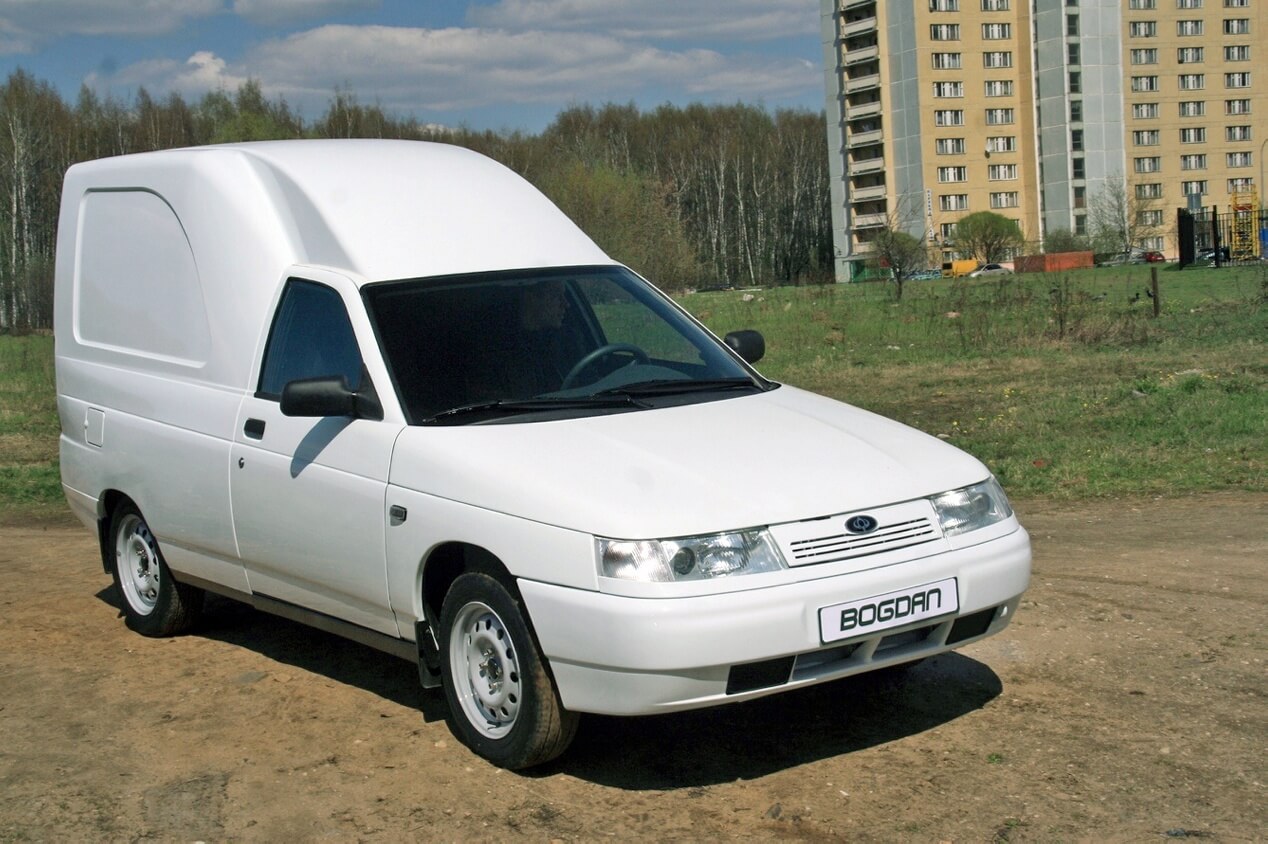
The Bogdan 2110 saloon, the 2111 estate and the Bogdan 2310 pickup were built in Cherkasy from 2009 to 2014. They were based on the Lada 110 (VAZ-2110) design, but the 2310 load bed was Bogdan's own development. The old 1cars text adds that car exports began in 2010 and that a joint venture with the Czech company Cegelec was set up to build trolleybuses for EU cities.
Money became tight after the 2008 financial crisis. In 2011 the group sold Cherkasy Autobus to a bank; that factory later built its buses under the Ataman name. The same year, according to the old text, the company launched small buses on Hyundai underpinnings and signed distribution deals for Lifan and Great Wall cars. In 2013 a joint venture with Poland's Ursus delivered 38 trolleybuses to the city of Lublin.
2014–2019: defence orders and new projects
After 2014 the Cherkasy car plant reduced passenger car output and turned to military work. Its engineers developed the Bars light armoured vehicle for the National Guard of Ukraine, supplied Bogdan-2251 ambulances to the armed forces in 2017 and had its Bogdan-6317 truck approved for service that December.
The company also looked for new civil business. It showed the Bogdan 2351 SUV in April 2018, built bus bodies for France's Bluebus and received an order from Denmark's Banke for an electric refuse truck. The story of that truck, Ukraine's first electric lorry, is covered in our news report on the Bogdan electric truck for Banke. Tenders won in early 2019 included 55 trolleybuses for Kyiv and 57 for Kharkiv.
2020 onward: bankruptcy and new owners
The factories stopped in 2020 after the parent company ran into insolvency. A commercial court opened bankruptcy proceedings against Bogdan Motors on 23 December 2020 and declared it bankrupt on 7 July 2021. By our conversion at 2022 exchange rates, creditors' claims came to roughly EUR 200 million.
The assets were then sold off. In June 2022 the state-owned Ukreximbank bought the workshops of the second Cherkasy car plant at auction. The same year the Lutsk bus plant was taken over by Bus Motor, a former Bogdan dealer, which kept building school buses and Bluebus bodies. In September 2024 the former LuAZ site was sold for a housing project.
Landmark Bogdan vehicles

| Model | Years | Why it matters |
|---|---|---|
| Bogdan A091 / A092 | from 1999 / 2003–2012 | Midi city buses on Isuzu chassis; the company's breakthrough |
| Bogdan E231 | 2007–2008 | Early Bogdan trolleybus |
| Bogdan 2110 / 2111 | 2009–2014 | Saloon and estate assembled in Cherkasy |
| Bogdan 2310 | 2009–2014 | Pickup with Bogdan's own cargo body |
| Bogdan T701 / T901 | from 2011 | Modern trolleybuses for Ukrainian cities |
| Bogdan-6317 | from 2016 | Military 6x6 truck approved in 2017 |
| Bogdan A224 | 2020–2024 | School bus, built in Lutsk after the bankruptcy |
Engineering milestones and records
The brand never raced; its records were industrial. The Lutsk plant could build up to about 8,000 buses and trolleybuses a year, and the Cherkasy bus line was rated at about 3,000. Across the group, the planned capacity was up to 9,000 buses and trolleybuses and about 15,000 trucks and special vehicles a year.

The company also tried technology that was new for the region. It built modern trolleybuses, an electric refuse truck and, in 2018, signed a development agreement with the Igor Sikorsky Kyiv Polytechnic Institute.
Factories and ownership changes
| Year | Plant or ownership event |
|---|---|
| 1993 | Bogdan Motors founded as a dealer |
| 1998–1999 | Cherkasy repair works bought and turned into Cherkasy Autobus |
| 2000 | LuAZ plant in Lutsk acquired |
| 2005 | Bogdan Corporation formed |
| 2008 | Second Cherkasy plant opens for car assembly |
| 2011 | Cherkasy Autobus sold to a bank |
| 2021 | Bogdan Motors declared bankrupt |
| 2022 | Cherkasy car plant workshops sold to Ukreximbank; Lutsk bus plant to Bus Motor |
| 2024 | Former LuAZ site sold for housing |
The Bogdan model line-up
| Model | Segment | Body | Years |
|---|---|---|---|
| Bogdan 2110 | Compact car | Saloon | 2009–2014 |
| Bogdan 2111 | Compact car | Estate | 2009–2014 |
| Bogdan 2310 | Light commercial | Pickup | 2009–2014 |
| Bogdan 2351 | SUV | Five-door SUV | shown 2018 |
| Bogdan A092 | Midi bus | City bus | 2003–2012 |
| Bogdan T701 | Trolleybus | City trolleybus | from 2011 |
No new Bogdan passenger cars are made today. Used examples and their data are listed in the Bogdan catalogue on 1cars, next to other cars from the Ukrainian car industry.

Bogdan in numbers
- 368,000+ vehicles built in the 20 years to May 2018.
- 18,781 of them buses and trolleybuses; by our calculation about 5 % of the total, with cars making up most of the rest.
- 120,000–150,000 cars a year: the design capacity of the Cherkasy car plant.
- 38 trolleybuses for Lublin in 2013, Bogdan's best-known EU order.
- 55 + 57 trolleybuses ordered by Kyiv and Kharkiv in early 2019.
Compared with the planned 9,000 a year, the 18,781 buses and trolleybuses built in 20 years average about 940 a year by our calculation, far below capacity.
Which Bogdan to buy used, and what to check
For a private buyer, the realistic choice is a Bogdan 2310 pickup or a 2110 saloon. The pickup suits small businesses that need a cheap load carrier with simple mechanics. Parts are shared with the Lada-based saloons and remain easy to find in Ukraine and neighbouring countries. Check the body for rust, the cargo bed for overloading damage and the service history of the timing belt. To weigh a pickup against modern rivals, use the 1cars comparison tool; for the electric side of commercial transport, see our electric cars section.
FAQ
Who owns Bogdan today?
No single company. After the 2021 bankruptcy the assets were auctioned: the state bank Ukreximbank bought the Cherkasy car plant workshops in 2022, and Bus Motor, a former dealer, took over the Lutsk bus factory.
When was Bogdan founded and by whom?
Bogdan Motors was set up in 1993 as a car dealer, and the Bogdan Corporation was formed in 2005. Company records name Oleh Hladkovskyi and Petro Poroshenko, later President of Ukraine, as founders.
Where were Bogdan vehicles made?
Buses and cars came from Cherkasy, in central Ukraine, where a second plant opened for car assembly in 2008. Buses and trolleybuses were built at the former LuAZ plant in Lutsk, in the north-west of the country.
What does the Bogdan name mean?
Bogdan, or Bohdan in Ukrainian spelling, is a Slavic first name meaning "given by God". In the sources we checked, the company gave no official reason for the choice.
What is the most famous Bogdan model?
The A092 midi bus on an Isuzu chassis is the best known, because large numbers served Ukrainian cities. Among cars, the Bogdan 2310 pickup is the company's own best-known design.