Asia Motors History: From Military Trucks to the Rocsta 4x4
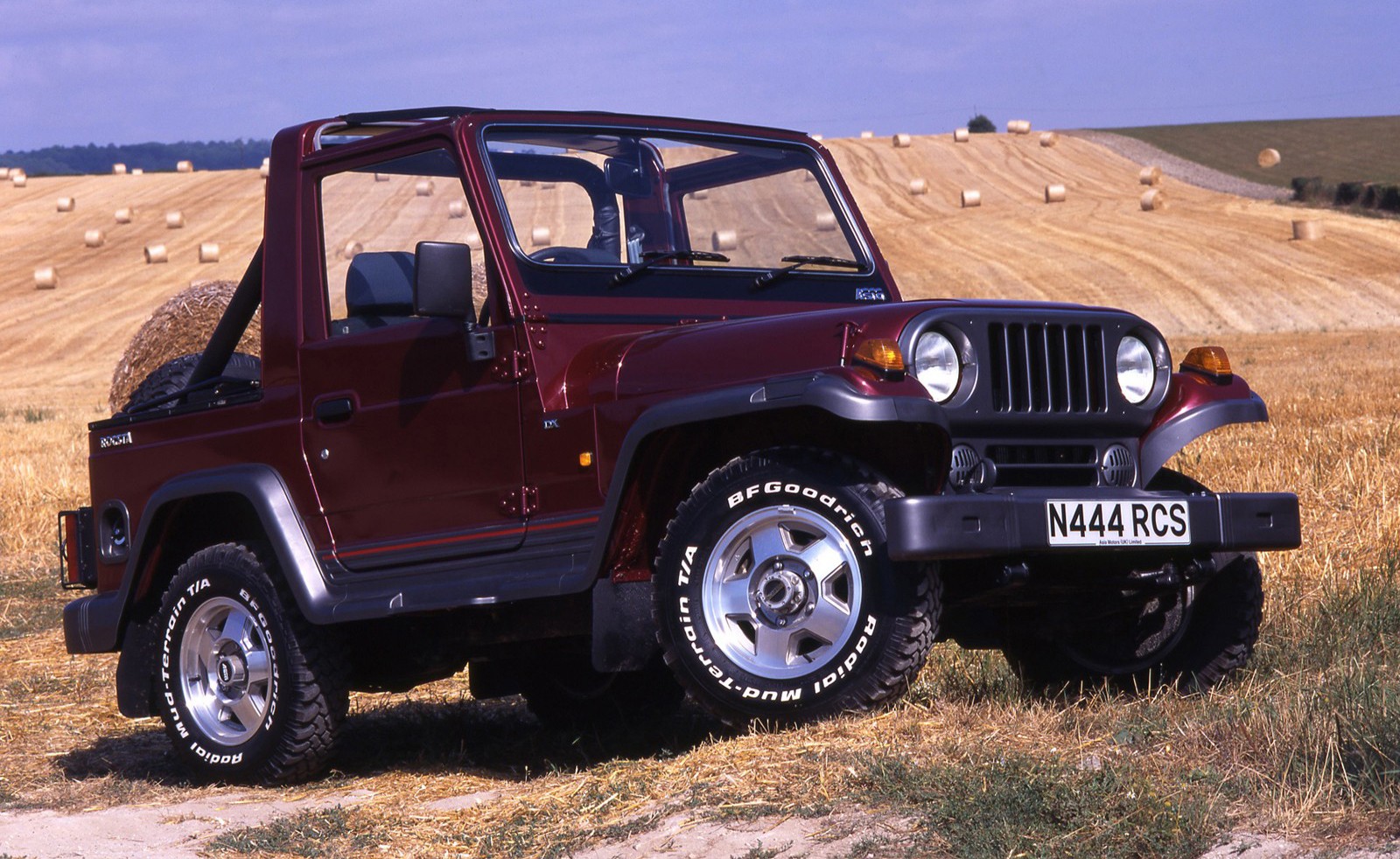
Asia Motors was a South Korean maker of military vehicles, trucks, buses, vans and small off-roaders, founded in Gwangju in 1965. Kia bought it in 1976, and the Asia name ended in 1999, after Hyundai had taken over Kia. Europeans remember it mainly for the Rocsta, a short, Jeep-like 4x4 sold in Britain from 1994 to 1997, and for the Hi-Topic van.
Key takeaways
- Founded: 1965 in Gwangju as Asia Motor Industries, backed by entrepreneur Lee Mun-hwan.
- Owners: Dongkuk Steel from 1969, Kia from 1976; Kia itself passed to Hyundai in 1998.
- Products: military vehicles, Hino-based trucks and buses, Topic and Hi-Topic vans, the Towner microvan, the Combi midibus and the Rocsta and Retona 4x4s.
- End: the brand was dropped in 1999; the Retona and other models continued with Kia badges.

Key facts at a glance

| Fact | Value |
|---|---|
| Founded | 1965, Gwangju, South Korea |
| Founder and backer | Lee Mun-hwan |
| Owners | Dongkuk Steel (1969), Kia (1976) |
| Known for | Military vehicles, trucks, buses, vans, the Rocsta 4x4 |
| Partners | Fiat (car assembly, 1970), Hino Motors (trucks and buses, 1978) |
| Brand closed | 1999 |
| Successor | Kia's Gwangju plant |
Origins: a tax law and a factory in Gwangju
South Korea had almost no car industry in the early 1960s. In 1962, as part of its first five-year economic plan, the government exempted imported parts from tax when they were assembled into knock-down vehicles at home. That rule made small assembly plants possible.
Asia Motor Industries was set up three years later in Gwangju, in the south-west of the country, with money from Lee Mun-hwan. Its first products were military vehicles, trucks and buses; passenger cars came later. The company also talked to Fiat from the start, and from 1970 it assembled the Fiat 124 saloon. The old 1cars text dates the Fiat deal four years after the founding, which is close to the documented date.
Asia Motors history by era
1965–1976: independent years and lost permits
Money ran short early. Dongkuk Steel took over Asia Motors in 1969, a year before Fiat 124 assembly began. In 1973 the government launched a plan to promote cheap cars for export, and companies had to meet strict conditions to keep their licences. Asia could not meet them and lost its permits to assemble cars.

1976–1990: the Kia years and Hino technology
Kia bought Asia in 1976. In return, the government promised Kia a monopoly on military vehicle production for the Korean armed forces. Asia became Kia's specialist for heavy, military and commercial vehicles, while Kia built cars.
In 1978 Asia signed an agreement with Japan's Hino Motors, which gave its small truck and bus output access to proven designs. Its military range included the KM900 armoured personnel carrier, a licensed version of the Fiat 6614. On the civil side, Asia built a family of light commercial vehicles: the Topic and larger Hi-Topic vans, the Towner microvan derived from the Daihatsu Hijet and the Combi midibus.
1990–1997: the Rocsta and export growth
The Rocsta of 1990 turned a military design into a civilian 4x4. It came from Asia's K111 jeep and used a separate chassis, leaf-sprung live axles at both ends and selectable four-wheel drive. Kia built the Mazda-derived engines: a 1.8-litre petrol with about 57 kW (77 bhp) and a 2.2-litre diesel with about 45 kW (61 bhp).
Exports grew quickly. Hagerty reports that Asia vehicles were sold in more than 100 countries by the mid-1990s. The Rocsta reached Australia in 1993 and Britain in spring 1994, and Asia Motors do Brasil was set up in 1994 as an importer for South America.
1997–1999: crisis, Hyundai and the end of the brand
The Asian financial crisis of 1997 pushed Kia into insolvency, and Hyundai Motor took over Kia in 1998. Asia left the British market by the end of 1997. Its last new model, the Retona, replaced the Rocsta and went on sale with Kia badges from 1998.
In 1999 the Asia brand was discontinued and the company closed. Its Gwangju factory became part of Kia. Kia had marked the 30th anniversary of Asia Motors only four years earlier, in 1995.
Landmark vehicles from Gwangju
| Model | Years | Why it matters |
|---|---|---|
| Fiat 124 (assembled) | from 1970 | Asia's first passenger car |
| K111 jeep | military service | Base of the Rocsta |
| KM900 | military service | Licensed Fiat 6614 armoured carrier for the Korean army |
| Hi-Topic (AM725) | 1987–1999 | Van and 15-seat minibus sold in many export markets |
| Rocsta | 1990–1997 | Civilian 4x4 from a military design; sold in Europe and Australia |
| Retona | from 1998 | Rocsta successor, sold as a Kia |
The Hi-Topic is covered in detail on its own page, the Asia Hi-Topic van and minibus.
Engineering and the Rocsta's numbers
Asia never entered motorsport; its strength was rugged, simple engineering for armies and fleets. The Rocsta shows that approach clearly.
| Rocsta specification | Metric | Imperial |
|---|---|---|
| Length | 3,460 mm | 136.2 in |
| Width | 1,680 mm | 66.1 in |
| Height | 1,855 mm | 73.0 in |
| Kerb weight | 1,510 kg | 3,329 lb |
| Petrol engine | 1.8 l, about 57 kW (77 bhp) | 110 cu in |
| Diesel engine | 2.2 l, about 45 kW (61 bhp) | 134 cu in |
| Gearbox | Five-speed manual | – |
By our calculation, the petrol Rocsta carried about 26 kg per kW, and the diesel about 34 kg per kW. Compared with that, the Hi-Topic's 2.7 diesel had 55 kW to move a much larger body. Hagerty quotes 0–60 mph in 11.4 seconds for the petrol hard top and a slow 22.6 seconds for the diesel. Four-wheel drive could only be engaged at a standstill, and the front hubs had to be locked by hand.
Owners, plants and the Brazilian project
| Year | Event |
|---|---|
| 1965 | Founded in Gwangju |
| 1969 | Bought by Dongkuk Steel |
| 1976 | Bought by Kia |
| 1994 | Asia Motors do Brasil founded as an importer |
| 1996 | Agreement to build a plant at Camaçari, Brazil, in return for tax breaks |
| 1998 | Hyundai takes over Kia |
| 1999 | Asia brand discontinued; Gwangju plant joins Kia |
The Brazilian plant was never finished. The tax dispute that followed lasted until 2012, when a Brazilian court ruled that Hyundai did not have to pay the unpaid Camaçari taxes. According to the old 1cars text, the Australian importer also became independent after 1999 and had to find other vehicles to sell.
The last model range
| Model | Segment | Body | Years |
|---|---|---|---|
| Rocsta | Compact 4x4 | Three-door hard top or soft top | 1990–1997 |
| Retona | Compact 4x4 | Three-door SUV | from 1998 (as Kia) |
| Hi-Topic | Light commercial | Van, minibus, pickup | 1987–1999 |
| Towner | Microvan | Van and small truck | until 1999 |
| Combi | Midibus | Bus | until 1999 |
The models that survived the brand are listed in the Asia Motors catalogue on 1cars. The parent company's own story is told in the history of Kia.
The company in numbers
- 1965: founding year; 1999: last year of the brand, so 34 years in all.
- More than 100: export countries by the mid-1990s, according to Hagerty.
- 1,200: Rocstas the British importer hoped to sell in 1994 alone.
- About 900: Rocstas actually sold in Britain from 1994 to 1997, by our calculation roughly 75 % of that first-year target over four years.
- 19 years: time under Kia ownership by the 30th anniversary in 1995.
Which Asia to buy today: a Rocsta or a Hi-Topic?
Asia vehicles are now rare in Europe. A Rocsta suits an enthusiast who wants a small, simple 4x4 with a separate chassis and is happy to repair it. Avoid cars with heavy chassis rust, and check the leaf springs, the manual hubs and the transfer case. Body and trim parts are the hardest to find; many mechanical parts are shared with Kia and Mazda engines of the period. A Hi-Topic makes sense only as a camper conversion or a classic van project. To compare a Rocsta's size with a modern small SUV, use the 1cars size comparison tool. For specifications side by side, the 1cars comparison tool helps, and other Korean cars on 1cars show what Kia and Hyundai built next.
FAQ
Who owns Asia Motors today?
Nobody uses the name for cars any more. Kia owned Asia Motors from 1976, absorbed it when the brand was dropped in 1999, and Kia itself has been part of the Hyundai Motor Group since 1998.
When was Asia Motors founded and by whom?
Asia Motor Industries was founded in 1965 in Gwangju, South Korea, with financial backing from businessman Lee Mun-hwan. It first built military vehicles, trucks and buses, and assembled the Fiat 124 from 1970.
Where were Asia Motors vehicles made?
They were made in Gwangju, in the south-west of South Korea. The plant became part of Kia after 1999. A planned assembly plant at Camaçari in Brazil was started in the 1990s but never completed.
What does the Asia Motors name mean?
The name refers to the continent. In the sources we checked, the company gave no other explanation, and it used the short form "Asia" as its brand on vehicles sold abroad.
What is the most famous Asia Motors model?
In Europe and Australia it is the Rocsta, the small 4x4 sold from 1990 to 1997. In Korea and many export markets, the Hi-Topic van and minibus and the military vehicles were at least as well known.