SsangYong: The Korean SUV Maker That Became KG Mobility
SsangYong Motor was a South Korean maker of SUVs, pickups and vans whose roots go back to a Seoul workshop founded in 1954. After owners as different as Daewoo, SAIC and Mahindra, and two periods in court receivership, it was bought by the KG Group in 2022 and renamed KG Mobility (KGM) in March 2023.

Key takeaways
- Started as Ha Dong-hwan Motor Workshop; built Jeep-type vehicles for the US Army from 1964 and took the name SsangYong ("two dragons") in 1988.
- A technology partnership with Daimler-Benz from 1991 produced the Musso, Istana, Chairman and Rexton.
- Ownership changed four times: SsangYong Group, Daewoo (1997), SAIC (2004), Mahindra (2011) and KG Group (2022).
- Main plant in Pyeongtaek since 1979; engines from Changwon; models now sold as KGM in Europe.

SsangYong at a glance

| Fact | Value |
|---|---|
| Founded | 1954 (Ha Dong-hwan Motor Workshop) |
| Name SsangYong Motor | 1988 |
| Name KG Mobility (KGM) | March 2023 |
| Base | Pyeongtaek, South Korea (main site), with an office in Seoul |
| Plants | Pyeongtaek (vehicles, since 1979), Changwon (engines and parts) |
| Owners | SsangYong Group, Daewoo, SAIC, Mahindra & Mahindra, KG Group |
| Speciality | SUVs, pickups, MPVs and large saloons |
| Production 2023 | 116,099 vehicles |
Workshops, jeeps and Dong-A Motor (1954–1985)
The company traces its history to two small firms. Ha Dong-hwan Motor Workshop was set up in 1954 and Dongbang Motor Co. in 1962, and in mid-1963 they merged as Ha Dong-hwan Motor Co. From 1964 the firm built Jeep-type vehicles for the US Army in Korea, as well as trucks and buses, and from 1976 it added a range of special-purpose vehicles.

In 1977 the company became Dong-A Motor. A separate line of the family tree began in 1974, when Shinjin Motors and American Motors Corporation set up a joint venture to assemble Jeeps. After AMC left, the business became Keohwa in 1981, and from 1983 its Jeep-based off-roaders were sold as the Korando, a name often explained as "Korean can do". In 1984 Dong-A Motor bought Keohwa, bringing the Korando into the group.
The SsangYong Group and Daimler-Benz (1986–1997)
In 1986 the SsangYong Business Group, a conglomerate best known for cement and oil refining, took control of Dong-A Motor. In 1987 it bought Panther Westwinds, the small British maker of retro sports cars, and in 1988 the car company took the name SsangYong Motor. "SsangYong" means "two dragons" in Korean.

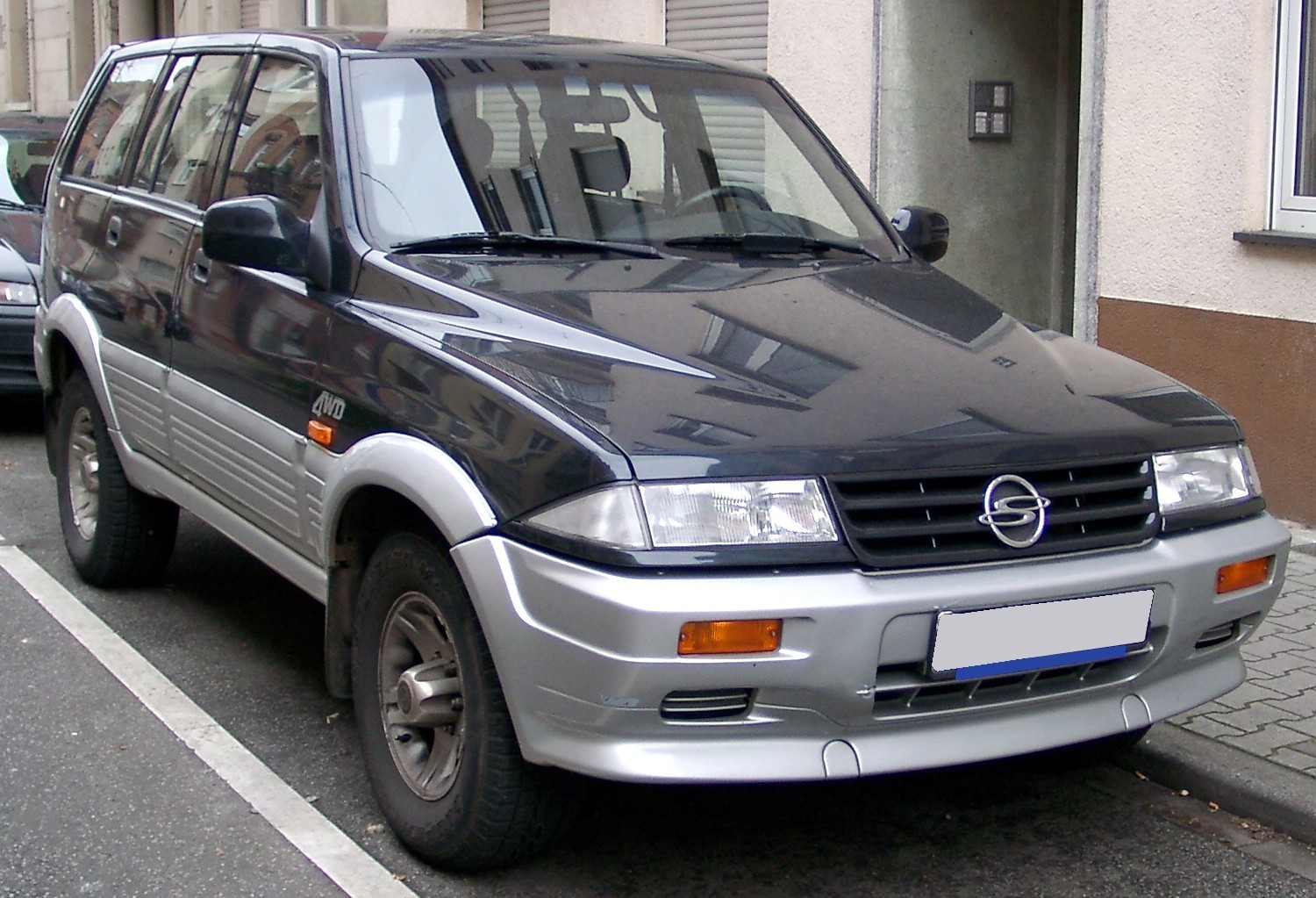
The turning point came in 1991, when SsangYong signed a technology partnership with Daimler-Benz to develop an SUV using Mercedes-Benz technology. The first result was the Musso of 1993, styled by the British designer Ken Greenley and powered by Mercedes-derived petrol and diesel engines. In some export markets the Musso was even sold through Mercedes-Benz dealers. The partnership also produced the Istana van of 1995, a licence-built version of the Mercedes MB100/MB140, and the second-generation Korando of 1996.
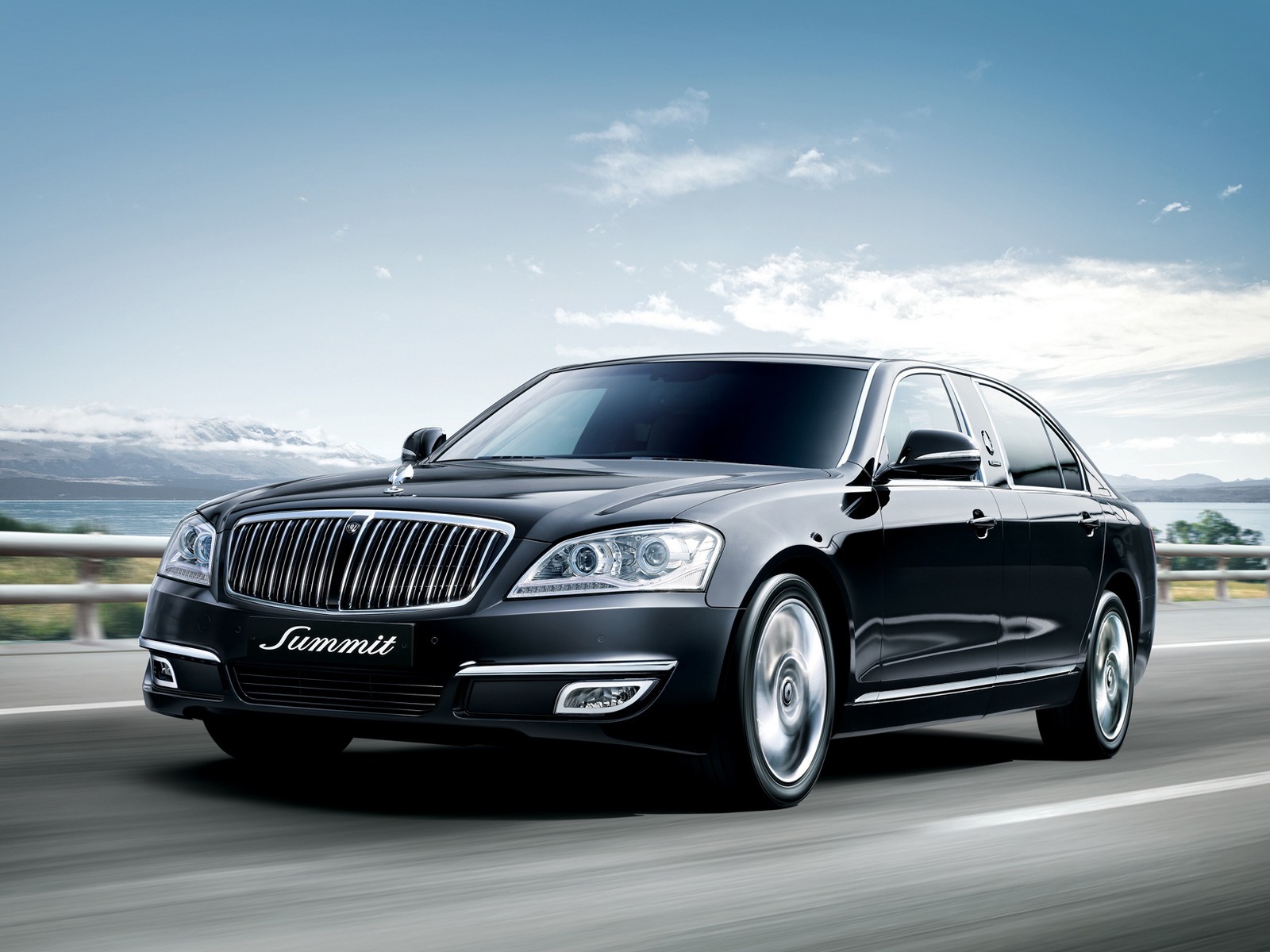
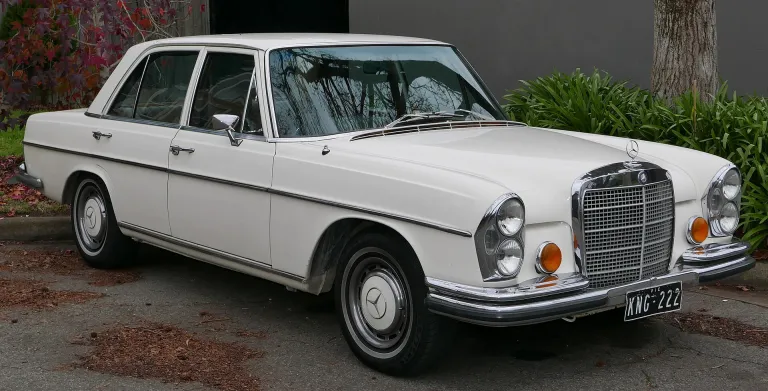
In 1997 SsangYong launched the Chairman, a large executive saloon based on the Mercedes-Benz E-Class of the W124 generation. The Chairman, in its H and later W versions, became SsangYong's flagship and stayed in production until 2014 in its H form.
Daewoo, independence and the Rexton (1997–2004)
The Asian financial crisis hit the SsangYong Group hard. In 1997 Daewoo Motors bought a controlling stake in SsangYong Motor, and for a short time SsangYong models appeared with Daewoo badges in some markets. When Daewoo itself ran into deep financial trouble, it sold the stake back in 2000, leaving SsangYong under the control of its creditors.
The most important model of this period was the Rexton, launched in 2001. It was a body-on-frame seven-seat SUV with Italian styling by Italdesign and Mercedes-derived engines, and it moved SsangYong into a higher price class. The Rexton name has stayed in the range ever since; the current Y400 generation was launched in 2017.
SAIC ownership and the 2009 receivership (2004–2010)
In late 2004 SAIC Motor, the state-owned carmaker from Shanghai, bought 51% of SsangYong Motor. New models followed: the Rodius MPV in 2004, the Kyron SUV and the coupé-like Actyon in 2005, and the Actyon Sports pickup. Their bold, unusual styling divided opinion.

Relations between SAIC and the workforce in Pyeongtaek were difficult. A seven-week strike in July and August 2006 protested a plan to cut 554 jobs. In January 2009, after heavy losses during the global financial crisis, SsangYong entered court receivership. Management planned to cut 2,600 jobs, about a third of the workforce, and workers occupied the Pyeongtaek factory. The occupation ended on 14 August 2009, after 77 days of disruption. Korean prosecutors later charged SAIC over the transfer of technology developed with government funding, which SAIC denied.
Mahindra and the Tivoli (2010–2020)
In August 2010 Mahindra & Mahindra, the vehicle maker from Mumbai, was chosen as the preferred bidder, and the takeover was completed in February 2011, giving Mahindra a majority stake of about 70%. In 2010 SsangYong also agreed to supply the Rodius and Chairman models to Daewoo Motor Sales.

The biggest success of the Mahindra years was the Tivoli, a compact crossover launched in 2015. It gave SsangYong its first net profit in nine years and was followed by the longer Tivoli XLV in 2016. In 2017 the company sold 143,685 vehicles worldwide, its best domestic result in 14 years. The Tivoli platform was later used for the Mahindra XUV300 of 2019.
The recovery did not last. On 21 December 2020, after Mahindra stopped funding the company, SsangYong filed for receivership for the second time. A takeover by the electric bus maker Edison Motors was approved in January 2022 but cancelled in March 2022 after missed payments.
KG Group and the KGM brand (2022–2026)
In June 2022 the Seoul Bankruptcy Court selected a consortium led by the KG Group, a business group with interests in chemicals, steel and payments. The Fair Trade Commission approved KG's 61% stake in August 2022, and the court ended the receivership on 11 November 2022. The Torres SUV, launched in 2022, became the first new model of the KG era, and in 2023 the company reported an operating profit.

In March 2023 the company was renamed KG Mobility, with KGM as its marque. The battery-electric Torres EVX followed in 2023, developed with battery technology from BYD, and in 2024 the Actyon name returned on a new coupé-style SUV. In Europe the cars are now sold as KGM, with a German sales subsidiary opened in August 2024. A strategic partnership with China's Chery was signed in October 2024, and the Musso EV electric pickup arrived in 2025.
SsangYong timeline

| Year | Event |
|---|---|
| 1954 | Ha Dong-hwan Motor Workshop founded |
| 1963 | Merger into Ha Dong-hwan Motor Co. |
| 1964 | Jeeps for the US Army, plus trucks and buses |
| 1977 | Renamed Dong-A Motor |
| 1983 | Korando name introduced (by Keohwa) |
| 1986 | SsangYong Group takes control |
| 1988 | Renamed SsangYong Motor |
| 1991 | Technology partnership with Daimler-Benz |
| 1993 | Musso SUV |
| 1997 | Chairman saloon; Daewoo buys control |
| 2001 | Rexton |
| 2004 | SAIC buys 51% |
| 2009 | Receivership and 77-day Pyeongtaek occupation |
| 2011 | Mahindra & Mahindra takeover completed |
| 2015 | Tivoli compact crossover |
| 2020 | Second receivership |
| 2022 | KG Group takeover; Torres |
| 2023 | Renamed KG Mobility (KGM); Torres EVX |
| 2025 | Musso EV pickup |
Landmark SsangYong models
| Model | Years | Why it matters |
|---|---|---|
| Korando | 1983– | The name that links the Jeep era with today's crossovers |
| Musso | 1993–2006 | First product of the Daimler-Benz partnership |
| Chairman | 1997–2014 (H) | Mercedes-based luxury saloon and flagship |
| Rexton | 2001– | Seven-seat body-on-frame SUV, core model for 25 years |
| Kyron | 2005–2014 | Mid-size SUV of the SAIC era |
| Actyon | 2005– | Coupé-style SUV and pickup, name revived in 2024 |
| Rodius / Stavic | 2004–2019 | Large MPV with up to 11 seats |
| Tivoli | 2015– | Compact crossover that saved the company |
| Torres | 2022– | SUV that marked the KG era, also as the electric EVX |
The KGM line-up as of October 2026
KGM's range is built around SUVs and pickups and includes the Tivoli, Korando, Torres, Torres EVX, Actyon and Rexton, plus the Musso and Musso EV pickups; availability varies by country. Most models offer petrol engines, some diesels remain for the Rexton and Musso, and the electric versions use BYD battery technology. All SsangYong and KGM models covered on 1cars are in the SsangYong catalogue.

Engineering and production today
SsangYong's speciality has always been body-on-frame SUVs and pickups with four-wheel drive, which set it apart from Hyundai and Kia. The 1cars catalogue shows the result: the Kyron's 620-litre boot ranks seventh in our biggest-boot SUVs list, and the Rexton W, at 7.6 l/100 km, is fourth among the most economical SUVs we list. The Pyeongtaek plant, opened in 1979 on 850,000 m² of land, builds the whole range, and engines and parts come from Changwon. In September 2023 KGM announced plans to sell the old Pyeongtaek site and build a new factory in the same city able to build up to 300,000 vehicles a year, due to be fully operational by 2028.

In 2023 the company built 116,099 vehicles. Knock-down assembly contracts in Saudi Arabia, the United Arab Emirates and Vietnam aim to grow exports beyond Korea and Europe. For buyers, the brand's strength remains rugged, well-equipped SUVs at prices below those of Japanese and European rivals. To compare a Rexton or Korando with other SUVs, use the 1cars comparison tool.
FAQ
Who owns SsangYong now?
Since November 2022 the company has been controlled by South Korea's KG Group, which holds about 61% of the shares. In March 2023 SsangYong Motor was renamed KG Mobility, and its cars are now sold under the KGM brand.
What does SsangYong mean?
SsangYong means "two dragons" in Korean. The name came from the SsangYong Business Group, the conglomerate that took over Dong-A Motor in 1986 and gave the car company the name SsangYong Motor in 1988.
Why did SsangYong change its name to KGM?
After the KG Group bought the company out of receivership in 2022, the new owner renamed it KG Mobility in March 2023 to mark a fresh start. Overseas, the shorter KGM marque is used, partly because of trademark disputes over the full name.
Was SsangYong connected to Mercedes-Benz?
Yes. From 1991 SsangYong had a technology partnership with Daimler-Benz. It produced the Musso, the Istana van based on the MB100/MB140, the Chairman saloon based on the W124 E-Class, and Mercedes-derived engines used in the Rexton.
Who owned SsangYong before KG Group?
Mahindra & Mahindra owned the majority from 2011 until the second receivership of 2020. Before that, SAIC held 51% from 2004, Daewoo had control from 1997 to 2000, and the SsangYong Business Group from 1986.
Where are SsangYong and KGM cars built?
All models are assembled in Pyeongtaek, South Korea, with engines and parts from the Changwon plant. Knock-down kits are also assembled by partners in Saudi Arabia, the United Arab Emirates and Vietnam.
Photos (1)