
 SsangYong Kyron
Specs, engines and history
Updated Published Sources (4) Report an error
By Oleksandr Hnatiuk, Automotive Editor & Used Car Specialist

- Built
- 2005–2011
- Top power
- 110 kW (150 PS)
- New price
- from about €23,900 (2005)
- Used price today
- about €1,900–7,000 (AutoScout24, Nov 2026)
Which Kyron to choose
Our verdict · Oleksandr Hnatiuk
For towing or longer motorway trips, the 2.7 Xdi from 2007 is the more relaxed choice: about 120 kW (163 PS) and 345 Nm against 104 kW (141 PS) and 310 Nm, with the same 2,300 kg braked limit and Euro 4 compliance. The 2.0 Xdi manual uses the least fuel on paper, at 8.0–8.1 L/100 km NEDC, and suits buyers who mainly need ground clearance and a low range.
The automatic makes the most sense for regular towing. Whichever you pick, condition and service history matter more than the badge on a car of this age, and a well-kept 2.0 is a better buy than a neglected 2.7.
The SsangYong Kyron is a mid-size, five-door, body-on-frame SUV that made its debut at the Frankfurt Motor Show in September 2005 and replaced the Musso in Europe. Styled by British designer Ken Greenley, it used Mercedes-Benz-derived diesel engines and part-time four-wheel drive with a low range. A facelift in 2007, often listed as the Kyron II, brought a 2.7-litre five-cylinder diesel.
In short
- Debut: Frankfurt, September 2005; European sales from the end of 2005; facelift (Kyron II) in 2007.
- Diesels: 2.0 Xdi with 104 kW (141 PS) and 310 Nm; 2.7 Xdi with about 120 kW (163 PS) and 345 Nm.
- Drive: part-time 4WD with a low-range transfer case; rear-wheel-drive versions also existed.
- Practical numbers: 4,660 mm long, 625 L boot, 2,300 kg braked towing capacity.

Size at a glance
Great Wall Hover H5
The SsangYong Kyron is 11 mm longer, 70 mm wider and 20 mm taller than the Great Wall Hover H5.
| Dimensions | SsangYong Kyron | Great Wall Hover H5 | Difference |
|---|---|---|---|
| Length | 4,660 mm183.5 in | 4,649 mm183.0 in | +11 mm+0.4 in |
| Width | 1,880 mm74.0 in | 1,810 mm71.3 in | +70 mm+2.8 in |
| Height | 1,755 mm69.1 in | 1,735 mm68.3 in | +20 mm+0.8 in |
| Wheelbase | 2,740 mm107.9 in | - | - |
| Boot | 620 L21.9 cu ft | 810 L28.6 cu ft | −190 L−6.7 cu ft |
UAZ Patriot
The SsangYong Kyron is 90 mm shorter, 20 mm narrower and 155 mm lower than the UAZ Patriot.
| Dimensions | SsangYong Kyron | UAZ Patriot | Difference |
|---|---|---|---|
| Length | 4,660 mm183.5 in | 4,750 mm187.0 in | −90 mm−3.5 in |
| Width | 1,880 mm74.0 in | 1,900 mm74.8 in | −20 mm−0.8 in |
| Height | 1,755 mm69.1 in | 1,910 mm75.2 in | −155 mm−6.1 in |
| Wheelbase | 2,740 mm107.9 in | - | - |
| Boot | 620 L21.9 cu ft | 700 L24.7 cu ft | −80 L−2.8 cu ft |
Specs by version
Engines
Dimensions and weight
Verified Manufacturer and type-approval data from our catalog · Sources and methodology
At a glance: what kind of car the Kyron is
The Kyron is a traditional ladder-frame SUV with car-like styling, built by SsangYong Motor Company at its Pyeongtaek plant in South Korea. It sat in the brand's line-up alongside the smaller SsangYong Actyon and the SsangYong Rexton, and in Europe it took over from the Musso.

Kits were also assembled outside Korea; Ukraine and Kazakhstan are usually listed among the assembly locations. In China a modified version was sold as the Roewe W5. The name is described as a loose blend of the Greek letter chi and the word "run", meant to suggest an endless run.
Production dates are less tidy than the launch dates. German catalogues list the original Kyron from 2005 to 2007 and the Kyron II from 2007 to 2011, while other sources run production to 2015, so the end date depends on the market.
History and design
SsangYong presented the Kyron at the Frankfurt Motor Show in September 2005, with European sales planned from the end of that year and a target of 35,000 cars a year in Europe. Australia followed in March 2006.

Ken Greenley's styling was a clear break from the boxy Musso, and it was the part of the car most reviews discussed first. Underneath, the formula was conservative: a separate chassis, double-wishbone-type front suspension and a five-link rear axle are usually quoted for the Kyron, which suits towing and rough tracks better than most monocoque crossovers of the period.
The 2007 facelift changed the front and rear styling and added the 2.7-litre diesel. Catalogues often call this version the Kyron II. A hybrid system was shown at the Geneva Motor Show in 2008, but we found no evidence that a hybrid Kyron reached series production.
The car's best-known sporting outing came in the 2009 Dakar Rally, where a Kyron 2.7 is reported to have finished 71st overall. The Kyron's place in the company's story is covered in our history of SsangYong.
Engines, gearboxes and 4WD
European Kyrons are diesel SUVs, and both main engines are derived from Mercedes-Benz designs. SsangYong badged them Xdi.

| Engine | Layout | Power | Torque | Years |
|---|---|---|---|---|
| 2.0 Xdi (200 Xdi) | 2.0 L four-cylinder, common-rail turbo-diesel | 104 kW (141 PS) | 310 Nm (229 lb-ft) at 1,800–2,750 rpm | from 2005 |
| 2.7 Xdi (270 Xdi) | 2,696 cc (164.5 cu in) five-cylinder turbo-diesel | about 120 kW (163 PS) | 345 Nm (254 lb-ft) | from 2007 |
Some spec sheets give the 2.7 as 121 kW (164 PS) and 340 Nm; the figures above are from the German ADAC catalogue. The 270 Xdi met Euro 4, and some later diesels had a particulate filter. Petrol engines were offered in some markets, including a Mercedes-Benz-derived 2.3-litre four-cylinder usually quoted at 112 kW (150 hp) and 310 Nm, and a 3.2-litre six-cylinder listed at 162 kW (220 hp). They were not part of the German range.
Both diesels were offered with a 5-speed manual or a 5-speed automatic; the automatic is usually described as a Mercedes-Benz unit. The standard 4WD system is part-time: the driver engages four-wheel drive and can select a low-range ratio in the transfer case. Reviewers note that there is no limited-slip or locking rear differential, so the Kyron is capable on muddy tracks but not a specialist off-roader.
Fuel consumption
Official figures are on the old NEDC cycle, so expect more in real use. The 2.0 Xdi manual is rated at 8.0–8.1 L/100 km (35.3–34.9 mpg UK) and the 2.0 automatic at 8.4–8.7 L/100 km (33.6–32.5 mpg UK). The 270 Xdi automatic is rated at 9.5 L/100 km (29.7 mpg UK) combined, with 11.1 L/100 km in town and 8.6 L/100 km out of town, and 242 g/km of CO2.
Dimensions, boot and towing
The Kyron is 4,660 mm (183.5 in) long and 1,880 mm (74.0 in) wide on a 2,740 mm (107.9 in) wheelbase, with a height of about 1,740–1,755 mm (68.5–69.1 in) depending on the source. Kerb weight runs from about 1,931 kg (4,257 lb) for a 2.0 automatic to 2,128 kg (4,691 lb) for a European 270 Xdi automatic.

The boot holds 625 L (22.1 cu ft) with five seats in use. With the rear seats folded and loaded to the roof, the Kyron II offers up to 2,322 L (82.0 cu ft); for the first version, some listings quote a smaller maximum of 1,222 L (43.2 cu ft), so sources differ on the folded figure.
Key specifications: Kyron II 2.7 Xdi automatic (EU)
| Parameter | Metric | Imperial |
|---|---|---|
| Engine | 2.7 L (2,696 cc) five-cylinder turbo-diesel | 164.5 cu in |
| Power | 120 kW (163 PS) | 161 hp |
| Torque | 345 Nm | 254 lb-ft |
| Gearbox | 5-speed automatic | 5-speed automatic |
| Drive | part-time 4WD with low range | part-time 4WD with low range |
| Length / width | 4,660 / 1,880 mm | 183.5 / 74.0 in |
| Height | about 1,740 mm | about 68.5 in |
| Wheelbase | 2,740 mm | 107.9 in |
| Boot (5 seats / maximum) | 625 / 2,322 L | 22.1 / 82.0 cu ft |
| Kerb weight | 2,128 kg | 4,691 lb |
| Towing, braked / unbraked | 2,300 / 750 kg | 5,071 / 1,653 lb |
| Top speed | 174 km/h | 108 mph |
| 0–100 km/h (0–62 mph) | 13.5 s | 13.5 s |
| Combined consumption (NEDC) | 9.5 L/100 km | 29.7 mpg UK |
| Fuel tank | 75 L | 16.5 UK gal |
For the 2.0 Xdi automatic, spec aggregators quote 166 km/h (103 mph) and 0–100 km/h in 14.2 seconds. Braked towing capacity is 2,300 kg (5,071 lb) for both diesels, which is the Kyron's strongest practical argument.
Equipment and safety
Equipment depended heavily on market and trim. A German-market 270 SPR 4x4 automatic from late 2007 came with front airbags, head airbags for both rows, ABS, brake assist, traction control and ESP as standard, plus a three-point belt for the rear centre seat and rear head restraints. In the UK in 2006, ESP was listed with the SE trim, so check what a particular car has rather than assuming.

We found no Euro NCAP, ANCAP or IIHS crash-test result for the Kyron. Results published for the SsangYong Korando and Tivoli belong to different, later models and should not be read across to this car.
For a sense of the original price, the ADAC catalogue lists the 270 SPR 4x4 automatic, built from October to December 2007, at EUR 35,295 in Germany. The Kyron stayed a niche choice there: 1,581 new cars were registered in Germany between 2005 and 2010, 1,171 of them in 2006.
Rivals and alternatives
The Kyron is usually compared with body-on-frame 4x4s such as the Nissan Terrano and the Mitsubishi Pajero. Like them, it has a separate chassis and a low range, but it has no locking rear differential, so the Kyron makes more sense as a towing and all-weather car than as a serious off-roader.

Within SsangYong's own range, the Actyon and the Rexton are the obvious alternatives, and buyers who needed a people carrier rather than an SUV could look at the SsangYong Stavic. All of them are listed among the full SsangYong range, and more Korean cars are in the catalogue.
Used Kyron: what reviewers and owners say
UK reviewers were lukewarm. Parkers rates the 2006–2010 Kyron at 3 out of 5, while Auto Express and Carbuyer each gave it 1 out of 5; Carbuyer's owner score, at 3.7 out of 5, is noticeably kinder. The Auto Express verdict sums up the split: a useful workhorse at a competitive price, but without the refinement of a compact SUV. Parkers also notes that UK cars came with a five-year warranty from 2009.

We did not find a component-level fault list from European reliability surveys, so we are not publishing one. Owner searches often focus on the immobiliser and the gearbox, which makes them sensible items to test on any car you view:
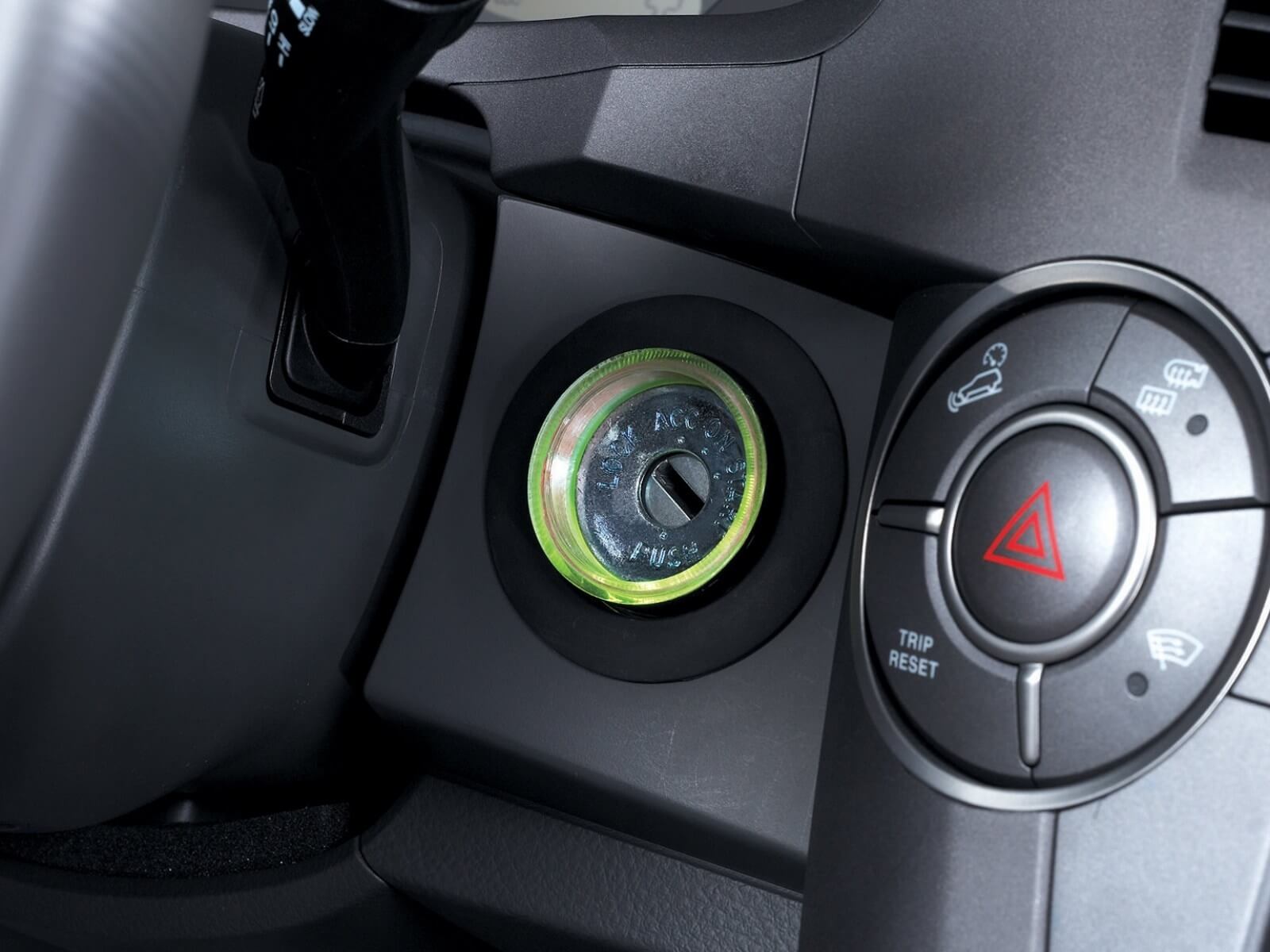
- Check that the key starts the car first time, more than once, and that any spare key works.
- On the move, engage four-wheel drive and low range, and confirm the transfer case selects and releases cleanly.
- Make sure an automatic shifts smoothly when warm and a manual selects all gears without crunching.
- Look for service records, and ask whether the car has towed regularly near its limit.
- Inspect the chassis frame and underbody for corrosion and off-road damage.
Rivals
Compare with…
Compare SsangYong Kyron with
- Great Wall Hover H5 full comparison
- Mitsubishi Pajero Sport quick spec comparison
- UAZ Patriot quick spec comparison
-
Ended 2020
- Years
- 2010–2020
- Body
- SUV
- Fuel
- Petrol, Diesel
- Power
- 100–105 kW (136–143 PS)
-
In production
- Years
- 1996–present
- Body
- SUV
- Fuel
- Petrol, Diesel
- Power
- 71–163 kW (97–222 PS)
3 generations
- I
- II
- III
-
In production
- Years
- 2014–present
- Body
- SUV
- Fuel
- Petrol, Diesel
- Power
- 84–110 kW (114–150 PS)
2 generations
- Patriot
- Patriot
-
Ended 2015
- Years
- 2006–2015
- Body
- SUV
- Fuel
- Petrol, Diesel
- Power
- 103–183 kW (140–249 PS)


SsangYong Kyron in our rankings
- No. 19 of 321 · Biggest boot: cars (620 l · top 6%)
- No. 15 of 140 · Biggest boot: SUVs and crossovers (620 l · top 11%)
- No. 194 of 516 · Widest cars (1,880 mm · top 38%)
- No. 234 of 539 · Longest cars (4,660 mm · top 44%)
- No. 90 of 194 · Widest SUVs and crossovers (1,880 mm · top 47%)
- No. 97 of 198 · Longest SUVs and crossovers (4,660 mm · top 49%)
Bigger boot than 94% of ranked cars in the 1CARS catalog (No. 19 of 321).
SsangYong Kyron photos 32
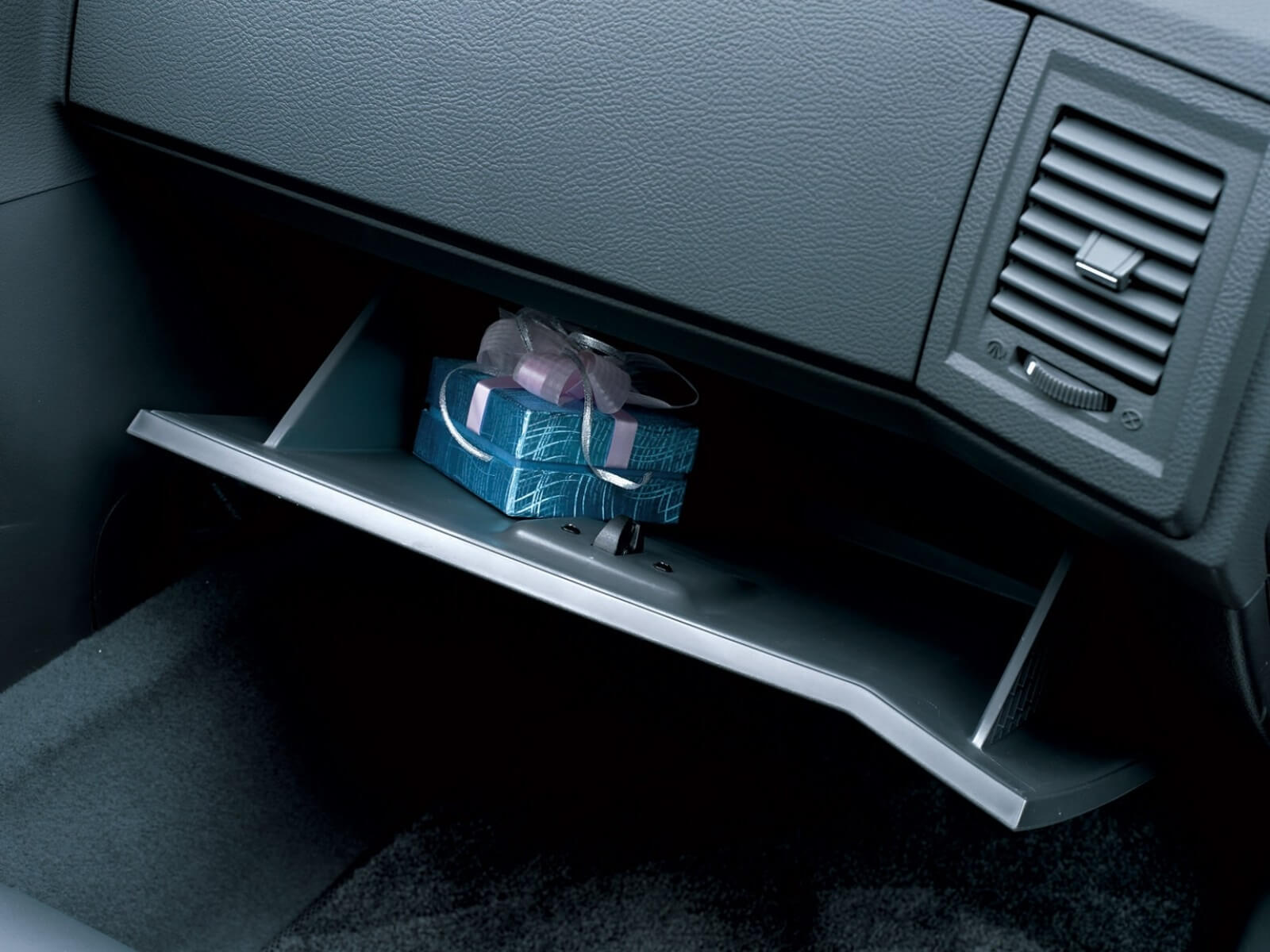


SsangYong Kyron videos 2

SsangYong Kyron video 1

SsangYong Kyron video 2
FAQ
What engines does the SsangYong Kyron have?
In Europe the Kyron used two Mercedes-Benz-derived diesels: the 2.0 Xdi with 104 kW (141 PS) and 310 Nm, and from 2007 the 2.7 Xdi five-cylinder with about 120 kW (163 PS) and 345 Nm. Petrol engines, including a 2.3-litre four-cylinder, were offered in some other markets.
Is the SsangYong Kyron 4WD?
European Kyrons have part-time four-wheel drive with a low-range transfer case, engaged by the driver. Rear-wheel-drive versions were also built, so check which system a used car has before buying.
How much can the SsangYong Kyron tow?
The European diesels are rated to tow 2,300 kg (5,071 lb) with a braked trailer and 750 kg (1,653 lb) unbraked, according to ADAC catalogue data.
What is the SsangYong Kyron's fuel consumption?
On the NEDC combined cycle, the 2.0 Xdi uses 8.0–8.7 L/100 km depending on gearbox, and the 2.7 Xdi automatic 9.5 L/100 km (29.7 mpg UK). Real-world figures are usually higher.
Did the SsangYong Kyron get a Euro NCAP rating?
We found no Euro NCAP, ANCAP or IIHS result for the Kyron. Star ratings for the SsangYong Korando and Tivoli apply to those models only.
Who designed the SsangYong Kyron?
The Kyron was styled by British designer Ken Greenley and built by SsangYong at Pyeongtaek in South Korea.
Data sources
Data checked by an editor against the sources below.
- The text of this article (1cars archive)
- Wikipedia - SsangYong Kyron
- Auto - Ssangyong Kyron Ve Frankfurtu 2005 55927
- ADAC


