
Archive first published
Koenigsegg's Camless Engine 2015: The Freevalve Story to 2026
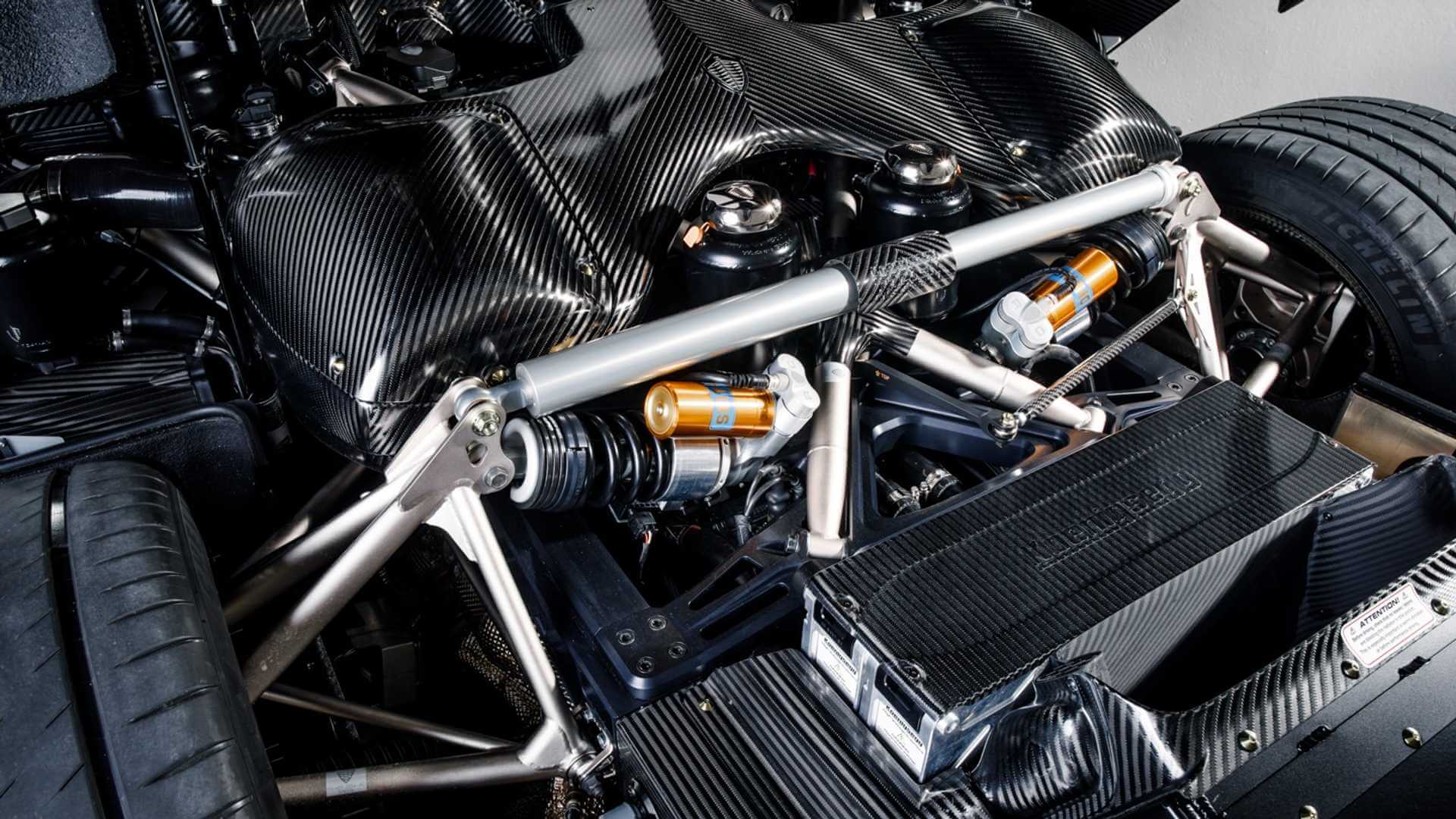
In April 2015 Christian von Koenigsegg said his company's camless engine work was nearly finished and production would follow within years. The technology, called Freevalve, opens each valve with its own actuator instead of a camshaft. It reached a show car in the 2020 Koenigsegg Gemera, with a 447 kW three-cylinder engine. In July 2024 that engine was dropped, and by October 2026 no production car uses Freevalve.
Key takeaways
- Freevalve grew out of Cargine Engineering, a Koenigsegg sister company, and its 2002 patent.
- Each intake and exhaust valve is opened by an electro-hydraulic-pneumatic actuator, so no camshaft or throttle body is needed.
- The Gemera's 2.0-litre "Tiny Friendly Giant" made 447 kW (608 PS) from three cylinders.
- Koenigsegg cancelled that engine in July 2024 because buyers chose the V8 version.
What Koenigsegg promised in 2015
Our 2015 report was based on an interview that Christian von Koenigsegg gave to Top Gear. He called the camshaft an outdated part that had reached the limit of its development. Electronics, he argued, could open each valve exactly when needed.

The interview came a month after Koenigsegg showed the Regera at the Geneva show. Our old text gave the Regera 1,500 horsepower and called it 1.5 times stronger than the Agera R. The correct combined figure is 1,119 kW (1,521 PS). The Agera R made 838 kW (1,140 PS) on E85, so the gap was about a third, not a half.
How Freevalve works
| Feature | Freevalve system |
|---|---|
| Valve drive | one electro-hydraulic-pneumatic actuator per valve |
| Camshaft | none |
| Throttle body | not needed; the valves control air flow |
| Cycles | can run Otto, Miller or Atkinson cycles, and skip cylinders |
| Claimed fuel saving | 15–20 % against an engine with variable camshafts |
| Claimed cold-start emissions | about 60 % lower |
| First engine in a car | 2.0-litre three-cylinder TFG, 447 kW (608 PS), 600 Nm, 70 kg |
A camshaft opens the valves by the same profile every time, and variable-timing systems only shift or change that profile. Freevalve lets the engine computer decide timing, lift and duration for each valve on each cycle. That freedom is what made the claims for economy and emissions possible.
The long road from patent to show car
The idea is older than Koenigsegg's hypercars. Cargine Engineering bought the key patent in 2002, and a converted Saab 9-5 engine was reported to run with camless intake valves in 2008. The company took the name Freevalve in 2012.
The first public car with the system was not a Koenigsegg. At the Guangzhou show in November 2016, the Chinese brand Qoros showed a Qoros 3 prototype with a camless engine. That car never went on sale. Engine Labs, writing in May 2023, listed the reasons: cost, durability and the difficulty of tuning every cylinder separately.
Freevalve timeline
| Date | Event |
|---|---|
| 2002 | Cargine Engineering acquires the camless-valve patent |
| 2008 | Converted Saab 9-5 engine runs with camless intake valves |
| 2012 | Company renamed Freevalve |
| April 2015 | Christian von Koenigsegg says the engine is close to production |
| November 2016 | Qoros 3 camless prototype shown in Guangzhou |
| 3 March 2020 | Gemera revealed with the TFG engine; 1,044 kW (1,419 PS) combined |
| July 2024 | TFG version cancelled; Gemera continues with a V8 hybrid |
| 2026 | Gemera production starts with the V8, limited to 300 cars |
Our verdict: Freevalve's status in 2026
In October 2026 the Koenigsegg Gemera is in production, but with a 5.0-litre twin-turbo V8 and electric motors. That version gives 1,715 kW (2,332 PS) on E85. Christian von Koenigsegg explained in July 2024 that orders had gone mainly to the V8, so the three-cylinder was dropped.
No production car uses Freevalve technology. "The coming years" of 2015 proved far longer, and most new combustion engines now work with electric motors.
See our history of Koenigsegg and the Koenigsegg catalogue, convert kW and PS with the power converter, or set hypercars side by side in the comparison tool.
FAQ
What is a Freevalve engine?
It is an engine without camshafts. Each valve has its own actuator, controlled by the engine computer, so timing and lift can change freely on every cycle.
Does any production car use Freevalve?
No, as of October 2026. The only car planned with it, the three-cylinder Koenigsegg Gemera, was cancelled in July 2024. A Qoros 3 prototype with a camless engine, shown in 2016, never went on sale either.
How powerful was the Koenigsegg TFG engine?
The 2.0-litre twin-turbo three-cylinder produced 447 kW (608 PS) and 600 Nm, and Koenigsegg quoted about 220 kW without its turbos. The engine itself weighed about 70 kg.
Why did Koenigsegg drop the three-cylinder Gemera?
Most Gemera buyers ordered the V8 hybrid version instead, which gives 1,715 kW (2,332 PS) on E85. Koenigsegg therefore cancelled the three-cylinder in July 2024.


