
JAC Motors: the History of Anhui Jianghuai Automobile
JAC Motors (Anhui Jianghuai Automobile Group) is a state-owned Chinese maker of trucks, buses, passenger cars and electric vehicles based in Hefei, Anhui province. It began in 1964 as the Hefei Jianghuai Automobile Factory, built light trucks for decades, and only received approval for passenger cars in 2007. Today it is best known for commercial vehicles and partnerships with Volkswagen, NIO and Huawei.

Key takeaways
- Founded in 1964 in Hefei; renamed Anhui Jianghuai Automobile Co., Ltd. in 1997 and listed in Shanghai in 2001.
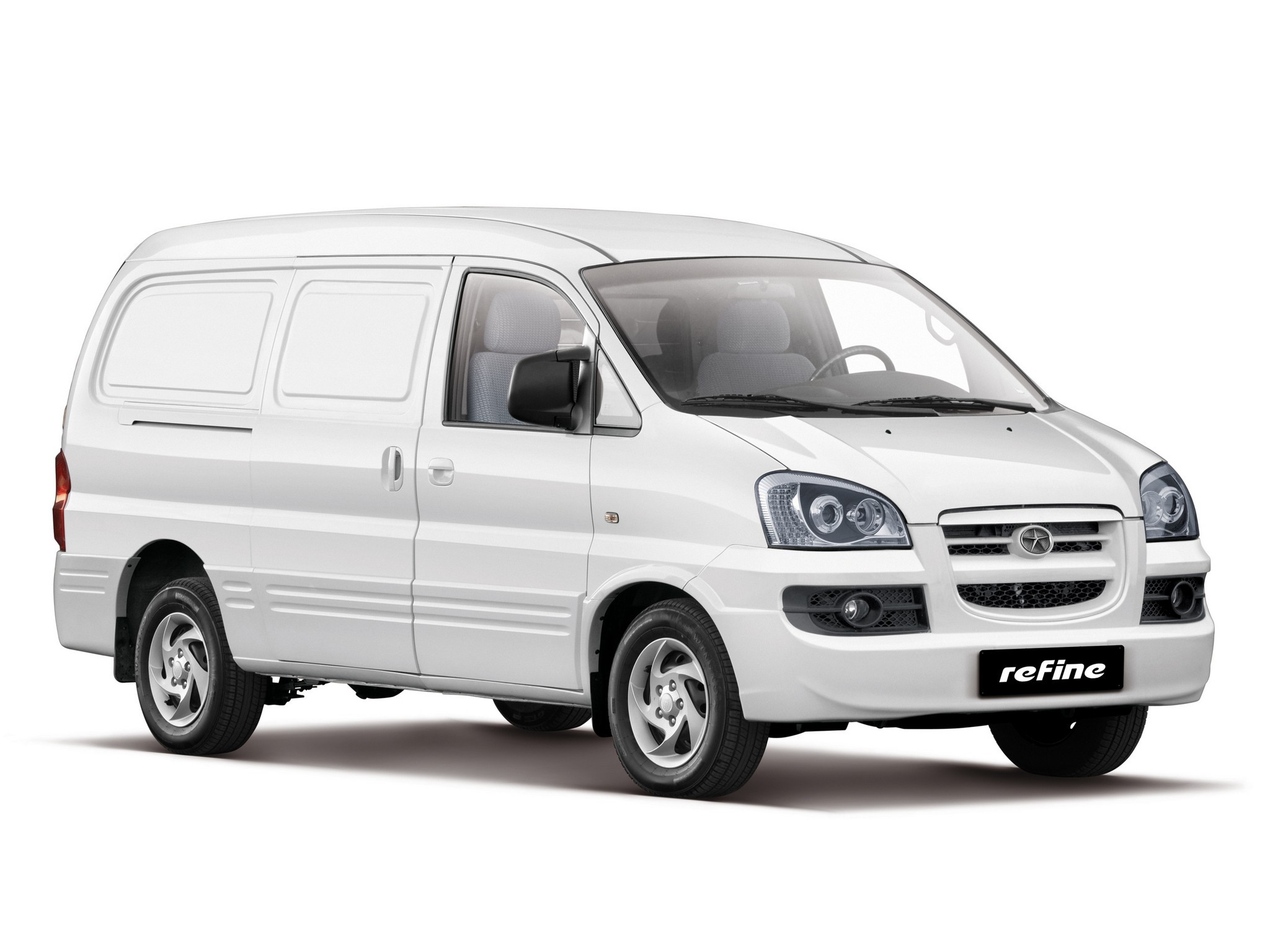
- Mainly a truck maker until the 2000s; Refine MPVs, Heyue saloons and S-series SUVs followed.
- Partners: Navistar and Cummins for diesel engines, Volkswagen (Volkswagen Anhui), NIO and Huawei's Maextro brand.
- Annual sales of roughly 400,000 to 640,000 vehicles between 2010 and 2025, with exports since 1990.

JAC Motors at a glance
JAC belongs to the JAC Holding Group, which is owned by the government of Anhui province, the same province that is home to Chery. Since a 2020 agreement Volkswagen has held 50% of that parent company. JAC's product range runs from light, medium and heavy trucks to MPVs, SUVs, buses and electric cars, and it has exported vehicles since 1990.
| Fact | Value |
|---|---|
| Full name | Anhui Jianghuai Automobile Group Co., Ltd. |
| Founded | 1964, as Hefei Jianghuai Automobile Factory |
| Headquarters | Hefei, Anhui province, China |
| Owner | JAC Holding Group (Anhui provincial government); Volkswagen holds 50% of the parent |
| Listing | Shanghai Stock Exchange since 2001 |
| Main products | Trucks, MPVs, SUVs, buses, electric vehicles |
| Brands and lines | Jianghuai trucks, Refine, Heyue, Jiayue, Sehol, Yiwei |
| Exports | Since 1990, to more than 100 countries |
Origins as a truck factory (1964–1990s)
The company was founded in 1964 in Hefei as the Hefei Jianghuai Automobile Factory. For more than three decades it built commercial trucks, sold under the Jianghuai name, and that work still forms the core of the business. Its truck families, such as the Shuailing, Junling and Kangling, still form the core of the range. In 1990 the factory began exporting, with Bolivia as its first foreign market.

In 1997 the company was reorganised as Anhui Jianghuai Automobile Co., Ltd., and in 2001 it was listed on the Shanghai Stock Exchange.
Hyundai MPVs and the road to passenger cars (2000s)
In the 2000s JAC widened its range with MPVs and SUVs. Between 2003 and 2007 it assembled Hyundai MPVs, and in 2004 Hyundai reportedly considered a joint venture with the company. In 2007 the Chinese government approved JAC as a manufacturer of passenger cars, although trucks still made up most of its output.

In 2009 analysts predicted a merger of JAC and Chery, the two big carmakers of Anhui province. JAC said it was not interested in joining the larger company and stayed independent.
Joint ventures and engines
JAC has relied on foreign partners for engines and technology. Around 2010 it set up two joint ventures with the American truck maker Navistar. One of them, JAC-Navistar Diesel Engine Company, built medium and heavy diesel engines in Hefei. In 2018 Cummins bought Navistar's stake in that business.

The most important partnership began in 2017, when JAC and Volkswagen announced a joint venture for electric cars. It was formally set up in April 2018 and launched the Sehol brand. In 2020 Volkswagen signed agreements to raise its stake in the venture, renamed Volkswagen Anhui, from 50% to 75% and to buy 50% of JAC's parent company. The story of the German group is in Volkswagen's history.
Passenger cars: Refine, Heyue and the S-series
JAC's passenger car range grew quickly after 2007. It covered several lines:
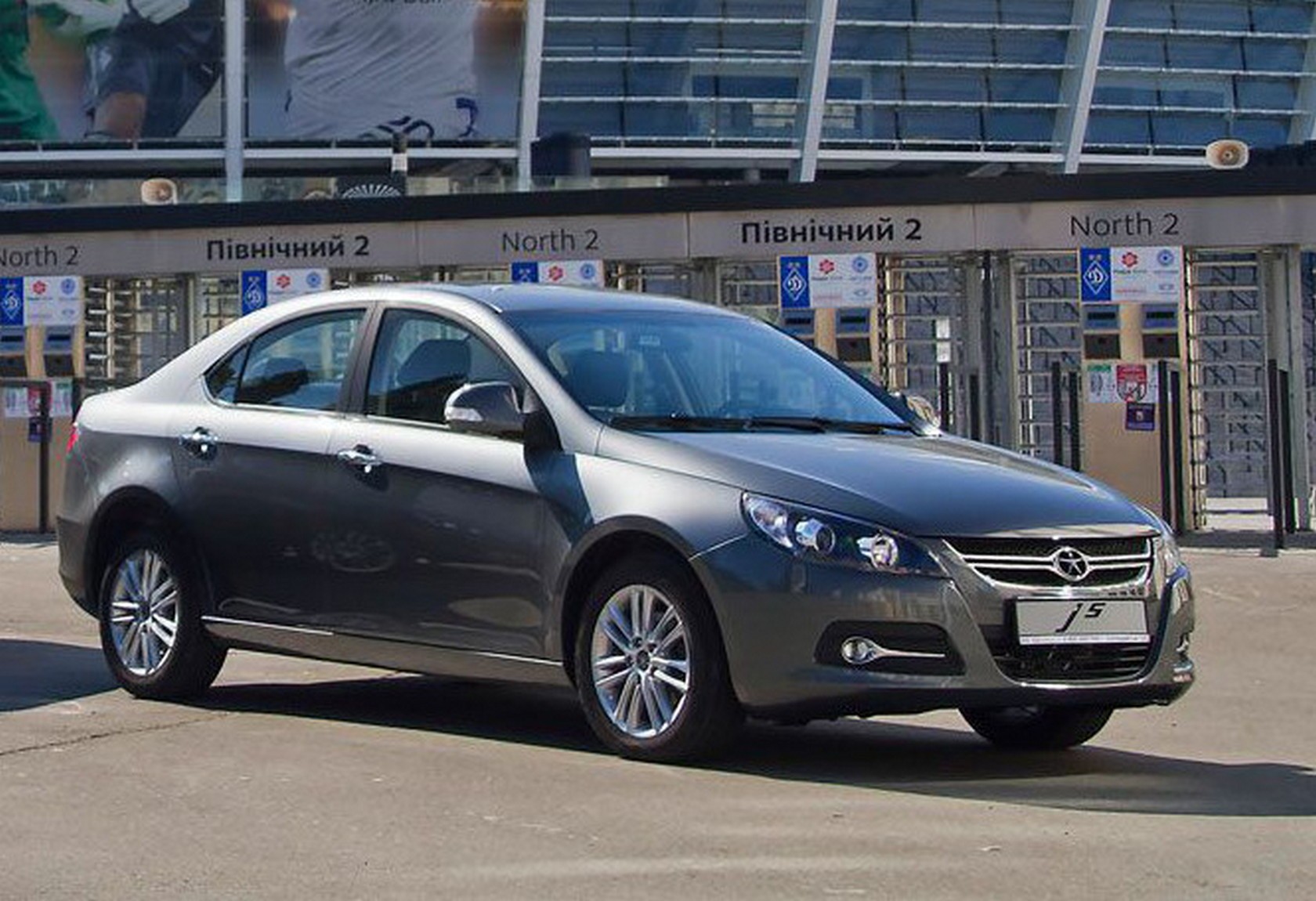
- Heyue: saloons and hatchbacks such as the J3, J5 and J6, replaced by electric models and discontinued in 2017;
- Refine: MPVs and vans (M2 to M6 and the RF8), which became an independent brand in 2020;
- Refine S-series: SUVs from the compact S2 to the seven-seat S7, among them the JAC S5 of 2013;
- Jiayue: a new series from 2019 that absorbed several Refine models.
The old 1cars text notes that the small Tojoy city car won awards in China in 2009. In 2016 JAC agreed with the Italian company DR Automobiles to sell its models in Italy under the DR badge.
Electric vehicles from 2010
JAC announced its electric-vehicle programme in 2010, partly in answer to the merger talk with Chery. The first result was the JAC J3 EV, built from 2010 with a range of about 130 km per charge. According to the old 1cars text, 6,568 were sold in four years, which made it one of China's best-selling electric cars of that early period. The iEV range followed, including the iEV4, iEV6E, iEV7 and later iEVA50 and iEVA60.

In April 2016 JAC signed a contract to build cars for the start-up NIO, with a target of 50,000 vehicles a year over five years. The NIO ES8, launched in 2018, came from JAC's Hefei plants. The two companies formed a joint manufacturing venture in 2021. In December 2023 NIO bought the factories that built its cars, ending its reliance on JAC as a contract maker.
New brands: Sehol, Yiwei and Maextro
JAC's brand portfolio changed several times in the 2020s. Sehol, launched in April 2018 for the Volkswagen joint venture, was later licensed to JAC, which announced in 2023 that it would phase the brand out. In April 2023 JAC launched Yiwei as its entry-level electric brand.

In December 2023 JAC signed a cooperation agreement with Huawei to develop premium electric cars. In August 2024 Huawei announced Maextro (Zunjie in Chinese) as the brand of this partnership, with the Maextro S800 large saloon as its first model. JAC also builds trucks for other brands: in January 2025 Wrightbus launched the Rightech RT75 electric box truck, based on the JAC Junling.
Exports and overseas assembly
JAC sells vehicles in more than 100 countries. Knock-down kits are assembled in Egypt, Ethiopia, Vietnam, Mexico and Iran, although not all of these plants belong to JAC. In 2017 the company formed a joint venture in Mexico with Giant Motors and opened a factory in Ciudad Sahagún, Hidalgo, with a capacity of more than 25,000 vehicles a year. JAC also entered the Philippines between 2016 and 2018. Plans for a plant in Bahia, Brazil, with the SHC Group were announced between 2009 and 2011.

Landmark JAC vehicles
| Model or line | Launched | Why it matters |
|---|---|---|
| Jianghuai light trucks (Shuailing, Junling, Kangling) | before 2000 | Core business since the 1960s factory |
| Refine M-series MPVs | 2000s | First step from trucks to passenger vehicles |
| Tojoy city car | late 2000s | Award-winning small car in 2009 |
| J3 EV | 2010 | Early Chinese mass-market electric car, 130 km range |
| Refine S5 SUV | 2013 | Mid-size SUV sold in many export markets |
| NIO ES8 (contract build) | 2018 | Electric SUV built by JAC for NIO |
| Maextro S800 | 2024–2025 | Premium electric saloon developed with Huawei |
The electric Lanmao and Kala logistics vans continue the commercial line in the electric era.
JAC in numbers
| Year | Sales (vehicles) |
|---|---|
| 2010 | 442,547 |
| 2013 | 495,737 |
| 2015 | 588,052 |
| 2016 | 643,342 |
| 2018 | 462,477 |
| 2020 | 456,125 |
| 2021 | 524,224 |
| 2023 | 592,499 |
| 2024 | 403,094 |
| 2025 | 384,071 |
The best year so far was 2016, with more than 640,000 vehicles. Compared with 2010, sales that year were 45% higher; by 2025 they had fallen about 40% below the 2016 peak. In 2013 JAC ranked eighth among Chinese carmakers with a market share of about 2.5%.

JAC timeline, 1964–2024

| Year | Event |
|---|---|
| 1964 | Hefei Jianghuai Automobile Factory founded |
| 1990 | First exports, to Bolivia |
| 1997 | Renamed Anhui Jianghuai Automobile Co., Ltd. |
| 2001 | Listed on the Shanghai Stock Exchange |
| 2003–2007 | Assembly of Hyundai MPVs |
| 2007 | Approval to build passenger cars |
| 2010 | Electric-vehicle programme; J3 EV; Navistar joint ventures |
| 2016 | Contract-manufacturing deal with NIO |
| 2018 | Volkswagen joint venture and Sehol brand founded |
| 2020 | Volkswagen agrees to take 50% of JAC's parent company |
| 2023 | Yiwei brand; NIO buys its factories; Huawei agreement |
| 2024 | Maextro brand announced with Huawei |
Verdict: where JAC Motors stands today
JAC remains first of all a commercial-vehicle maker, with light trucks and vans as its strongest products at home and abroad. Its passenger cars now lean on partners: Volkswagen for technology and capital, and Huawei for the premium Maextro brand. For buyers outside China, JAC Motors mostly means trucks, vans and affordable SUVs sold through importers, and its SUVs can be found by size and power in the 1cars car finder. The models covered on 1cars are listed in the JAC catalogue. For comparison with other Chinese makers, see the history of Geely, Changan's history and the overview of Chinese cars.

FAQ
Who owns JAC Motors?
JAC is controlled by the JAC Holding Group, which belongs to the government of Anhui province in China. Under a 2020 agreement Volkswagen holds 50% of that parent company, and it also controls the Volkswagen Anhui joint venture.
When was JAC founded?
The company was founded in 1964 in Hefei as the Hefei Jianghuai Automobile Factory. It took the name Anhui Jianghuai Automobile Co., Ltd. in 1997 and has been listed on the Shanghai Stock Exchange since 2001.
What does JAC stand for?
JAC is short for Jianghuai Automobile Co., after the full name Anhui Jianghuai Automobile. Jianghuai refers to the region between the Yangtze and Huai rivers, where Hefei lies.
Does JAC make electric cars?
Yes. JAC has built electric cars since the J3 EV of 2010, followed by the iEV range, the Sehol models with Volkswagen and the Yiwei brand launched in 2023. It also develops premium electric cars with Huawei under the Maextro brand.
Is JAC connected to NIO?
From 2016 JAC built cars for NIO under contract, starting with the NIO ES8 in 2018. The two formed a manufacturing joint venture in 2021, and in December 2023 NIO bought the factories that made its cars.
Photos (1)




