
 Lancia D24 Spider Sport
Specs, engines and history
Updated Published Sources (2) Report an error
By Felix Hartmann, Automotive Technology & EV Contributor Reviewed by Oleksandr Hnatiuk
- Built
- 1953–1954
- Top power
- 195 kW (265 PS)
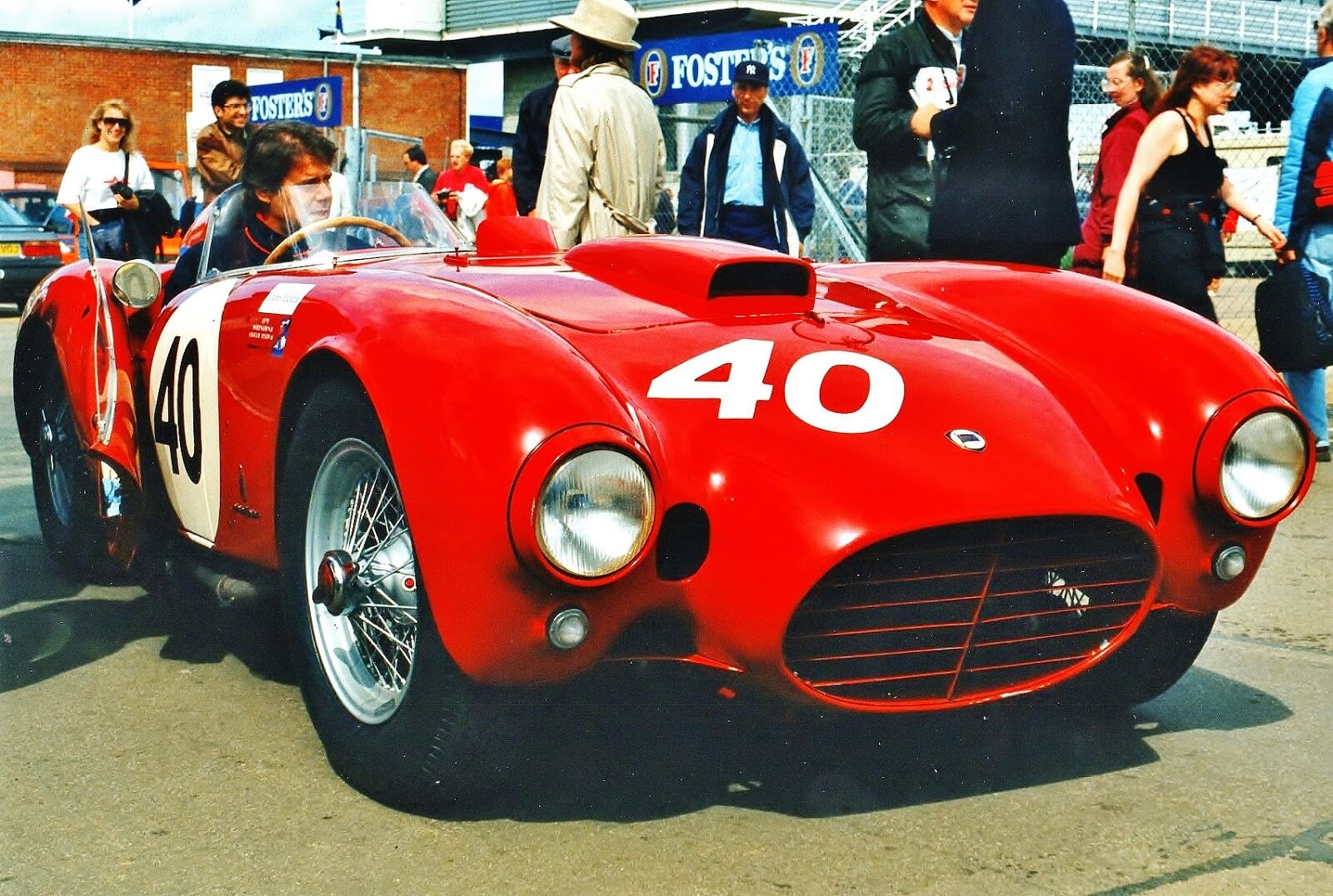
The Lancia D24 is an open two-seat sports-racing car that Scuderia Lancia raced in 1953 and 1954. It had a 3.3-litre V6 of about 180–198 kW (245–265 hp), a tubular frame and a dry weight of 750 kg. In two seasons it won the 1953 Carrera Panamericana with Juan Manuel Fangio and the 1954 Mille Miglia and Targa Florio. According to Lancia, it took 11 wins from 17 races.
In short
- Developed from the D20 coupé and D23 spider, with a shorter wheelbase and a bigger engine.
- 3,284 cc 60° V6 with twin overhead camshafts per bank, twin ignition and three Weber carburettors.
- Drivers included Fangio, Alberto Ascari, Piero Taruffi, Eugenio Castellotti and Gigi Villoresi.
- Only two cars are known to survive, one of them in the Lancia museum.

Specs by version
Engines
Performance
Show all 1 versions
| Version | 0–100 km/h | Top speed |
|---|---|---|
| 3.3 195 kW (265 PS) Roadster | 5.2 s 0–62 mph | 260 km/h162 mph |
Dimensions and weight
Show all 1 versions
| Version | Wheelbase |
|---|---|
| 3.3 195 kW (265 PS) Roadster | 2,400 mm94.5 in |
Verified Manufacturer and type-approval data from our catalog · Sources and methodology
D24 at a glance

| Fact | Value |
|---|---|
| Maker | Lancia (Scuderia Lancia racing department), Turin |
| Type | open two-seat sports-racing car (barchetta) |
| Racing seasons | 1953–1954 |
| Predecessor / successor | D23 / D25 |
| Engine | 3.3-litre 60° V6, front-mounted |
| Power | 180 kW (245 PS) per Lancia; 198 kW (265 hp) in other sources |
| Weight and speed | 750 kg dry, about 260 km/h |
| Best-known wins | Carrera Panamericana 1953, Mille Miglia 1954, Targa Florio 1954 |
| Survivors | two known cars |
Why Lancia went racing
Lancia was known for engineering firsts in road cars, from the monocoque Lambda to the first series-production V6 in the Aurelia. In 1951 private drivers began to win with the Aurelia B20 GT coupé. At that year's Mille Miglia, Giovanni Bracco and Umberto Maglioli finished second overall in a B20, behind only a Ferrari 340 America.

Gianni Lancia, the son of founder Vincenzo Lancia, ran the company at the time. Encouraged by these results, he set up a factory team, Scuderia Lancia. The old 1cars text notes that he wanted Lancia to compete with Alfa Romeo and Maserati on the race track as well as in the showroom. The brand's whole story is told in the history of Lancia.
From the D20 to the D24
The first purpose-built racer was the D20 Coupé Sport of 1953. It had an aluminium closed body by Pinin Farina and a V6 enlarged to 3.0 litres, with a supercharged 2.7-litre version rated at 176 kW (240 PS). Lancia soon decided to race open cars as well.

The D23 Sport Spider followed, and four were built. It used a 3.0-litre engine with 160 kW (217 PS) and a De Dion rear axle, and served as the base for the next step. The D24 Sport Spider was then built in record time during 1953. It had a shorter wheelbase than the D23 and a larger 3.3-litre V6. Its open body is credited to Pinin Farina, as on the earlier cars, and the founder of that coachbuilder is profiled on our Battista Pininfarina page.
Design and engineering
The D24 kept the D23's layout. A trellis frame of chrome-molybdenum steel tubes carried double-wishbone front suspension with a transverse leaf spring. At the rear, a De Dion tube also used a transverse leaf spring, and hydraulic dampers worked at both ends. The wheelbase was 2,400 mm (94.5 in).
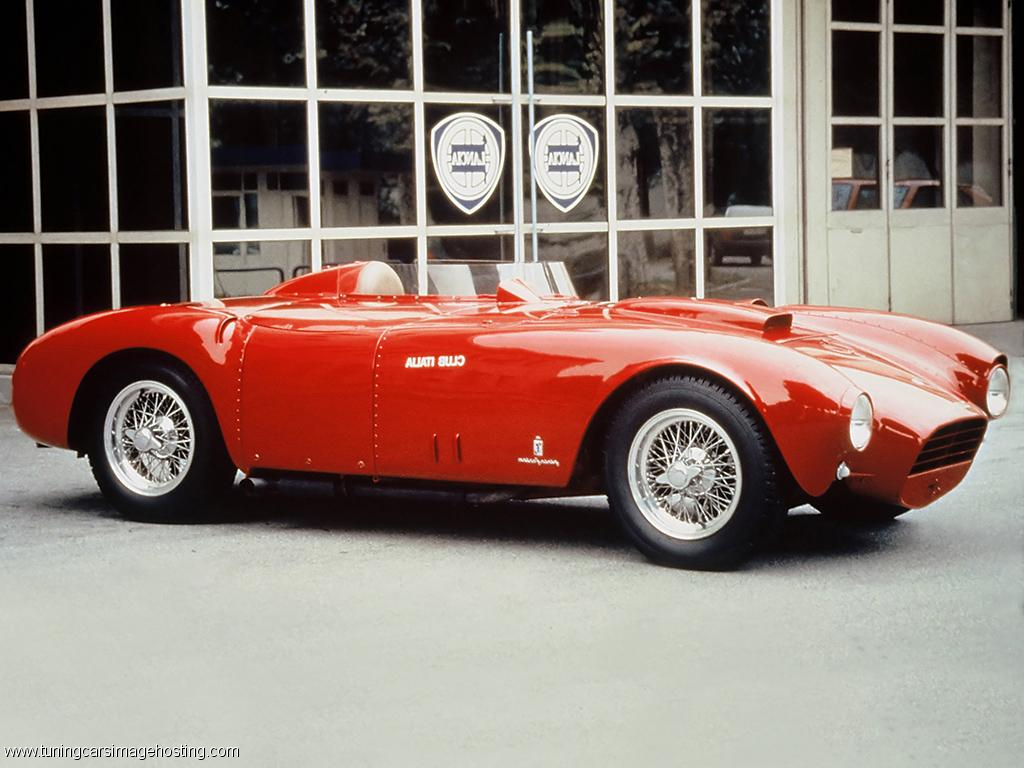
The gearbox sat at the rear axle as a transaxle, which helped balance the weight. It had four speeds, synchronised from second gear, and a limited-slip differential, and Lancia could choose from eight final-drive ratios to suit each circuit. The rear drum brakes were mounted inboard, next to the differential, to reduce unsprung weight.
According to the old 1cars text, the cockpit was strictly functional. The passenger seat was covered, and a small windscreen protected only the driver. A large rev counter reading to 8,000 rpm sat behind the three-spoke wheel. An air-intake fairing behind the driver's seat was a visual signature of the car.
Engine and drivetrain
The engine was a 60-degree V6 of 3,284 cc (200.4 cu in), mounted at the front. Each bank had two overhead camshafts, and every cylinder had two spark plugs fired by two distributors. Dry-sump lubrication with a separate oil tank and radiator kept oil supply steady in long corners. Three twin-choke Weber carburettors with 46 mm throats fed the fuel.

Sources differ on the output. Lancia's heritage department quotes 245 PS (180 kW), while other references give 265 hp (198 kW). The gap may reflect development during the two seasons or different measuring standards. The 1cars power converter shows how PS, hp and kW relate.
By our calculation, the D24 carried only about 3.8–4.2 kg per kilowatt of power at its 750 kg dry weight. Its V6 produced roughly 55–60 kW per litre, a high figure for a naturally aspirated engine of the early 1950s. You can compare such figures with modern cars in the 1cars power-to-weight calculator.
Lancia D24 specifications

| Parameter | Metric | Imperial |
|---|---|---|
| Engine | 60° V6, DOHC per bank, twin ignition, dry sump | - |
| Displacement | 3,284 cc | 200.4 cu in |
| Fuel system | three Weber 46 mm twin-choke carburettors | - |
| Power | 180–198 kW (245–265 PS/hp) | 241–265 hp |
| Gearbox | 4-speed manual transaxle, limited-slip differential | - |
| Front suspension | double wishbones, transverse leaf spring | - |
| Rear suspension | De Dion tube, transverse leaf spring | - |
| Brakes | drums, inboard at the rear | - |
| Frame | chrome-molybdenum steel tube trellis | - |
| Wheelbase | 2,400 mm | 94.5 in |
| Dry weight | 750 kg | 1,653 lb |
| Top speed | about 260 km/h | about 162 mph |
1953: victory in Mexico
The D24 made its debut at the Nürburgring 1000 km in 1953, where both cars retired. Both retired again at the Gran Premio Supercortemaggiore. The first win came on the Bologna–Raticosa hill climb, where Felice Bonetto finished ahead of a young Eugenio Castellotti.

The big success followed in November at the Carrera Panamericana in Mexico, a road race of more than 3,000 km. Juan Manuel Fangio won with Gino Bronzoni as co-driver, and Piero Taruffi finished second in another D24. The win was overshadowed by the death of Felice Bonetto, who crashed in the third car.
1954: Mille Miglia and Targa Florio
The 1954 season was the D24's best. Valenzano and Rubirosa finished second at the 12 Hours of Sebring in Florida. Taruffi won the Giro di Sicilia, and then came the Mille Miglia in May.

Alberto Ascari drove D24 number 602 and won in 11 hours, 26 minutes and 10 seconds, at an average of 139.645 km/h. By our calculation, that equals almost 1,600 km of Italian public roads. He finished more than half an hour ahead of Vittorio Marzotto's Ferrari 500 Mondial. Taruffi had led by four minutes at the halfway point before he crashed out. It remained Lancia's only overall win in the Mille Miglia.
Taruffi then won the Targa Florio in Sicily, ahead of Luigi Musso's Maserati, while Castellotti set the fastest lap at 93.116 km/h. Villoresi won the Oporto Grand Prix in Portugal with Castellotti second. Taruffi and Fangio also won their class in the RAC Tourist Trophy, and Castellotti collected a series of Italian hill climbs.
| Year | Race | Result |
|---|---|---|
| 1953 | Bologna–Raticosa | 1st Bonetto, 2nd Castellotti (first win) |
| 1953 | Carrera Panamericana | 1st Fangio, 2nd Taruffi |
| 1954 | 12 Hours of Sebring | 2nd Valenzano / Rubirosa |
| 1954 | Giro di Sicilia | 1st Taruffi |
| 1954 | Mille Miglia | 1st Ascari |
| 1954 | Targa Florio | 1st Taruffi |
| 1954 | Oporto Grand Prix | 1st Villoresi, 2nd Castellotti |
| 1954 | RAC Tourist Trophy | class win, Taruffi / Fangio |
| 1954 | Coppa Firenze–Siena | 1st Castellotti (last win) |
By our calculation, the 11 wins from 17 starts equal a success rate of about 65 %. The D24's chief rival was Ferrari, whose cars such as the Ferrari 750 Monza fought it in the same races.
After 1954: the D25 and Formula 1
The D25 followed the D24, and Lancia moved much of its racing effort into Formula 1 with the D50. The cost of these programmes strained the company's finances. In 1955 Lancia left racing, Gianni Lancia gave up control of the firm, and the D50 cars and equipment passed to Ferrari. The story of that team is in the history of Ferrari.

In 1955 the company's president presented a D24 to the Argentine president, Juan Perón. He raced it at national level in blue and yellow colours. The car returned to Italy in the 1980s and was restored by Count Vittorio Zanon.
Survivors and collecting today
Only two D24s are known to exist. One is the former Perón car, and the other belongs to the Lancia museum collection. With so few survivors and such a race record, a D24 almost never comes up for sale. The old 1cars text quoted a value of about 1.6 million US dollars, but no public sale confirms a current figure.

For collectors and historians, the D24 matters as one of the most successful Italian sports-racers of its time. It beat Ferrari in the 1954 Mille Miglia and gave both Fangio and Ascari major wins. Other Lancias are listed on the Lancia catalogue page, and more cars of the decade are in the 1cars classics of the 1950s.

Lancia D24 Spider Sport in our rankings
- No. 9 of 27 · Fastest convertibles and roadsters (260 km/h)
- No. 81 of 418 · Fastest cars (260 km/h · top 20%)
- No. 113 of 366 · Quickest cars, 0–100 (5.2 s · top 33%)
- No. 302 of 712 · Biggest engines: cars (3,300 cc · top 43%)
- No. 21 of 44 · Fastest Italian cars (260 km/h · top 48%)
- No. 43 of 88 · Most powerful convertibles and roadsters (195 kW · top 49%)
Faster than 80% of ranked cars in the 1CARS catalog (No. 81 of 418).
Lancia D24 Spider Sport photos 13


FAQ
What engine did the Lancia D24 have?
It used a front-mounted 3,284 cc 60-degree V6 with two overhead camshafts per bank, twin ignition, dry-sump lubrication and three Weber carburettors. Lancia quotes 180 kW (245 PS), while other sources give 198 kW (265 hp).
What races did the Lancia D24 win?
Its biggest wins were the 1953 Carrera Panamericana with Fangio, and the 1954 Mille Miglia with Ascari and Targa Florio with Taruffi. Lancia counts 11 victories from 17 races in 1953 and 1954.
How many Lancia D24s survive?
Two cars are known to exist. One was given to Argentina's president Juan Perón in 1955 and later restored in Italy, and the other is part of the Lancia museum collection.
How fast was the Lancia D24?
Lancia's figures give a top speed of about 260 km/h (162 mph). On public roads in the 1954 Mille Miglia, Ascari averaged almost 140 km/h for more than eleven hours.
Who designed the Lancia D24?
It was developed by Lancia's racing department under Gianni Lancia, as an evolution of the D20 and D23. Its open spider body is credited to the Pinin Farina coachworks, which had also bodied the D20 coupé.
Data sources
Data checked by an editor against the sources below.
- The text of this article (1cars archive)
- Wikipedia - Lancia D24


