
 Lancia Delta
All generations, specs and history
Updated Published Sources (2) Report an error
By Felix Hartmann, Automotive Technology & EV Contributor Reviewed by Oleksandr Hnatiuk

- Built
- 1979–2014
- Generations
- 3 · 831 to 844
- Top power
- 158 kW (215 PS)
- New price
- from about €7,797 (1980)
Timeline
Delta generations
Click a generation for its own page


831 and 836 overlapped in 1993–1994, so 836 sits on a second lane
- Delta 831 1979–1994 · Hatchback · 55–158 kW (75–215 PS)
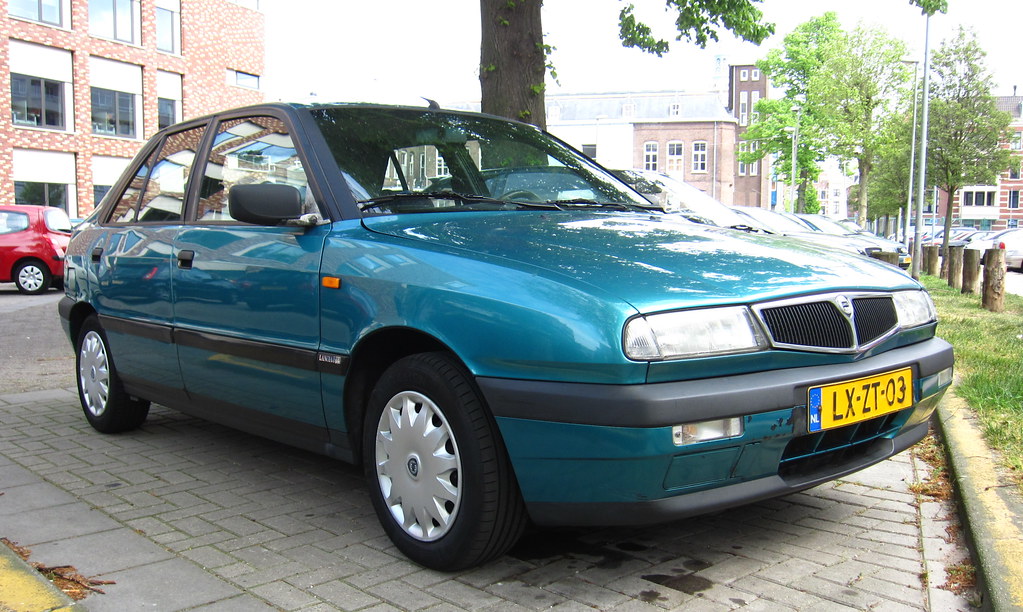
- Delta 836 1993–1999 · Hatchback · 52–142 kW (71–193 PS)
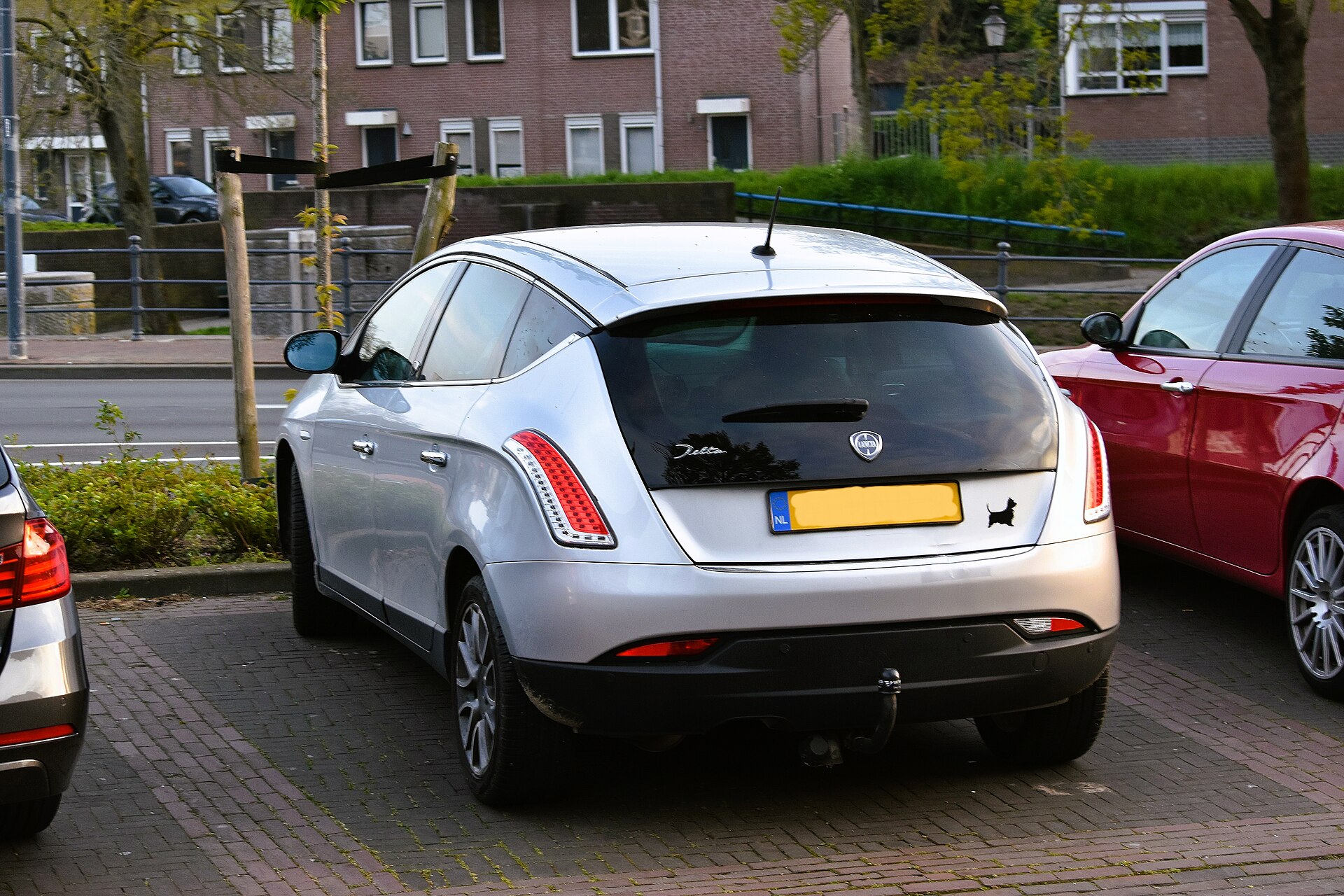
- Delta 844 2008–2014 · Hatchback · 77–147 kW (105–200 PS)
Newest first · 3 generations since 1979
-
2008
-
1993
-
1979
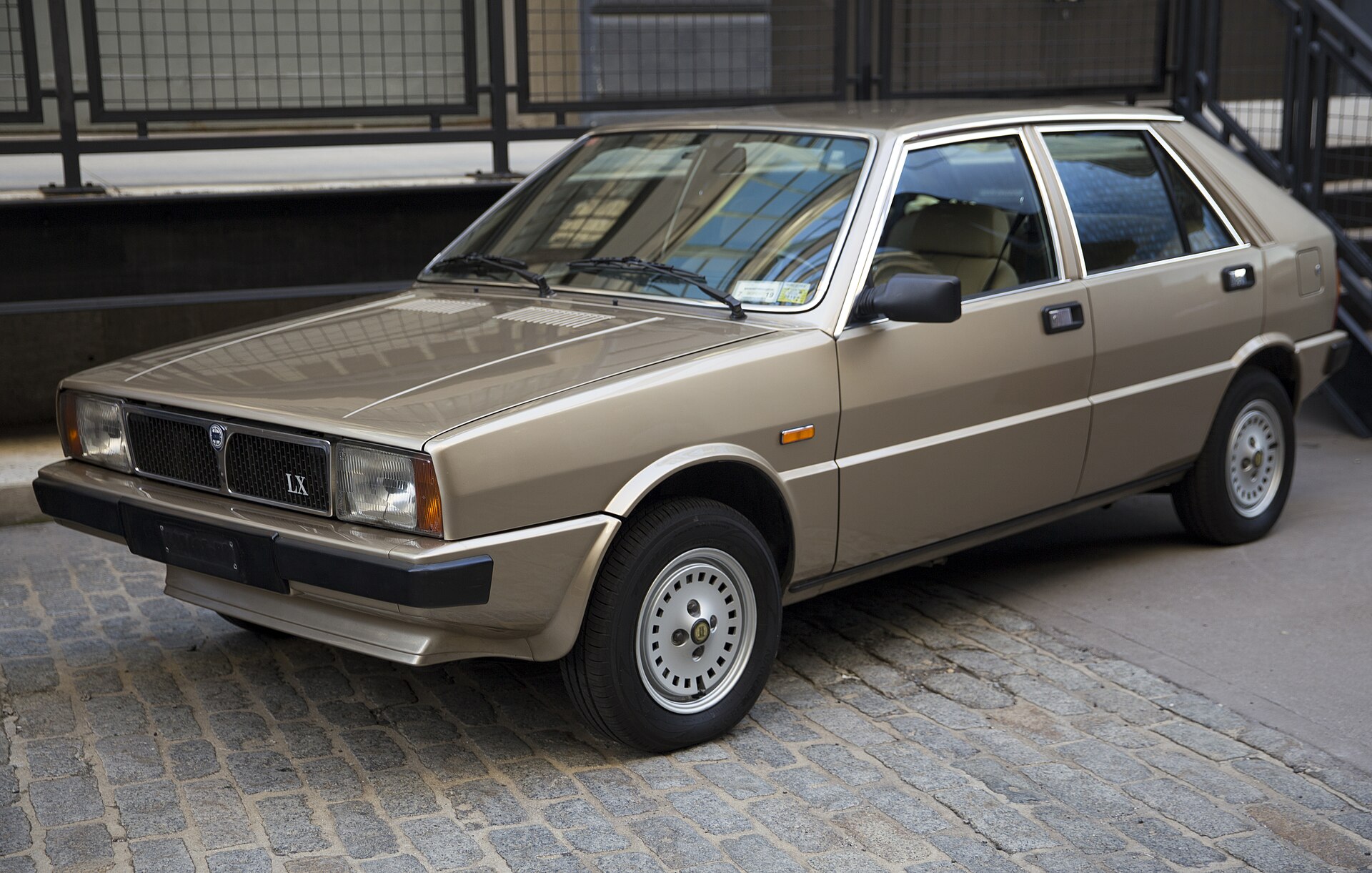
All generations by year: Delta 844 (2008–2014) · Delta 836 (1993–1999) · Delta 831 (1979–1994)
Which one is mine?
Pick the year of first registration to see which generation it is.
- 844 2008–2014
- 836 1993–1999
- 831 1979–1994
The Lancia Delta is a compact hatchback that Lancia built in three generations between 1979 and 2014. The first, designed by Giorgetto Giugiaro and shown at Frankfurt in September 1979, became European Car of the Year 1980. Its four-wheel-drive HF 4WD and HF Integrale versions won six consecutive World Rally Championship manufacturers' titles, from 1987 to 1992.
In short
- Generation 1 (1979–1994): five-door hatchback on Fiat Ritmo mechanicals; 478,645 built, including 44,296 Integrales.
- Rally record: six manufacturers' titles in a row and four drivers' titles for Juha Kankkunen and Miki Biasion.
- Generation 2 (1993–1999): "Nuova Delta" on the Fiat Tipo platform, front-wheel drive only.
- Generation 3 (2008–2014): larger hatchback on the Fiat Bravo platform; a new Delta is planned for late 2028.

Specs by version
Verified Manufacturer and type-approval data from our catalog · Sources and methodology
The Delta at a glance

| Fact | Value |
|---|---|
| Maker | Lancia (part of the Fiat group) |
| Production | 1979–1994 (first generation); 1993–1999; 2008–2014 |
| Designer (first generation) | Giorgetto Giugiaro, Italdesign |
| Body | Five-door hatchback; three-door HPE from 1995 |
| Purpose | Premium compact family car; later a rally homologation base |
| Awards | European Car of the Year 1980 |
| Rally titles | WRC manufacturers' champion 1987–1992 |
From Giugiaro sketch to 478,645 cars
Lancia wanted a premium compact car above the Fiat range, and Giugiaro's Italdesign drew a sharp, upright five-door hatchback. The Delta used a strengthened version of the Fiat Ritmo floorpan, with MacPherson strut suspension taken from the Lancia Beta. It was presented at the Frankfurt Motor Show in September 1979 and won European Car of the Year for 1980.

Sales started quickly: 43,000 cars in 1980, more than 100,000 by the end of 1981 and the 200,000th car on 9 March 1984. From 1980 to 1982 Saab also sold a rebadged version, the Saab-Lancia 600, in Scandinavia. Production of the regular front-wheel-drive versions wound down in the early 1990s, while the Integrale continued until 1994. In total, 478,645 first-generation Deltas were built.
| Year | Event |
|---|---|
| 1979 | Shown at Frankfurt in September; Giugiaro design |
| 1980 | European Car of the Year; 43,000 sold |
| 1983 | HF Turbo with 96 kW (130 PS) |
| 1985–1986 | Delta S4 competes in Group B rallying |
| 1986 | HF 4WD with a 2.0 turbo |
| 1987 | HF Integrale 8v; first manufacturers' title |
| 1989 | Integrale 16v |
| 1991 | Integrale Evoluzione |
| 1992 | Sixth consecutive manufacturers' title |
| 1993 | Evo 2; Nuova Delta launched |
| 1994 | First-generation production ends |
Ritmo underpinnings and the four-wheel-drive conversion
The Delta's body was a crisp two-box shape with a short bonnet and a large glass area, designed for good space in a compact length. The interior was trimmed to a higher standard than Fiat's, which suited Lancia's premium position. The front-wheel-drive layout, transverse engines and strut suspension were conventional. What made the car special was how well the basic structure accepted four-wheel drive and turbocharging later on.

The HF 4WD of 1986 added permanent four-wheel drive with a centre differential and a Torsen rear differential. The Integrale versions widened the track and added flared wheel arches to fit bigger wheels and brakes, giving the car its famous muscular stance.
Delta engines from 1.3 to Evo 2
| Version | Engine | Power | Drive |
|---|---|---|---|
| 1.3 | 1.3 petrol | 55 kW (75 PS), later 57 kW (78 PS) | Front |
| 1.5 | 1.5 petrol | 63 kW (85 PS) | Front |
| GT 1600 / GT i.e. | 1.6 petrol | 77–79 kW (105–108 PS) | Front |
| HF Turbo | 1.6 turbo petrol | 96 kW (130 PS), later 103 kW (140 PS) | Front |
| 1.9 TD | 1.9 turbodiesel | 59 kW (80 PS) | Front |
| HF 4WD | 2.0 turbo petrol | 121 kW (165 PS) | Four-wheel |
| HF Integrale 8v | 2.0 turbo petrol | 136 kW (185 PS) | Four-wheel |
| HF Integrale 16v | 2.0 turbo petrol | 147 kW (200 PS) | Four-wheel |
| Integrale Evoluzione | 2.0 turbo petrol | 154 kW (210 PS) | Four-wheel |
| Integrale Evo 2 | 2.0 turbo petrol | 158 kW (215 PS) | Four-wheel |
By our calculation the Evo 2 has almost three times the power of the original 1.3, from an engine only about 50 % larger.
Lancia Delta HF Integrale specifications

| Parameter | Metric | Imperial |
|---|---|---|
| Engine | 1,995 cc turbocharged four-cylinder | 121.7 cu in |
| Power (Evo 2, 1993) | 158 kW (215 PS) | 212 hp |
| Power (Integrale 8v, 1987) | 136 kW (185 PS) | 182 hp |
| Drive | Permanent four-wheel drive | - |
| Integrales built | 44,296 | - |
Saab-Lancia 600, S4, Nuova Delta and the 2008 car
| Variant | Years | Body / purpose | Engine | Notes |
|---|---|---|---|---|
| Delta (first generation) | 1979–1994 | Five-door hatchback | 1.3–1.6 petrol, 1.9 TD | European Car of the Year 1980 |
| Saab-Lancia 600 | 1980–1982 | Rebadged Delta for Scandinavia | 1.5 petrol, 63 kW | Sold by Saab dealers |
| Delta S4 | 1985–1986 | Group B rally car | Turbo and supercharged | Works rally car only |
| HF 4WD / Integrale | 1986–1994 | Rally homologation road car | 2.0 turbo | Six WRC manufacturers' titles |
| Nuova Delta | 1993–1999 | Five-door and HPE three-door | 1.4–2.0 petrol, 1.9 TD | About 139,000 built |
| Delta (third generation) | 2008–2014 | Larger five-door hatchback | 1.4–1.8 petrol, 1.6–2.0 diesel | Sold as a Chrysler in the UK and Ireland |
Ercole Spada at I.DE.A styled the second generation. It used the Fiat Tipo platform and stayed front-wheel drive, with up to 142 kW (193 PS) in the HF. The third, revealed at Geneva in 2008, used the Fiat Bravo platform with a 2,700 mm wheelbase and engines from 77 to 147 kW (105–200 PS), including a 1.9 twin-turbo diesel.

Six titles in a row: the rally years
The Delta's motorsport story began with the Delta S4, a mid-engined Group B car that raced from the 1985 RAC Rally until Group B was banned after the 1986 season. Lancia then turned to Group A with the road-based HF 4WD and Integrale. They dominated: six consecutive manufacturers' titles from 1987 to 1992, drivers' titles for Juha Kankkunen in 1987 and 1991 and Miki Biasion in 1988 and 1989, and 46 World Rally Championship wins.

The rally success is why the Integrale is remembered while the ordinary Delta has largely disappeared. Its rivals of the 1980s were the Volkswagen Golf, Ford Escort and Opel Kadett, as the old 1cars text noted. The full Golf story is on the Volkswagen Golf page, and the four-wheel-drive pioneer that changed rallying before the Delta is the Audi Quattro.
How the Integrale compared with its rally rivals
In Group A the Integrale faced cars built on the same idea: a road-going four-wheel-drive turbo hatchback or coupé sold in enough numbers to qualify. Toyota's Celica GT-Four was the strongest rival and gave Carlos Sainz the drivers' titles of 1990 and 1992, but Lancia still won the manufacturers' title in both years. Ford's Sierra RS Cosworth 4x4 and Mitsubishi's Galant VR-4 won rallies without matching the Delta's consistency. Toyota finally took the manufacturers' crown in 1993, after Lancia had scaled back its official involvement.

Compared with these rivals, the Delta was smaller, shorter and older in design, which helped on narrow stages. Its success also shows how much a homologation special can lift a brand: the Integrale accounts for under 10 % of first-generation Delta production, by our count, yet it defines the car's reputation. Modern hot hatchbacks with similar power are listed in the ranking of the quickest hatchbacks.
Buying and collecting a Delta today
The car to own is the HF Integrale, preferably a 16v or an Evoluzione with full history. Values have risen strongly, so originality and documentation matter more than mileage. Typical problems are rust in the sills, floor and tailgate, worn four-wheel-drive components, turbo and cooling issues, and hard-to-find interior and body trim. Expect specialist servicing and budget for parts imported from Italy.

The regular 1.3–1.6 Deltas are cheap but rare, because most were scrapped. The Nuova Delta HF is an affordable curiosity, and the 2008–2014 Delta is simply a stylish used family car with Fiat running gear. To compare classic hatchbacks, use the 1cars comparison tool and browse the 1980s classics section. More on the brand is in the history of Lancia, and its earlier rally icon is the Lancia Stratos.
Lancia Delta evolution in numbers
Did you know?
- The Lancia Delta ran for 35 years, from 1979 to 2014, over 3 generations in our catalog.
- The longest-running generation is the Delta 831 (1979–1994): 15 years.
- The most powerful Lancia Delta is not the newest: the Delta 831 (1979–1994) offered up to 158 kW (215 PS), the Delta 844 up to 147 kW (200 PS).
Most powerful version, kW
Figures from the 1cars catalog: power is the strongest version of each generation; generations without the figure are left out.
Lancia Delta: first vs latest generation
| Spec | Delta 831 | Delta 844 | Change |
|---|---|---|---|
| Years | 1979–1994 | 2008–2014 | 29 years apart |
| Most powerful version | 158 kW (215 PS) | 147 kW (200 PS) | −11 kW (−7%) |
Oldest and newest generation in the 1cars catalog. Power is the strongest version of each; other rows are shown only when both generations have the figure.
Image credits · Photos from Wikimedia Commons under free licences
- Lancia Delta 831 · Photo: Mr.choppers / Wikimedia Commons, CC BY-SA 3.0
- Lancia Delta 836 · Photo: rvandermaar / Flickr, CC BY 2.0
- Lancia Delta 844 · Photo: Charles from Port Chester, New York / Wikimedia Commons, CC BY 2.0
Lancia Delta in our rankings
- No. 42 of 156 · Most powerful hatchbacks (158 kW · top 27%)
- No. 305 of 1172 · Longest-running car nameplates (15 years · top 28%)
- No. 70 of 195 · Most powerful diesel cars (140 kW · top 39%)
- No. 77 of 149 · Most powerful cars of the 1970s (147 kW · top 53%)
- No. 698 of 1111 · Most powerful cars (158 kW · top 64%)
- No. 117 of 155 · Most powerful Italian cars (158 kW · top 77%)
More powerful than 73% of ranked hatchbacks in the 1CARS catalog (No. 42 of 156).
Lancia Delta photos 11


Lancia Delta videos 3

Lancia Delta video 1

Test drive

Video overview
FAQ
How many world rally titles did the Lancia Delta win?
Lancia took the WRC manufacturers' crown six years running, from 1987 to 1992, with the HF 4WD and HF Integrale. Juha Kankkunen (1987, 1991) and Miki Biasion (1988, 1989) took four drivers' titles in the car.
How many Lancia Delta Integrales were made?
Lancia built 44,296 Delta Integrales of all versions, from the 1987 8v to the 1993 Evo 2. Including the regular front-wheel-drive models, the first-generation Delta reached 478,645 cars between 1979 and 1994.
What engine does the Lancia Delta Integrale have?
All Integrales use a 2.0-litre (1,995 cc) turbocharged four-cylinder engine with four-wheel drive. Power rose from 136 kW (185 PS) in the 1987 8v to 158 kW (215 PS) in the 1993 Evo 2.
Who designed the Lancia Delta?
Giorgetto Giugiaro of Italdesign designed the first Delta, presented at the Frankfurt Motor Show in 1979. The second generation was styled by Ercole Spada at I.DE.A.
Is Lancia making a new Delta?
Yes. A fourth-generation Delta is planned, with production expected in late 2028 at the Cassino plant in Italy. It is set to offer hybrid and fully electric versions.
Data sources
Data checked by an editor against the sources below.
- The text of this article (1cars archive)
- Wikipedia - Lancia Delta


