 Oldsmobile 442 Hurst
All generations, specs and history
Updated Published Sources (4) Report an error
By Sarah Whitmore, Senior Automotive Writer Reviewed by Oleksandr Hnatiuk

- Built
- 1968–1984
- Generations
- 4
- Top power
- 291 kW (396 PS)
Timeline
442 Hurst generations
Click a generation for its own page
- Hurst/Olds 4-4-2 1968–1969 · Coupe · 283–291 kW (385–396 PS)
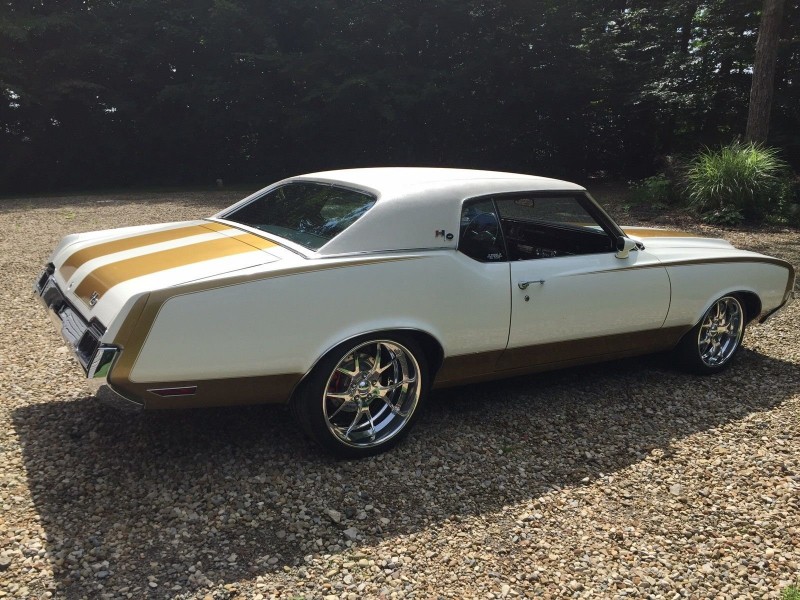
- Hurst/Olds Cutlass 1972–1975 · Coupe, Convertible · 134–224 kW (182–305 PS)
- Hurst/Olds Calais 1979 · Coupe
- Hurst/Olds Anniversary 1983–1984 · Coupe
Newest first · 4 generations since 1968
- 1983 Hurst/Olds Anniversary 1983–1984 · Coupe
- 1979 Hurst/Olds Calais 1979 · Coupe
-
1972
-
1968


All generations by year: Hurst/Olds Anniversary (1983–1984) · Hurst/Olds Calais (1979) · Hurst/Olds Cutlass (1972–1975) · Hurst/Olds 4-4-2 (1968–1969)
Which one is mine?
Pick the year of first registration to see which generation it is.
- Hurst/Olds Anniversary 1983–1984
- Hurst/Olds Calais 1979
- Hurst/Olds Cutlass 1972–1975
- Hurst/Olds 4-4-2 1968–1969
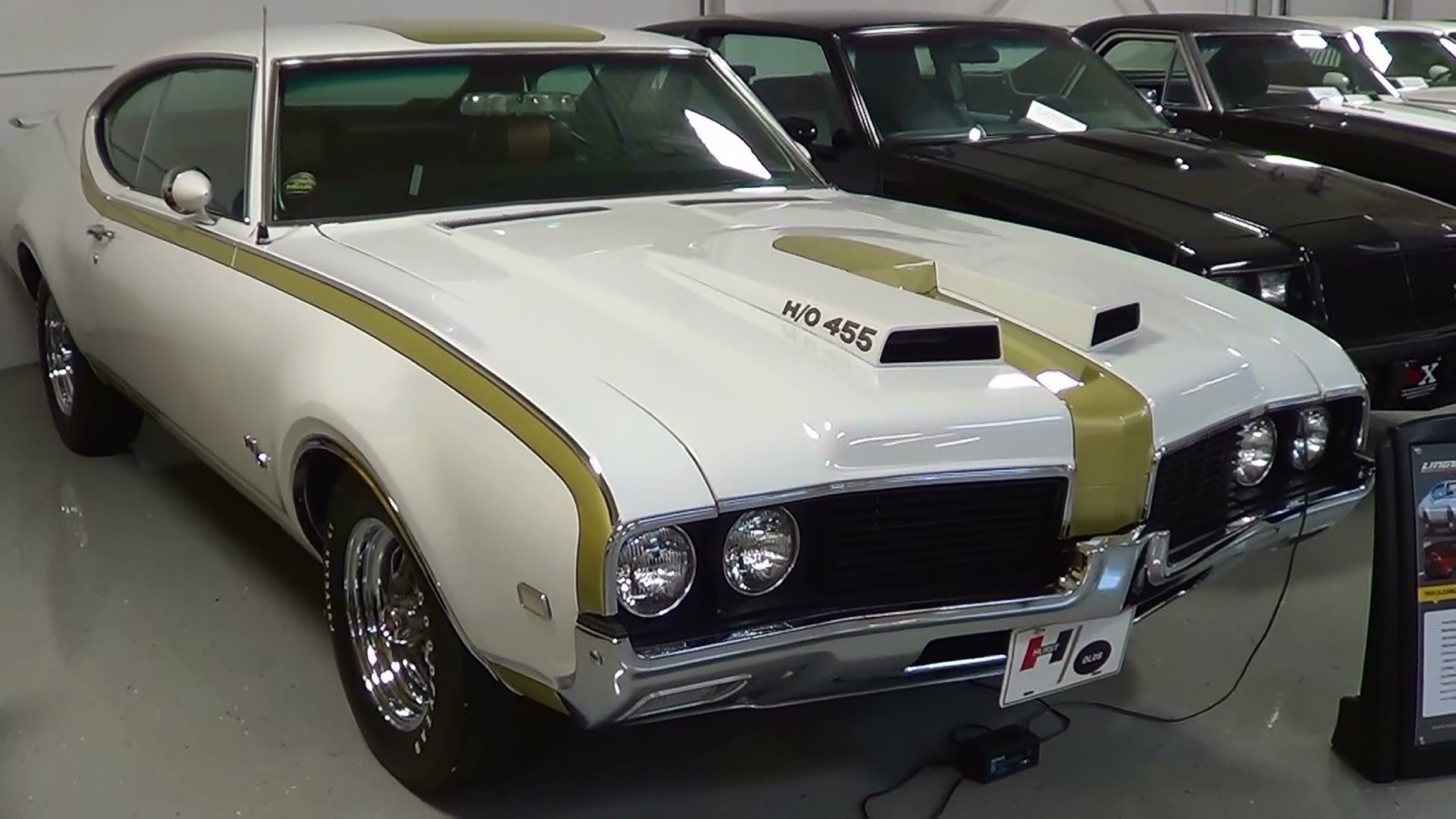
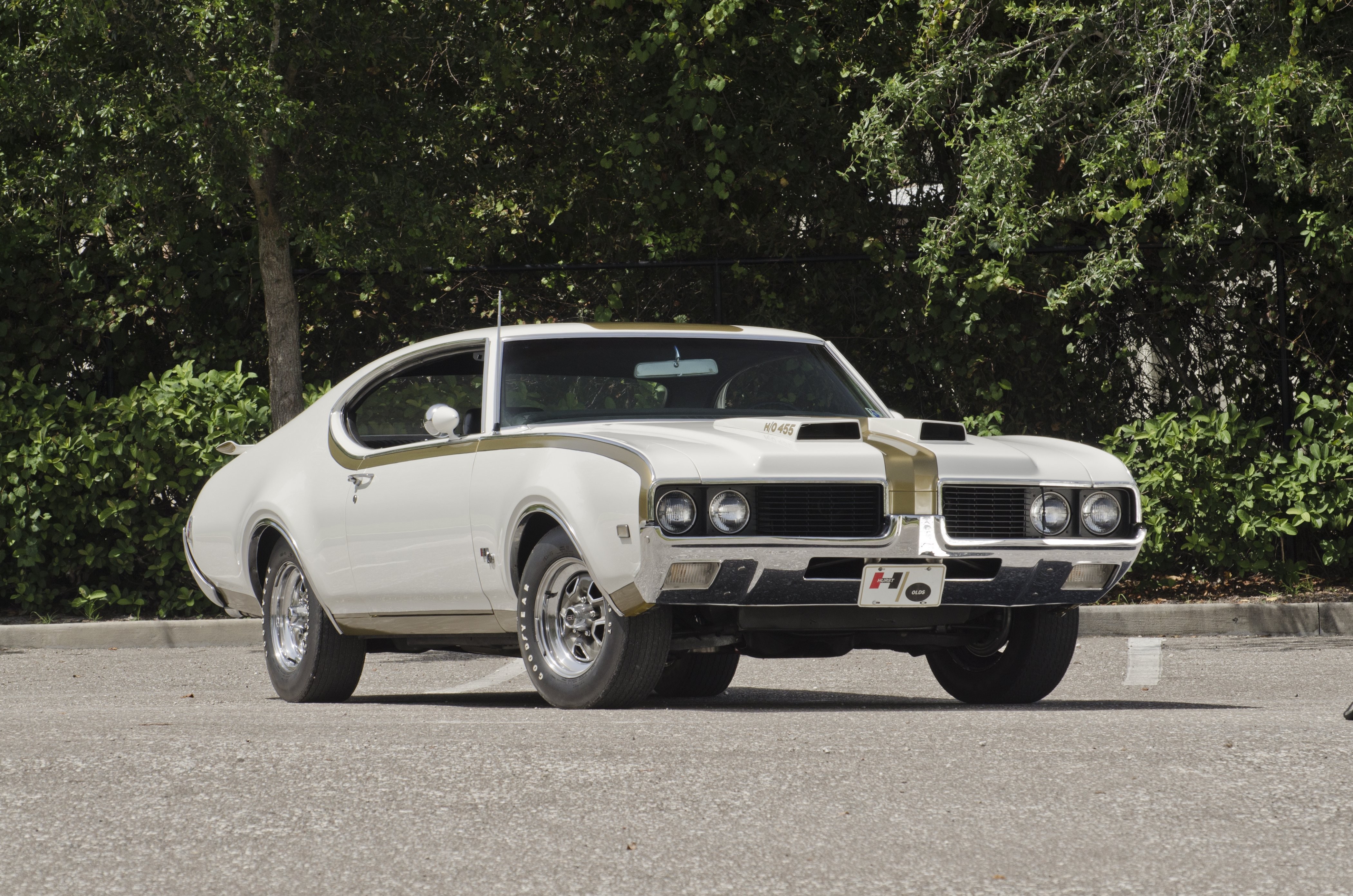
The Hurst/Olds is a limited-edition Oldsmobile muscle car built with the shifter specialist Hurst Performance, based on the Cutlass and 4-4-2. The first, in 1968, used a 455 cu in (7.5-litre) V8 rated at 291 kW (390 hp) gross, larger than GM then allowed in its mid-size cars; only 515 were built. Later editions followed in 1969, 1972–1975, 1979 and 1983–1984.
In short
- The 4-4-2 began in 1964 as an option named after its four-barrel carburettor, four-speed manual and dual exhausts; it was a separate model from 1968 to 1971.
- 1968 Hurst/Olds: 515 cars (459 Holiday Coupés, 56 Sport Coupés); 1969: 906 coupés plus six prototypes and two convertibles, with 283 kW (380 hp).
- 1972: the Hurst/Olds convertible paced the Indianapolis 500; 1979: 2,499 cars with a 5.7-litre V8.
- 1983 and 1984: anniversary editions with a high-output 307 V8 and the three-lever Hurst "Lightning Rods" shifter.
Specs by version
Engines
Dimensions and weight
Show all 1 versions
| Version | Kerb weight |
|---|---|
| Hurst/Olds 4-4-2 · 6.6 257 kW (349 PS) Coupe | 1,600 kg3,527 lb |
Verified Manufacturer and type-approval data from our catalog · Sources and methodology
Oldsmobile 4-4-2 and Hurst/Olds at a glance
Oldsmobile, General Motors' engineering-led division, answered the 1964 Pontiac GTO with the 4-4-2 package for the Cutlass. The name first meant a four-barrel carburettor, a four-speed manual gearbox and two exhausts; from 1965 Oldsmobile redefined it as 400 cubic inches, four-barrel and two exhausts. Hurst, founded in 1958 by George Hurst and Bill Campbell in Pennsylvania and famous for its gear shifters, then worked with Oldsmobile on the most powerful versions. The brand's own story is in Oldsmobile's history.

| Fact | Value |
|---|---|
| Maker | Oldsmobile (General Motors), with Hurst Performance |
| 4-4-2 | Option 1964–1967 and 1972 onwards; separate model 1968–1971 |
| Hurst/Olds editions | 1968, 1969, 1972–1975, 1979, 1983, 1984 |
| Body | Two-door coupé, hardtop, convertible (selected years) |
| Layout | Front engine, rear-wheel drive |
| Largest engine | 455 cu in (7.5 l) Rocket V8 |
The 4-4-2 years (1964–1971)
| Year | Engine | Power (gross) | Notes |
|---|---|---|---|
| 1964 | 330 cu in (5.4 l) V8 | 231 kW (310 hp) | 2,999 built; option on the Cutlass |
| 1965 | 400 cu in (6.6 l) V8 | 257 kW (345 hp) | 25,003 built |
| 1966 | 400 V8, L69 tri-carb | 261–268 kW (350–360 hp) | 21,997 built; W-30 introduced |
| 1967 | 400 V8 | 261 kW (350 hp) | 24,833 built |
| 1968 | 400 V8 / W-30 | 261–268 kW (350–360 hp) | Separate model; over 33,000 built |
| 1970 | 455 cu in (7.5 l) V8 | 272 kW (365 hp); W-30 276 kW (370 hp) | Peak muscle-car year |
| 1971 | 455 V8 | 254 kW (340 hp); W-30 261 kW (350 hp) | Lower compression |
The W-30 option, from 1966, added outside-air induction and a hotter camshaft. According to the old 1cars text, early cars weighed about 1,600 kg and reached 100 km/h in about 7.5 seconds, and a 400-engined convertible ran the quarter mile in about 14 seconds. For the 1964 model year the 4-4-2 package cost only a small extra over the Cutlass coupé or hardtop.

1968 and 1969: the first Hurst/Olds
In 1968 GM still limited its mid-size cars to 400 cubic inches. Hurst got around the rule by fitting Oldsmobile's 455 cu in V8 from the large Toronado and Delta 88 range to the 4-4-2 body, producing a 291 kW (390 hp) gross muscle car. Production reached 515: 459 Holiday Coupés and 56 Sport Coupés. The 1969 car was rated at 283 kW (380 hp), and 906 Holiday Coupés were built, plus six prototypes and two convertibles. These two years are the most valuable Hurst/Olds models today.
1972 to 1984: pace cars and Lightning Rods
The Hurst/Olds returned for 1972 on the Cutlass Supreme hardtop and convertible, with both versions of the 455 Rocket V8 from the 4-4-2, a Turbo Hydra-Matic 400 automatic and the Hurst Dual/Gate shifter, which lets the driver lock out gears for manual changes. The convertible was the official pace car of the 1972 Indianapolis 500, and dealers sold replicas.

| Edition | Base car | Engine | Production | Notes |
|---|---|---|---|---|
| 1968 | 4-4-2 | 455 V8, 291 kW (390 hp) | 515 | First Hurst/Olds |
| 1969 | 4-4-2 | 455 V8, 283 kW (380 hp) | 906 + 8 | Plus prototypes and convertibles |
| 1972 | Cutlass Supreme | 455 V8 | – | Indy 500 pace car |
| 1979 | Cutlass Calais | 5.7 l (350) L34 V8 | 2,499 | White or black with gold |
| 1983 | Cutlass Calais | 307 V8 high output | – | 15th anniversary, black over silver, Lightning Rods |
| 1984 | Cutlass Calais | 307 V8 high output | – | Silver over black |
The 1979 car was based on the Cutlass Calais coupé, finished in white or black with gold trim, and used the 5.7-litre L34 V8 with a three-speed automatic and the Dual/Gate shifter. The 1983 15th-anniversary edition, black over silver with chrome wheels and red striping, had a high-output 307 V8 with a four-barrel carburettor and dual exhausts. Its party trick was the Hurst "Lightning Rods": three chrome levers in the console that let the driver change up through the gears of the automatic, intended to make straight-line acceleration simpler. The 1984 edition reversed the colours to silver over black. The levers became so attractive to thieves that many cars lost them.
After the Hurst/Olds
In 1985 the concept continued as the W42 4-4-2 package on the Cutlass Supreme, with a high-output 5.0-litre V8, two-tone paint and gold-trim wheels, built until 1987. A final 442 appeared on the front-wheel-drive Cutlass Calais in 1990–1991 with the 2.3-litre Quad 4 four-cylinder engine. Oldsmobile itself closed in 2004. The related Cutlass Rallye 350 of 1970 shows the lighter side of the family.

Rivals: GM muscle cars of 1968–1970
| Model | Engine | Power (gross) |
|---|---|---|
| Hurst/Olds (1968) | 455 V8 | 291 kW (390 hp) |
| Pontiac GTO | 400 V8 | up to 273 kW (366 hp) |
| Chevrolet Chevelle SS 396 | 396 V8 | up to 280 kW (375 hp) |
| Buick GS 400 | 400 V8 | about 254 kW (340 hp) |
Compared with the 1968 GTO's strongest engine, the Hurst/Olds had about 18 kW more and far more torque from its larger V8. Line up the classics in the 1cars comparison tool or browse the best classic cars of the 1960s.

Collecting a Hurst/Olds today
The 1968 and 1969 cars are the most collectable and the easiest to fake, because a Cutlass or 4-4-2 can be dressed up as a Hurst/Olds. Buyers should check the documentation, the engine and body codes, the correct 455 engine and the Hurst shifter. Later 1979 and 1983–1984 editions are cheaper entry points; on the 1983–1984 cars, an original set of Lightning Rods adds value. More models are in the Oldsmobile catalogue.

Oldsmobile 442 Hurst evolution in numbers
Did you know?
- The Oldsmobile 442 Hurst ran for 16 years, from 1968 to 1984, over 4 generations in our catalog.
- The longest-running generation is the Hurst/Olds Cutlass (1972–1975): 3 years.
Oldsmobile 442 Hurst in our rankings
- No. 64 of 733 · Biggest engines: cars (6,600 cc · top 9%)
- No. 20 of 144 · Most powerful cars of the 1960s (291 kW · top 15%)
- No. 48 of 230 · Biggest engines: coupes (6,600 cc · top 21%)
- No. 107 of 452 · Power-to-weight: cars (161 kW/t · top 24%)
- No. 281 of 1182 · Longest-running car nameplates (16 years · top 26%)
- No. 354 of 1121 · Most powerful cars (291 kW · top 32%)
Bigger engine than 91% of ranked cars in the 1CARS catalog (No. 64 of 733).
Oldsmobile 442 Hurst photos 14




Oldsmobile 442 Hurst videos 2

Oldsmobile 442 Hurst video 1

Video overview
FAQ
What does 442 mean on an Oldsmobile?
In 1964 the name stood for a four-barrel carburettor, a four-speed manual gearbox and dual exhausts. From 1965 Oldsmobile redefined it as a 400 cubic inch engine, a four-barrel carburettor and two exhausts.
How many 1968 Hurst/Olds were made?
Oldsmobile and Hurst built 515 Hurst/Olds cars in 1968: 459 Holiday Coupés and 56 Sport Coupés. In 1969 production rose to 906 Holiday Coupés, plus six prototypes and two convertibles.
What engine does the Hurst/Olds have?
The 1968 and 1969 cars used the 455 cubic inch (7.5-litre) Rocket V8, rated at 291 kW (390 hp) and 283 kW (380 hp) gross. The 1979 car had a 5.7-litre V8, and the 1983–1984 editions a high-output 307 V8.
What are the Hurst Lightning Rods?
They are three chrome levers mounted in the console of the 1983 and 1984 Hurst/Olds. They let the driver select each gear of the automatic separately, a way to make straight-line acceleration simpler and more involving.
Was the Hurst/Olds an Indianapolis 500 pace car?
Yes. The 1972 Hurst/Olds convertible, based on the Cutlass Supreme with a 455 V8, was the official pace car of the 1972 Indianapolis 500, and Oldsmobile dealers sold replica versions.
Data sources
Data checked by an editor against the sources below.
- The text of this article (1cars archive)
- Wikipedia - Oldsmobile Cutlass Supreme
- Wikipedia - Oldsmobile 442
- Wikipedia - Olds