Saab 92: How an Aircraft Maker Built Its First Car
The Saab 92 was the first Saab car, built in Trollhättan from 12 December 1949. Saab, an aircraft maker founded in 1937, started the project in 1945 when wartime orders dried up. The 92 had front-wheel drive, a 764 cc two-stroke twin and a body with a drag coefficient of about 0.30. In all, 20,128 were made.

Key takeaways
- Project 92 began in 1945 with 16 engineers; only two of them had a driving licence.
- The Ursaab prototype, number 92001, was shown to the press on 10 June 1947.
- Production 92: 19 kW (25 hp), three-speed gearbox, 105 km/h, every early car painted green.
- The 92B of 1953 added an opening boot lid; the Saab 93 replaced the 92 from December 1955.

This page is about the first Saab car. The full company story, from the 92 to the 2011 bankruptcy, is in our Saab history.
Saab 92 key facts

| Fact | Value |
|---|---|
| Maker | Saab, aircraft company founded in 1937 |
| Project start | 1945, internal name X9248, later Project 92 |
| Prototype | Ursaab (92001), shown 10 June 1947 |
| Production | 12 December 1949 to 1957, Trollhättan |
| Designer | Sixten Sason (body), Gunnar Ljungström (engineering) |
| Engine | 764 cc two-cylinder two-stroke, transverse, water-cooled |
| Power | 19 kW (25 hp); 21 kW (28 hp) from 1954 |
| Top speed | 105 km/h |
| Drag coefficient | about 0.30 |
| Built | 20,128 |
Why an aircraft maker turned to cars
Saab was founded in 1937 to build military aircraft for Sweden. In 1945 the Second World War ended and demand for warplanes fell sharply. The company needed new work for its factories and staff. According to Saab Planet and the old 1cars text, the managers looked at kitchen appliances, prefabricated houses and light commercial vehicles. They chose a small car.

The timing made sense. Sweden had few car makers of its own, and the old 1cars text notes that Volvo's cars were too expensive for many families. A cheap, tough small car could sell well in a country of long winters and gravel roads. The new car took the next project number after the Saab 91 Safir trainer aircraft, so it became Project 92.
Project 92: sixteen engineers and a borrowed engine
Gunnar Ljungström led the engineering team. Its 16 members came from aircraft work and had never built a car. Only two of them held a driving licence.

The engineers studied the pre-war DKW F8, a small German car with front-wheel drive and a two-stroke engine. Both ideas suited the Swedish brief. Front-wheel drive removed the propeller shaft and helped traction on snow. A two-stroke engine had fewer parts, and it was easy to start in the cold because its oil was mixed into the fuel. The first prototype used a borrowed DKW twin of about 13 kW (18 hp) and a DKW gearbox. Ljungström's own engine and gearbox replaced them later.
The body showed the team's aircraft background. It was a monocoque, a self-supporting shell with no separate chassis. The prototype panels were 1.2 mm steel sheets shaped by hand over a wooden jig. To keep the shell stiff, the rear window was small and split, and there was no boot lid.
Sixten Sason and the Ursaab shape
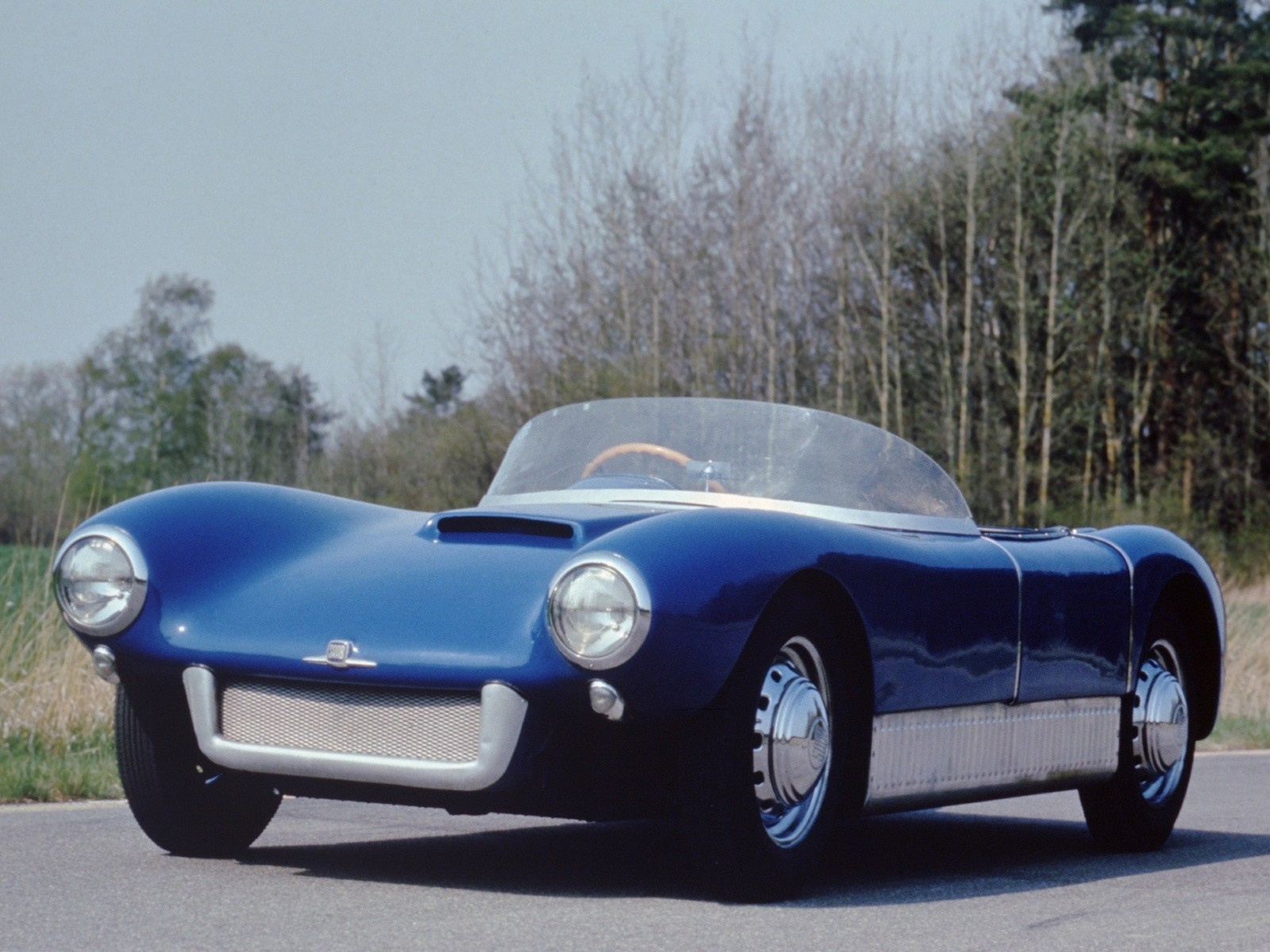
Sixten Sason was an industrial designer and a former military pilot. He drew the first sketches in 1946. The shape looked like a wingless aircraft fuselage: a smooth roof, curved sides and wheels hidden under wide arches.

A 1:10 model reached a drag coefficient of 0.32 in Saab's wind tunnel, and the production car is quoted at 0.30. Those are very low figures for a small car of the 1940s. The first prototype, 92001, became known as the Ursaab, "the original Saab". Four prototypes, numbered 92001 to 92004, came before production. Saab showed the Ursaab to the press at its headquarters on 10 June 1947. It survives today in the Saab Car Museum in Trollhättan.
According to the old 1cars text, the leading Swedish car dealer Philipsons asked for 8,000 cars and paid in advance. Saab Planet writes that orders at one point passed 30,000. Either way, demand was far ahead of what the small factory could build.
From prototype to production
Production began on 12 December 1949. Compared with the prototype, the production car got a new front with a different grille and headlights. The old 1cars text says the wheel cut-outs were opened up after winter tests in which snow packed into the enclosed arches. The body was stamped from a single large sheet of steel, then cut for the doors and windows.
| Year | Saab 92 change |
|---|---|
| 1949 | production starts on 12 December, Deluxe version only |
| 1950 | first full year; 700 cars of the 1950 model, all dark green |
| 1951 | VDO instruments replace the US-made Stewart-Warner gauges |
| 1953 | 92B: larger rear window, opening boot lid, grey, blue-grey and black paint added |
| 1954 | Solex carburettor and new ignition coil: 21 kW (28 hp) |
| 1955 | electric fuel pump, square tail lights; Saab 93 introduced in December |
Saab Planet counts about 1,400 cars built by the end of calendar 1950. The difference from the 700 above comes from counting model years and calendar years.
Engineering: two strokes, three gears and a freewheel
The production engine was a transverse, water-cooled two-cylinder two-stroke of 764 cc. It gave 19 kW (25 hp). Cooling worked by thermosiphon, without a water pump, according to the old 1cars text. The gearbox had three speeds, and first gear had no synchromesh.

A freewheel was fitted for a reason particular to two-strokes. The engine was lubricated only by oil mixed into the fuel. When the driver lifted off downhill, the engine received almost no fuel and so almost no oil. The freewheel let the car coast with the engine at idle, which protected it. Torsion bars sprang all four wheels.
With a kerb weight under 800 kg in the old 1cars text, the 92 had about 24 kW per tonne by our calculation. That is modest, yet the car's low drag let it hold 105 km/h. You can compare the figure with modern cars in our power-to-weight calculator, and the power converter turns old hp ratings into kW.
Rally wins that built a reputation
Saab used motorsport to prove the car. Two weeks after the 92 went on sale, Saab's chief engineer Rolf Mellde finished second in his class in the Swedish Rally. In 1952 Greta Molander won the Coupe des Dames, the ladies' award, at the Monte Carlo Rally. Her 92 had been tuned to 26 kW (35 hp).
These results set a pattern. Saab's later two-stroke cars, especially the Saab 96, became strong rally cars, and the brand kept its image of tough front-wheel-drive cars for decades.
What the 92 started
The 92 shaped every Saab that followed. The 93 of December 1955 took a three-cylinder two-stroke engine. The Saab 96, which kept the 92's basic shape, stayed in production until 1980. Front-wheel drive, a strong body and aircraft-style thinking remained Saab trademarks up to the Saab 9-3.

| Model | Years | Link to the 92 |
|---|---|---|
| 92 / 92B | 1949–1957 | the original |
| Saab 93 | 1955–1960 | same body idea, three-cylinder engine |
| Saab 96 | 1960–1980 | larger rear window and boot, later a V4 engine |
Buying a Saab 92 today: our view for collectors
Our view: a Saab 92 suits a collector who wants an important car rather than a fast one. It is the first car of a well-known brand, its design story is well documented, and with 20,128 built it is rare but not unobtainable.

- Most sought after, in our view: early green 1950 cars, because the first year had one colour and the smallest output.
- Easiest to use: a late 92B with the 21 kW engine and the opening boot lid.
- Check first: rust in the self-supporting body, the condition of the two-stroke engine, and correct oil-and-petrol mixing in use.
More Swedish cars are in our Swedish cars list, and the rival from Gothenburg is covered in the history of Volvo. Later Saab models are in the Saab catalogue.
FAQ
What was the first Saab car?
The Saab 92, built in Trollhättan from 12 December 1949. Its prototype, the Ursaab (92001), was shown to the press on 10 June 1947. The 92 had a 764 cc two-stroke engine, front-wheel drive and a very low-drag body.
Why did Saab start making cars?
Saab was an aircraft maker, and military orders fell after the Second World War. To keep its factories busy, it looked at several products and chose a small car. The project began in 1945 and took the number 92, after the Saab 91 Safir aircraft.
Who designed the Saab 92?
Sixten Sason, an industrial designer and former military pilot, designed the body. Gunnar Ljungström led the engineering team of 16 people. The shape reached a drag coefficient of about 0.30, which was very low for the period.
How many Saab 92s were built?
Saab built 20,128 cars of the 92 and 92B between December 1949 and 1957. The first model year was small: 700 cars of the 1950 model, all painted dark green.
What engine did the Saab 92 have?
A transverse, water-cooled, two-cylinder two-stroke engine of 764 cc, based on a DKW design. It gave 19 kW (25 hp), rising to 21 kW (28 hp) in 1954. It drove the front wheels through a three-speed gearbox with a freewheel.
Photos (1)