Archive first published
Five Good Reasons to Buy a Mitsubishi ASX, New or Used
The main reasons to buy a Mitsubishi ASX are its compact size, simple engineering and, in the new model, hybrid power. The 2010–2023 first generation offers optional four-wheel drive and durable petrol engines, while the 2023 second generation adds hybrid power and a five-year warranty. It is less suitable for buyers who want a large boot, a modern cabin in an older car, or four-wheel drive in a new one.
Key takeaways
- Size: about 4.3 m long but with the 2,670 mm wheelbase of the larger Outlander.
- Grip: the first generation could be ordered with selectable 4WD and has about 195 mm of ground clearance.
- Safety: five ANCAP stars for the first generation; good occupant scores for the second.
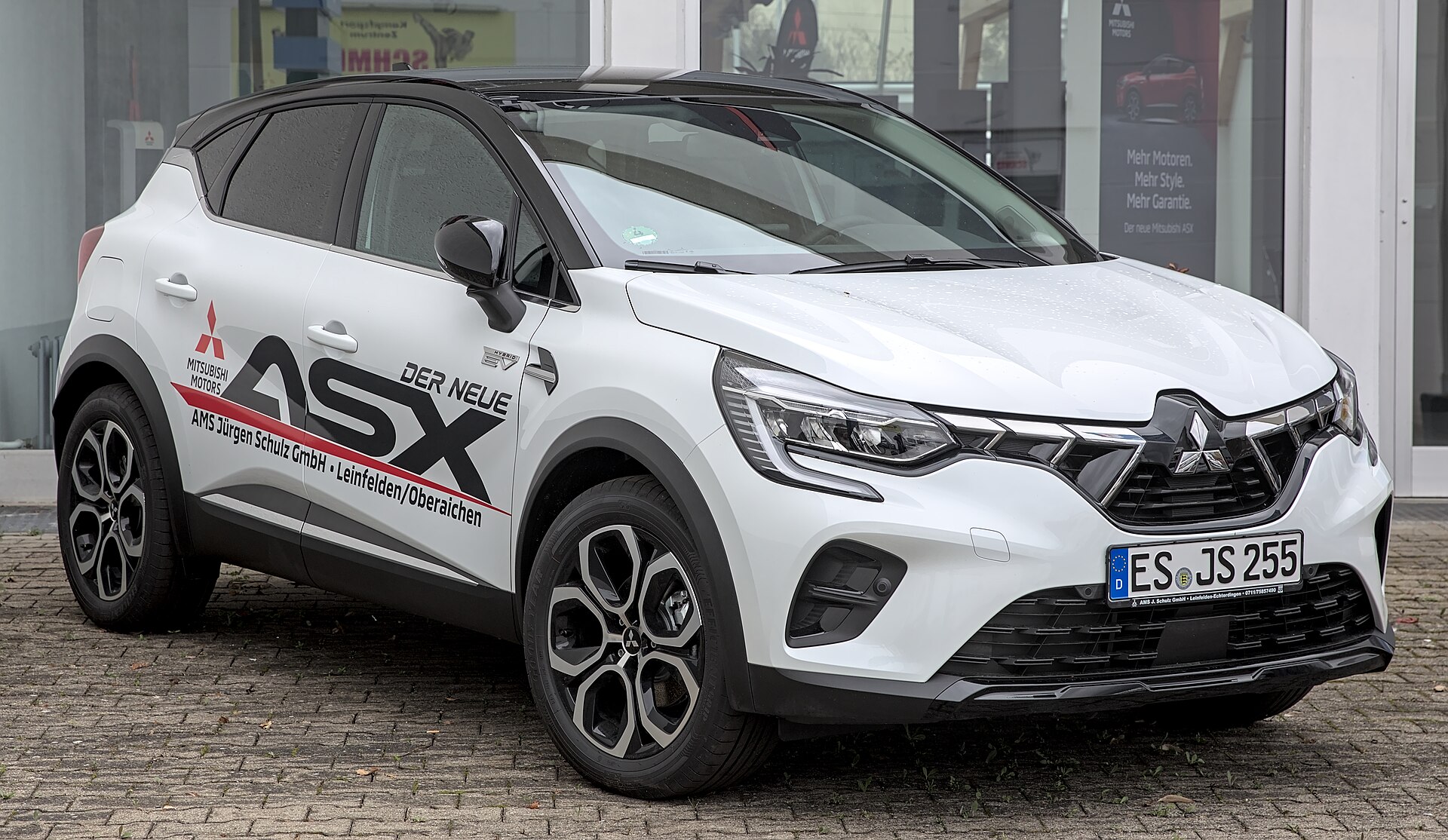
- New car: the Captur-based ASX since 2023 brings mild-hybrid, full-hybrid and plug-in hybrid versions.

How we picked these reasons
This page is a buying guide, not a full model history. The engines, facelifts and dimensions of every version are covered in our main Mitsubishi ASX page. Here we looked at what the ASX does better than most rivals, using official data, crash test results and sales figures, and at the points where it falls short. We cover both generations, because "new" now means the second-generation car, while most ASX buyers choose a used first-generation model.
Size at a glance
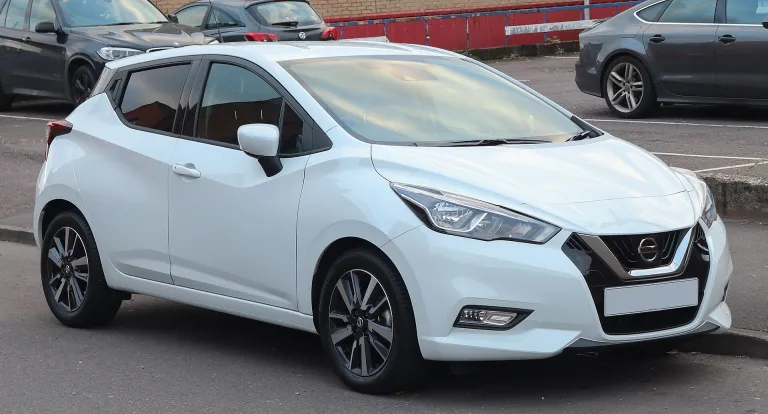
Nissan Qashqai J11
The Mitsubishi ASX I is 82 mm shorter, 36 mm narrower and 30 mm taller than the Nissan Qashqai J11.
| Dimensions | Mitsubishi ASX I | Nissan Qashqai J11 | Difference |
|---|---|---|---|
| Length | 4,295 mm169.1 in | 4,377 mm172.3 in | −82 mm−3.2 in |
| Width | 1,770 mm69.7 in | 1,806 mm71.1 in | −36 mm−1.4 in |
| Height | 1,625 mm64.0 in | 1,595 mm62.8 in | +30 mm+1.2 in |
| Wheelbase | 2,670 mm105.1 in | 2,646 mm104.2 in | +24 mm+0.9 in |
| Boot | 415 L14.7 cu ft | 430 L15.2 cu ft | −15 L−0.5 cu ft |
Opel Mokka
The Mitsubishi ASX I is 17 mm longer, 7 mm narrower and 21 mm lower than the Opel Mokka.
| Dimensions | Mitsubishi ASX I | Opel Mokka | Difference |
|---|---|---|---|
| Length | 4,295 mm169.1 in | 4,278 mm168.4 in | +17 mm+0.7 in |
| Width | 1,770 mm69.7 in | 1,777 mm70.0 in | −7 mm−0.3 in |
| Height | 1,625 mm64.0 in | 1,646 mm64.8 in | −21 mm−0.8 in |
| Wheelbase | 2,670 mm105.1 in | 2,555 mm100.6 in | +115 mm+4.5 in |
| Boot | 415 L14.7 cu ft | 356 L12.6 cu ft | +59 L+2.1 cu ft |
| # | Version | Years | Engine | Power (kW / PS) | Why it is on the list |
|---|---|---|---|---|---|
| 1 | ASX 1.6 MIVEC 2WD | 2010–2023 | 1.6 petrol | 86 kW (117 PS) | cheapest, simplest town car |
| 2 | ASX 2.0 MIVEC 4WD | 2010–2023 | 2.0 petrol, CVT | 110 kW (150 PS) | selectable four-wheel drive |
| 3 | ASX diesel 4WD (1.8 DI-D, later 1.6) | from 2010, market-dependent | turbo diesel | varies by market | economy with 4WD |
| 4 | ASX II 1.3 mild hybrid | 2023– | 1.3 turbo petrol | up to 116 kW (158 PS) | modern cabin, warranty |
| 5 | ASX II full hybrid | 2023– | 1.6 hybrid | 105 kW (143 PS) | lowest fuel use in town |
1. Mitsubishi ASX size: small outside, roomy inside (2010–2023)
The first ASX was built on the GS platform of the Lancer and the second-generation Outlander. Engineers kept the 2,670 mm wheelbase of the bigger SUV but cut the overhangs, so the original car was only 4,295 mm long. After the 2019 facelift the length grew to 4,365 mm, with a width of 1,810 mm. By our calculation the wheelbase takes up about 61 % of the length of the later car, a high share that leaves good space for rear passengers.
For city drivers this matters more than headline power. A car under 4.4 m fits ordinary parking spaces and garages, while the cabin seats four adults in comfort. Our size comparison tool shows how the ASX measures up against other compact SUVs. The boot is the trade-off: 415 litres with the seats up is average for the class rather than generous.
2. Real four-wheel drive and ground clearance (first generation)
Many compact SUVs are sold only with front-wheel drive. The first ASX could be ordered with an electronically controlled 4WD system with three modes. 2WD saves fuel, 4WD Auto sends torque to the rear wheels when the front ones slip, and 4WD Lock is meant for snow and mud. About 195 mm of ground clearance helps on rough tracks and snowy roads.
This makes a used ASX 4WD a sensible choice in hilly or snowy regions where a bigger SUV is not needed. The 2.0-litre petrol with CVT and the diesel versions were the usual 4WD combinations. The second-generation ASX, by contrast, is front-wheel drive only, so buyers who need 4WD in a new Mitsubishi should look at the Eclipse Cross or the Outlander.
3. Simple, proven engines and a long production run (first generation)
The MIVEC petrol engines of the first ASX are naturally aspirated, with aluminium blocks, timing chains and variable valve timing. The petrol versions have no turbocharger, so there are fewer expensive parts to fail as the car ages. The 1.6 delivers 86 kW (117 PS). The old version of this page gave its official combined consumption as about 6.1 litres per 100 km and its 0–100 km/h time as around 11.5 seconds.
The ASX was also built in very large numbers for 13 years. Global production peaked at 228,209 cars in fiscal year 2014, and Europe alone bought 45,228 in 2015. By our estimate from the yearly production figures, Mitsubishi built comfortably more than a million first-generation cars across its plants in Japan, the United States, China, Brazil, Indonesia and Malaysia. That keeps parts available and makes the car familiar to independent garages, which matters more for an older car than a few extra kilowatts.
4. Safety that held up (both generations)
ANCAP gave the first ASX five stars in 2010, with 14.13 of 16 points in the frontal offset test and full marks in the side impact test. A retest in 2014 kept the scores and rated whiplash protection as Good. Standard equipment included seven airbags in many markets, including a driver's knee airbag, plus stability control on most versions.
The second-generation ASX was tested by ANCAP in 2024, aligned with Euro NCAP. It scored 76 % for adult occupants, 83 % for child occupants, 76 % for vulnerable road users and 70 % for safety assist. Those numbers reflect a far stricter test protocol than the one used in 2010, so the two results cannot be compared directly.
5. Hybrid power and a long warranty (second generation, from 2023)
The ASX sold in Europe since March 2023 is a Renault Captur built for Mitsubishi, with its own grille and badges. That gives buyers a modern cabin and drivetrains the old car never had. The range covers 1.0 and 1.3 turbo petrol engines with 67–116 kW, a full hybrid with 105 kW (143 PS) and a plug-in hybrid. A facelift followed on 23 April 2024.
The main reason to choose the Mitsubishi over its Renault twin is the warranty. At launch Mitsubishi offered five years against Renault's two, which can save a buyer real money in years three to five. The full hybrid suits mostly urban driving, where it can run on electricity for short stretches. Buyers comparing new models can use our car finder to set the ASX against other compact SUVs.
When the ASX is not the right choice
Not every buyer will be happy with an ASX. These are its main weak points:
- Boot space: 415 litres in the first generation is average, and several newer rivals offer more.
- Ageing design: a first-generation car built in 2022 still has a cabin designed in 2010, with hard plastics and a small screen until the 2019 update.
- Performance: the 1.6 petrol needs more than 11 seconds to 100 km/h, and in our view the CVT dulls response.
- No 4WD in the new car: the Captur-based ASX is front-wheel drive only.
- Fading European presence: first-generation sales in Europe fell from 45,228 in 2015 to just 29 in 2022.
First or second generation: which ASX to buy
| Criterion | ASX I (2010–2023) | ASX II (2023–) |
|---|---|---|
| Platform | Mitsubishi GS (with Outlander) | Renault–Nissan CMF-B (with Captur) |
| Drive | FWD or selectable 4WD | FWD only |
| Engines | 1.6–2.4 petrol, diesels | 1.0 and 1.3 turbo, hybrid, plug-in hybrid |
| Best for | budget buyers, 4WD needs, simple engineering | low running costs, modern tech, warranty |
| Main weakness | dated interior, average boot | no 4WD, shares everything with Captur |
By our calculation, a 1.6 at 6.1 l/100 km uses about 915 litres of petrol over 15,000 km a year. Our verdict: a used first-generation ASX 2.0 4WD from after the 2016 facelift is the best value for drivers who face snow or gravel. A 1.6 2WD from the 2019 update suits city drivers on a tight budget. The second-generation full hybrid is the right choice for a new car with low running costs, provided four-wheel drive is not needed. All Mitsubishi models are in our Mitsubishi catalogue.
FAQ
Is the Mitsubishi ASX a reliable car?
The first-generation ASX uses simple naturally aspirated petrol engines with timing chains and was built for 13 years, so its weak points are well known and parts are easy to find. As with any used car, the service history matters more than the badge.
Is the new Mitsubishi ASX the same as the Renault Captur?
Yes. Since 2023 the European ASX has been built by Renault on the Captur, with a Mitsubishi grille and badges. It shares the Captur's engines and equipment, but Mitsubishi offers a longer warranty.
Does the Mitsubishi ASX have four-wheel drive?
The first generation (2010–2023) was available with selectable 4WD and 2WD, 4WD Auto and 4WD Lock modes. The second generation, based on the Captur, is sold with front-wheel drive only.
Which Mitsubishi ASX engine is best?
For a used car, the 2.0 petrol suits buyers who want 4WD and the 1.6 petrol those who drive mostly in town. In the new ASX, the 105 kW full hybrid gives the lowest fuel use in urban driving.
Is the ASX bigger than the Eclipse Cross?
No. The ASX is Mitsubishi's smaller compact SUV, about 4.3 m long, while the Eclipse Cross sits above it at 4.4–4.5 m and the Outlander above that.