
GAZ-3102
All generations, specs and history
Updated Published Sources (2) Report an error
By Felix Hartmann, Automotive Technology & EV Contributor

- Built
- 1982–2009
- Generations
- 5
- Top power
- 96 kW (131 PS)
Timeline
GAZ-3102 generations
Click a generation for its own page
- GAZ-3102 1982–1991 · Sedan · 77 kW (105 PS)
- GAZ-3102 1992–1997 · Sedan · 96 kW (131 PS)
- GAZ-3102 1997–2003 · Sedan
- GAZ-3102 2003–2006 · Sedan
- GAZ-3102 2006–2009 · Sedan
Newest first · 5 generations since 1982
-
2006
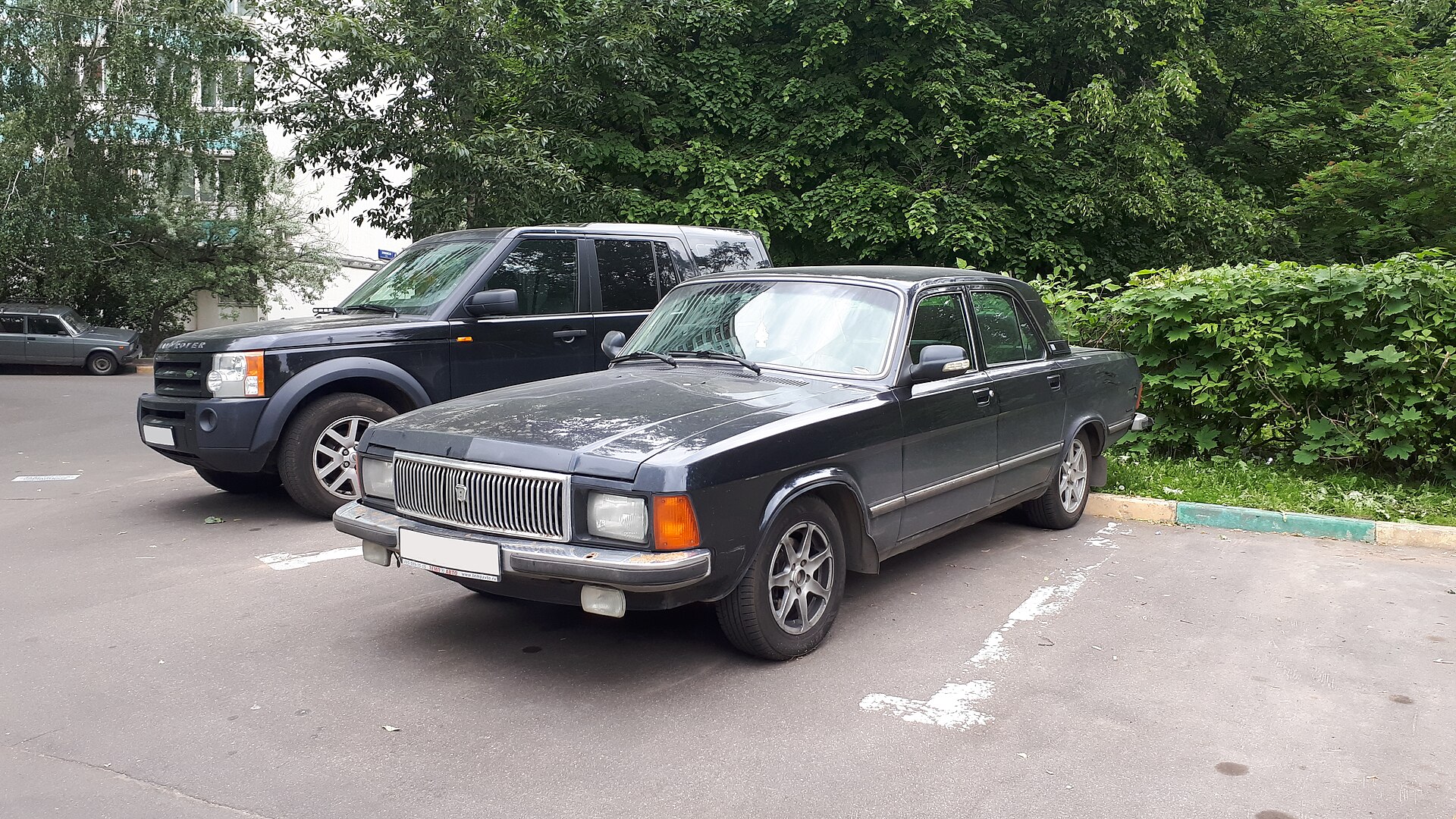
-
2003
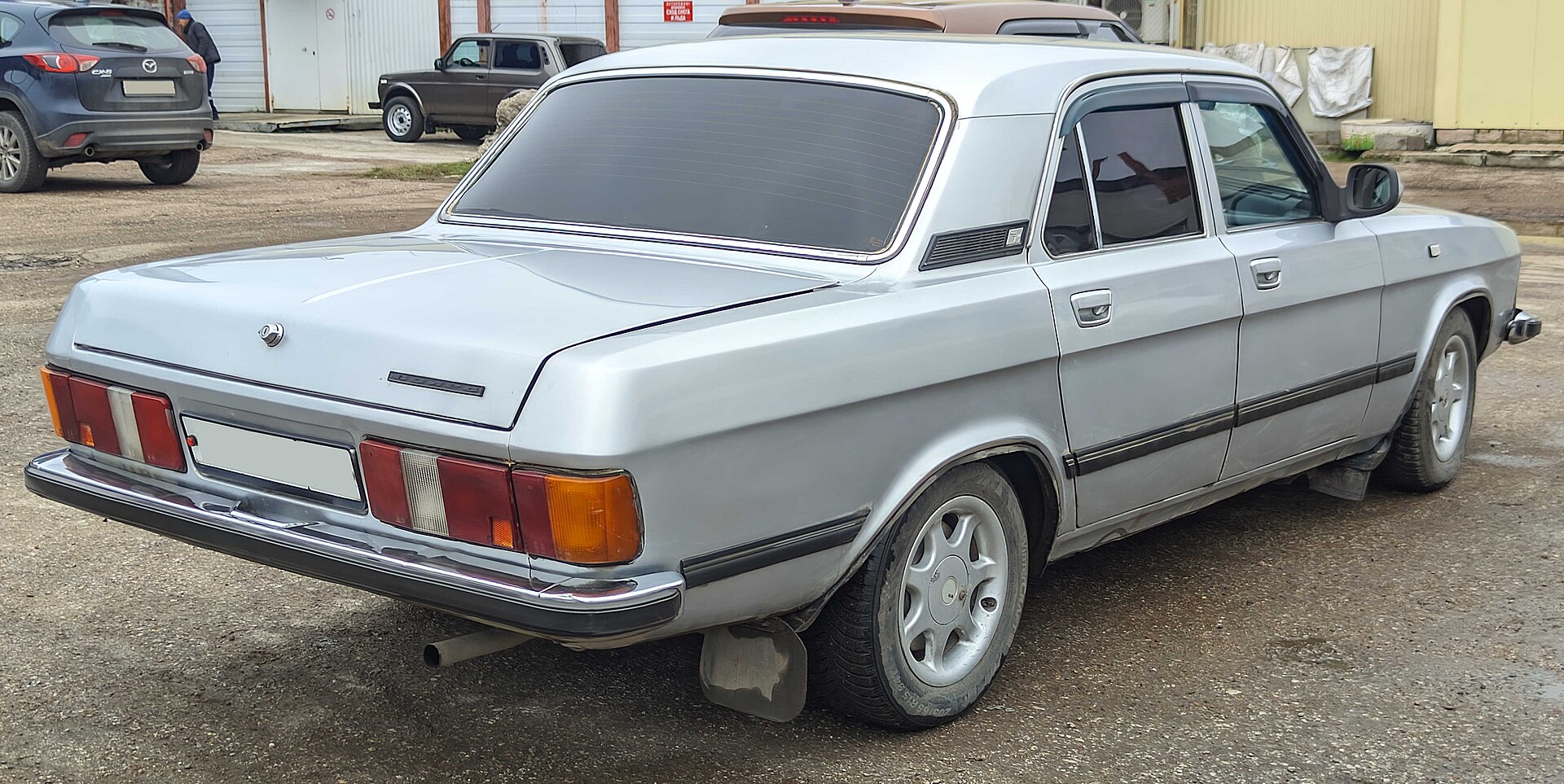
-
1997
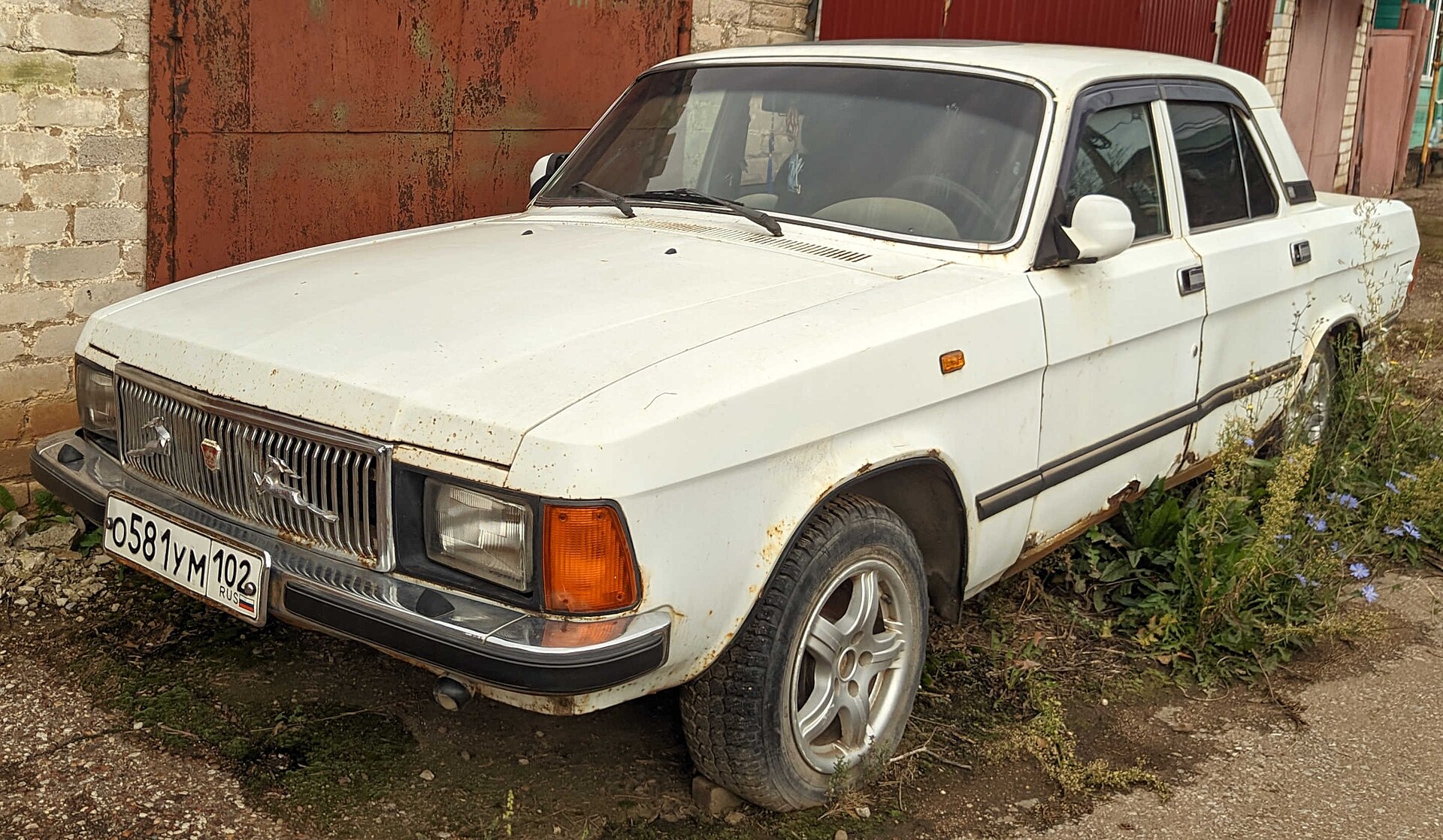
-
1992
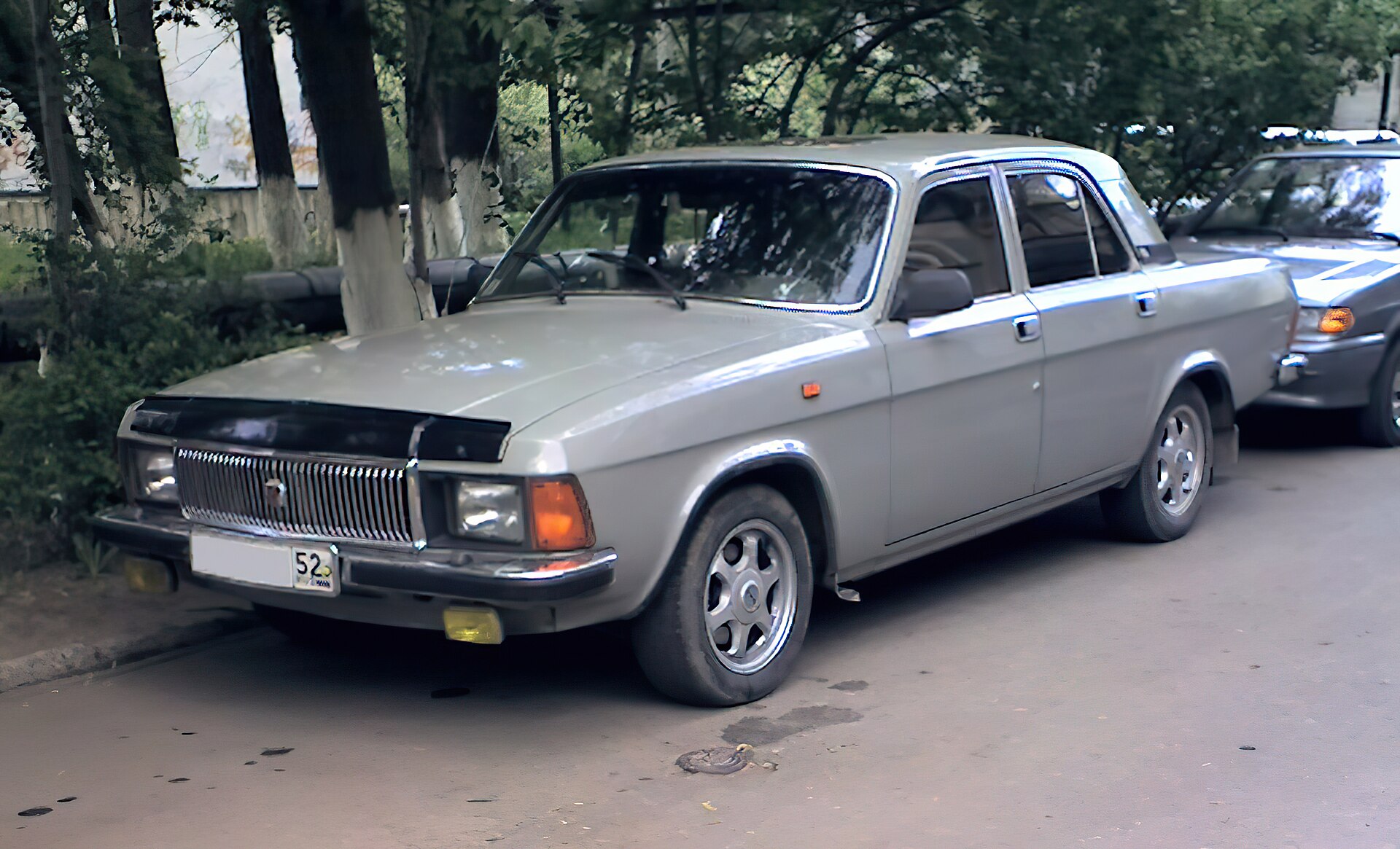
-
1982


All generations by year: GAZ-3102 (2006–2009) · GAZ-3102 (2003–2006) · GAZ-3102 (1997–2003) · GAZ-3102 (1992–1997) · GAZ-3102 (1982–1991)
Which one is mine?
Pick the year of first registration to see which generation it is.
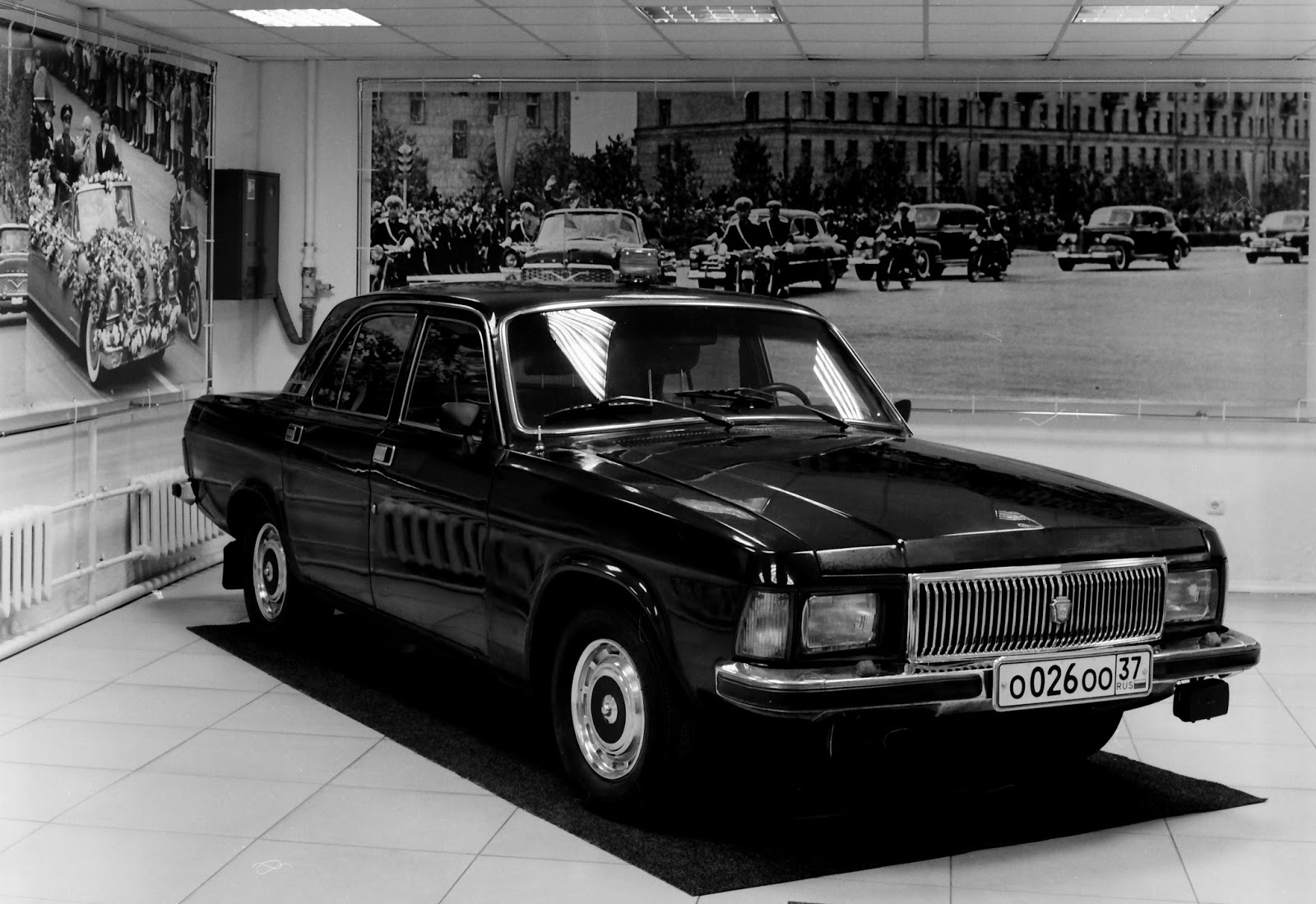
Check by VINThe GAZ-3102 Volga is the executive saloon GAZ built from 1982 to 2009 on a reworked GAZ-24 body. It was intended for state organisations rather than private buyers, and it introduced a stratified-charge four-cylinder engine of 77 kW (105 PS). Over 27 years it went through several rounds of modernisation, but it remained one car, not five generations.
In short
- Four-door, five-seat, rear-wheel-drive saloon built by GAZ in the Soviet Union and, after 1991, Russia.
- The 1982 car used the ZMZ-4022.10 engine; later cars received the ZMZ-402.10 and the 2.3-litre ZMZ-406.
- The GAZ-31029 of 1992–1997 was the high-volume version with a new front end.
- Small V8 and Wankel-engined series were made for state use, alongside a taxi, an estate and an ambulance.

Size at a glance
Mercedes-Benz E-Class W211
The GAZ-3102 is 109 mm longer and 23 mm taller than the Mercedes-Benz E-Class W211.
| Dimensions | GAZ-3102 | Mercedes-Benz E-Class W211 | Difference |
|---|---|---|---|
| Length | 4,960 mm195.3 in | 4,851 mm191.0 in | +109 mm+4.3 in |
| Width | 1,820 mm71.7 in | 1,821 mm71.7 in | −1 mm |
| Height | 1,476 mm58.1 in | 1,453 mm57.2 in | +23 mm+0.9 in |
| Wheelbase | 2,800 mm110.2 in | 2,854 mm112.4 in | −54 mm−2.1 in |
Specs by version
Dimensions and weight
Show all 1 versions
| Version | Length | Width | Height | Wheelbase | Kerb weight |
|---|---|---|---|---|---|
| GAZ-3102 · 2.3 96 kW (131 PS) | 4,960 mm195.3 in | 1,820 mm71.7 in | 1,476 mm58.1 in | 2,800 mm110.2 in | 1,455 kg3,208 lb |
Verified Manufacturer and type-approval data from our catalog · Sources and methodology
GAZ-3102 at a glance
The GAZ-3102 is a large rear-wheel-drive saloon that sat above the everyday Volga in GAZ's range. In the 1980s it went to state organisations and official users, and English-language Wikipedia dates its sale to private buyers to 1993. The production span is usually given as 1982–2009; one Wikipedia article ends it in 2008, another says the car was retired in early 2009, so output wound down over those two years.

Development and production history
Work on a successor to the GAZ-24 began soon after that car entered production. The first GAZ-3101 prototypes were running by 1973 at the latest, with experimental V8 and V6 engines; a 1976 prototype carried a 2,990 cc V6 of about 101 kW (136 hp). Pre-production was planned for 1978, but approval stalled for about two years.

GAZ resubmitted the project early in 1980 as the GAZ-3102 with a four-cylinder engine and showed it at the 1980 Olympic Games. Hand assembly started in April 1982 at about 3,000 cars a year, rising to around 10,000 a year by 1996. In the 1980s the 3102 made up roughly 8–10% of GAZ passenger-car output. The GAZ-24 it was meant to replace stayed in production until 1992, and from 1985 its simplified GAZ-24-10 version borrowed many 3102 parts and styling details.
| Year | Event |
|---|---|
| 1973 | First drivable GAZ-3101 prototypes |
| 1976 | Prototype shown with a 2,990 cc V6 |
| 1980 | Resubmitted as GAZ-3102 with the ZMZ-4022 engine |
| 1981 | First production samples |
| 1982 | Hand assembly begins in April |
| 1989 | Small series of V8 and Wankel-engined cars |
| 1992 | GAZ-31029 introduced; stratified charge dropped |
| Mid-1990s | ZMZ-406 engine and five-speed gearbox |
| 1997 | GAZ-3110 becomes the mainstream Volga |
| 2007–2009 | Four-speed automatic offered |
| 2009 | End of production |
Design and engineering
GAZ kept the main body structure of the GAZ-24 for cost reasons and changed the ends of the car and its equipment. The 3102 gained a new front end and headlights, a new rear, doors without triangular quarter windows and recessed handles. Inside came a redesigned dashboard, a safety steering column, a heated rear window and headlight washers.

The fuel tank moved behind the rear seat to meet ECE rules, with the spare wheel taking its place in the boot. The front suspension was reinforced, corrosion protection improved and some brake parts were shared with the Moskvich-2140. The result was about 50 kg heavier than the GAZ-24.
Engine and drivetrain
The 1982 car used the ZMZ-4022.10, a 2,445 cc inline four with stratified charge and torch ignition: a small pre-chamber with a rich mixture lit a leaner main charge. It produced 77 kW (105 PS) at 4,750 rpm and 182 Nm (134 lb-ft) at 2,500–3,000 rpm, against 95 hp for the GAZ-24's engine. A low-compression version ran on 76-octane petrol, and a four-speed manual drove the rear wheels.

From 1992 GAZ fitted the conventional ZMZ-402.10 of the same capacity, rated at 73.5 kW (100 PS), with a 66 kW (90 PS) low-compression version alongside. The 1990s brought five-speed gearboxes, power steering, better brakes and 15-inch wheels. The fuel-injected twin-cam ZMZ-406 of 2,287 cc, quoted at about 108 kW (145 hp), arrived in 1996 or 1997 depending on the source. From 2007 to 2009 a four-speed Aisin Warner automatic was also offered.
GAZ-3102 specifications
The figures are for the 1982 car. Sources quote kerb weights of 1,455 kg and 1,470 kg, so the table shows an average.

| Parameter | Metric | Imperial |
|---|---|---|
| Engine | ZMZ-4022.10 inline-four, 2,445 cc | 149.2 cu in |
| Bore x stroke | 92 x 92 mm | 3.62 x 3.62 in |
| Power | 77 kW (105 PS) at 4,750 rpm | about 104 hp |
| Torque | 182 Nm at 2,500–3,000 rpm | 134 lb-ft |
| Gearbox | 4-speed manual, rear-wheel drive | 4-speed manual, rear-wheel drive |
| Length | 4,960 mm | 195.3 in |
| Width | 1,820 mm | 71.7 in |
| Height | 1,476 mm | 58.1 in |
| Wheelbase | 2,800 mm | 110.2 in |
| Kerb weight | about 1,460 kg | about 3,219 lb |
| Gross weight | 1,870 kg | 4,123 lb |
| Fuel tank | 70 L | 15.4 imp gal |
| Top speed | 152 km/h | 94 mph |
| 0–100 km/h | 16.2 s | 16.2 s |
| Fuel use at 80 km/h | 8.5 L/100 km | 33.2 mpg (imp) |
| Tyres | 205/70 R14 | 205/70 R14 |
The GAZ-24 needed about 22 seconds to reach 100 km/h and topped out at 145 km/h (90 mph), so the gain was clear.
Modernisation stages, not generations
Our catalogue lists five generations, but the sources describe one body updated in stages, and only some can be dated.

1982–1991: the original car
The stratified-charge car described above, built by hand for official users. The V8 and Wankel versions of 1989 belong here.
GAZ-31029 (1992–1997)
The GAZ-31029 was the volume version: the GAZ-24 centre section with a revised front end and the ZMZ-402.10. Sources put output at 521,650 to 529,604 cars, and English-language Wikipedia notes that quality suffered as volumes rose. With the ZMZ-406 and five speeds it reached 170 km/h (106 mph) and 100 km/h in 13.5 seconds. The 3102 continued alongside as the better-equipped car.
Mid-1990s to 2009: new engines and an automatic
The ZMZ-406, five-speed gearbox and power steering mark the third stage, and the 2007–2009 automatic is the last documented change. We found no source for the 2003 and 2006 boundaries in our catalogue.
GAZ-3102 variants and derivatives
| Variant | Years | Body / purpose | Engine | Notes |
|---|---|---|---|---|
| GAZ-3102 | 1982–2009 | Executive saloon | ZMZ-4022.10, then ZMZ-402.10 and ZMZ-406 | Base model |
| GAZ-31021 | Not published | Taxi | As base, 76-octane tune | Taximeter, roof sign |
| GAZ-31022 | 1992–1997 | Estate on the 31029 | ZMZ-402.10 | 5,155 built |
| GAZ-31023 | 1992–1997 | Ambulance estate | ZMZ-402.10 | 3,097 built |
| GAZ-31029 | 1992–1997 | Saloon, revised front end | ZMZ-402.10, ZMZ-406 later | Volume model |
| GAZ-31012 / 31013 | From 1989 | Saloon for state bodies | 5.5 L V8, 143–147 kW (195–200 PS) | No more than 300 built |
| GAZ-31028 | 1989–1990 | Saloon | Wankel rotary, 103 kW (140 PS) | Small series |
| GAZ-31027 | Mid-1990s | Prototype | ZMZ-4064.10 turbo, 147 kW (200 PS) | Not produced |
| GAZ-31025 | 1983 | Prototype | 2,112 cc Indenor diesel, about 52 kW (70 hp) | Not produced |
The V8 cars, preceded by a 4.25-litre 31011 prototype in 1984, used engines related to those of the GAZ-13 and GAZ-14 Chaika and served state security bodies.

In service: operation, reliability and legacy
For most of its life the 3102 was a working official car: roomy and conservative, with a body that dated back to 1970. No published reliability survey covers it, so we do not repeat owner folklore as fact.

Successors arrived while it was still being built. The Volga-3105, conceived to replace it, was dropped long before it, and the GAZ-3110 of 1997 took over from the 31029. The 31105 followed in 2004, while the Volga-3111 never reached volume production. The 3102 outlasted them on the line; the final Volga saloon was the Chrysler-based Volga Siber of 2008–2010. Our history of GAZ covers the wider story.
Preservation and collecting today
An early stratified-charge 3102 is now a period piece among classic cars of the 1980s, and survivors range from hand-built Soviet cars to injected cars of the 2000s. Identification comes first: a 3102, a 31029 and a GAZ-24-10 share most of their body, and an engine may have been changed during a long service life. The ZMZ-4022, ZMZ-402 and ZMZ-406 need different parts and knowledge, and the body deserves a close corrosion check, as on any steel saloon of the era. We do not publish values. For related models, see all GAZ models.

GAZ-3102 evolution in numbers
Did you know?
- The GAZ-3102 ran for 27 years, from 1982 to 2009, over 5 generations in our catalog.
- The longest-running generation is the GAZ-3102 (1982–1991): 9 years.
Image credits · Photos from Wikimedia Commons under free licences
- GAZ-3102 · Photo: Yury Savin / Wikimedia Commons, CC BY-SA 4.0
- GAZ-3102 · Photo: DL24 / Wikimedia Commons, Public domain
- GAZ-3102 · Photo: Throwawayacc222 / Wikimedia Commons, CC0
- GAZ-3102 · Photo: Throwawayacc222 / Wikimedia Commons, CC0
- GAZ-3102 · Photo: Kirill Borisenko / Wikimedia Commons, CC BY-SA 4.0
Rivals
Compare with…
Compare GAZ-3102 with
- Mercedes-Benz E-Class quick spec comparison
- Hyundai Grandeur quick spec comparison
- Infiniti Q45 quick spec comparison
-
Ended 2023
- Years
- 1984–2023
- Body
- Sedan, Station wagon
- Fuel
- Petrol, Diesel
- Power
- 53–450 kW (72–612 PS)
5 generations
- W124
- W210
- W211
- W212
- W213
-
Ended 2022
- Years
- 1986–2022
- Body
- Sedan
- Fuel
- Petrol, Diesel, Hybrid
- Power
- 88–218 kW (120–296 PS)
6 generations
- I
- II
- XG
- TG
- HG
- IG
-
Ended 2006
- Years
- 1989–2006
- Body
- Sedan
- Power
- 198–254 kW (269–345 PS)
4 generations
- G50
- Y33
- F50
- Q45


Popular comparisons
GAZ-3102 in our rankings
- No. 100 of 1158 · Longest-running car nameplates (27 years · top 10%)
- No. 78 of 574 · Longest cars (4,960 mm · top 14%)
- No. 68 of 455 · Cars with the most generations (5 generations · top 22%)
- No. 32 of 123 · Longest sedans (4,960 mm · top 27%)
- No. 208 of 434 · Lightest cars (1,455 kg · top 48%)
- No. 54 of 114 · Widest sedans (1,820 mm · top 49%)
In production longer than 90% of ranked nameplates in the 1CARS catalog (No. 100 of 1158).
GAZ-3102 photos 24


GAZ-3102 videos 3

GAZ-3102 video 1

GAZ-3102 video 2

GAZ-3102 video 3
FAQ
When was the GAZ-3102 produced, and where?
From 1982 to 2009, by GAZ in the Soviet Union and later Russia, with output winding down over 2008 and 2009.
How many GAZ-3102 were built?
There is no reliable single total. English-language Wikipedia gives 155,850 hand-built cars, but its scope is unclear; the separate GAZ-31029 adds 521,650 to 529,604.
What engine does the GAZ-3102 have?
The 2,445 cc ZMZ-4022.10 with 77 kW (105 PS) at first, the ZMZ-402.10 with 73.5 kW (100 PS) from 1992, and later also the 2.3-litre ZMZ-406.
What variants of the GAZ-3102 were made?
The 31021 taxi, 31022 estate, 31023 ambulance, high-volume 31029 saloon and V8 models 31012 and 31013, plus Wankel, turbo and diesel prototypes or small series.
Did the GAZ-3102 have a V8?
Yes. The 31012 and 31013 used 5.5-litre V8s of 143–147 kW (195–200 PS); no more than 300 were built from 1989 for state bodies.
Is the GAZ-3102 collectable, and what should buyers check?
Yes, as a period executive saloon with a long history. Confirm the model and engine against the documents, check for corrosion and expect the ZMZ-4022 to need specialist knowledge.
Data sources
Data checked by an editor against the sources below.
- The text of this article (1cars archive)
- Wikipedia - GAZ 3102


