Peel P50
Specs, engines and history
Updated Published Sources (1) Report an error
By Sarah Whitmore, Senior Automotive Writer Reviewed by Oleksandr Hnatiuk
- Built
- 1962–1965
- Top power
- 3 kW (4 PS)
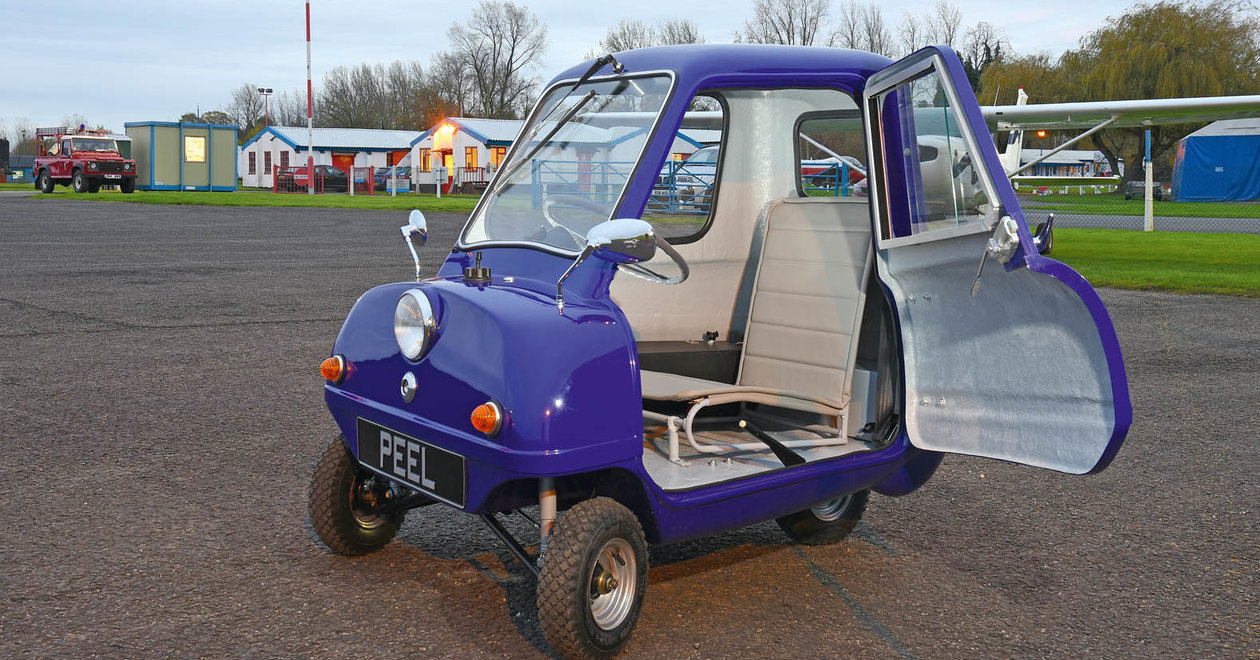
The Peel P50 is a single-seat, three-wheeled microcar built by the Peel Engineering Company on the Isle of Man from 1962 to 1965. At 137 cm long and 59 kg, it is listed by Guinness World Records as the smallest production car ever made. About 50 were built and 27 survive, which is why a 1964 example set an auction record in March 2016.
In short
- Maker: Peel Engineering Company, Peel, Isle of Man; designer Cyril Cannell; about 50 built, 27 known survivors.
- Size and power: 137 × 99 cm, 59 kg, a 49 cc DKW two-stroke with 3.1 kW (4.2 bhp), top speed about 61 km/h.
- Fame: Guinness record in the 2010 edition and a 2007 Top Gear drive into the BBC building.
- Auctions: a six-figure sale in February 2013 and a new record at RM Sotheby's in March 2016; replicas have been built since 2010.

Specs by version
Engines
Performance
Show all 1 versions
| Version | Top speed |
|---|---|
| 49 cc DKW (3.1 kW) | 61 km/h38 mph |
Dimensions and weight
Show all 1 versions
| Version | Length | Width | Kerb weight |
|---|---|---|---|
| 49 cc DKW (3.1 kW) | 1,370 mm53.9 in | 990 mm39.0 in | 59 kg130 lb |
Verified Manufacturer and type-approval data from our catalog · Sources and methodology
What happened: the 2013 and 2016 auction sales
This page began as a 2016 news item about a Peel P50 coming up for sale. On 15 February 2013 RM Auctions sold a 1964 P50, registration ARX 37B, from the Bruce Weiner Microcar Museum collection in the USA for a six-figure sum. In March 2016 RM Sotheby's sold another 1964 car in Florida for a new record, almost twice its pre-sale estimate.

With only 27 known survivors, a genuine original rarely comes on the market.
Peel P50 specifications
| Parameter | Value |
|---|---|
| Maker | Peel Engineering Company, Isle of Man |
| Designer | Cyril Cannell |
| Production | 1962–1965 |
| Built / surviving | about 50 / 27 |
| Engine | DKW 49 cc single-cylinder two-stroke, fan-cooled |
| Power | 3.1 kW (4.2 bhp) |
| Gearbox | 3-speed manual, no reverse |
| Top speed | about 61 km/h (38 mph) |
| Length × width | 137 × 99 cm (54 × 39 in) |
| Weight | 59 kg (130 lb) |
| Seats / doors | 1 / 1 |
It has two front wheels and one rear wheel, a single door on the left and one headlamp. It was conceived as a one-person town car for one adult and a shopping bag, and period advertising claimed it was almost cheaper than walking. By our calculation the P50 carries about 19 kg per kW, yet with only 3.1 kW its pace is modest.

Why it matters: the smallest car ever sold
The P50 is the only car ever built in series on the Isle of Man. The 2010 Guinness World Records book listed it as the smallest production car ever made, a title it still holds. Its fame grew in 2007, when Jeremy Clarkson drove a blue P50 through London traffic, into the BBC Television Centre and into a lift for an episode of Top Gear.
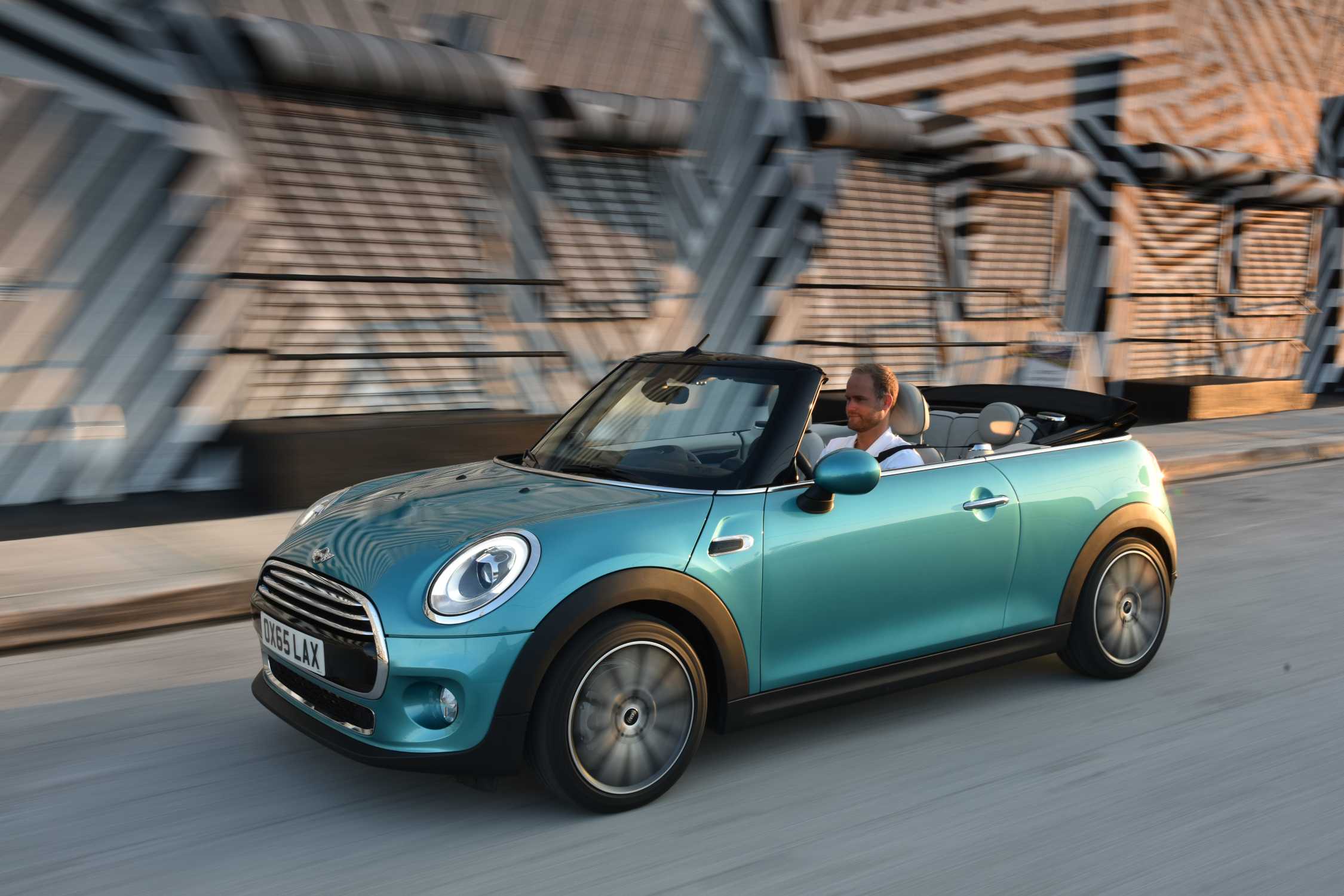
Compared with other small cars, the scale is striking. The Peel is about 1.7 metres shorter than the original Mini of 1959 and about 1.1 metres shorter than a first-generation Smart ForTwo. Our size comparison tool shows such gaps side by side.
| Car | Length | Seats |
|---|---|---|
| Peel P50 | 1,370 mm | 1 |
| Smart ForTwo (first generation) | about 2,500 mm | 2 |
| Mini (1959) | about 3,050 mm | 4 |
| Fiat 500 (1957) | about 2,970 mm | 4 |
The rivals and the Peel Trident
The P50 belonged to the age of the microcar, when bubble cars such as the BMW Isetta and the Messerschmitt KR200 offered a step up from a motorcycle, usually with two seats. Peel's own two-seater was the Trident of 1965, with a hinged clear canopy. Small four-seaters like the Mini and the Fiat 500 ended the microcar era, and Peel stopped making cars.
What happened next: the revival
In 2010 a new company, Peel Engineering Ltd, began building replicas of the P50 and the Trident in England. The new P50 has either a 49 cc four-stroke petrol engine of 2.5 kW with a CVT or a 2.3 kW electric motor, and both reach about 45 km/h. Its founders, Gary Hillman and Faizal Khan, won investment for revised models on the TV show Dragons' Den in 2011. The replicas weigh about 98 kg.
Buying a Peel today
An original P50 is a museum piece, so check its history carefully: replicas look almost identical, and documented ownership and the original DKW engine matter most. A modern replica is the practical and far cheaper way to own one. Other cars of the decade are collected in our 1960s classics.
Peel P50 in our rankings
- No. 766 of 912 · Longest-running car nameplates (3 years · top 89%)
- No. 78 of 78 · Fastest coupes (61 km/h)
- No. 281 of 281 · Fastest cars (61 km/h)
In production longer than 11% of ranked nameplates in the 1CARS catalog (No. 766 of 912).
FAQ
What is the smallest car in the world?
Guinness lists the Peel P50 as the smallest production car of all time. The single-seater is 137 cm long and 99 cm wide and weighs 59 kg; Peel made it on its home island between 1962 and 1965.
How many Peel P50s were made?
The original company built about 50 cars between 1962 and 1965, and 27 are known to survive. Since 2010 Peel Engineering Ltd has built petrol and electric replicas, which do not count as originals.
How fast is a Peel P50?
The original, with a 49 cc DKW two-stroke of 3.1 kW (4.2 bhp), reaches about 61 km/h (38 mph). Modern petrol and electric replicas are limited to about 45 km/h (28 mph).
Does the Peel P50 have a reverse gear?
No. The three-speed manual gearbox has no reverse. To turn round, the driver lifts the rear of the car by a handle and pulls it round, which is easy at only 59 kg.
Data sources
Data checked by an editor against the sources below.