
 Haima M3
Specs, engines and history
Updated Published Sources (3) Report an error
By Oleksandr Hnatiuk, Automotive Editor & Used Car Specialist Reviewed by Felix Hartmann
- Built
- 2013–2019
- Top power
- 82 kW (111 PS)
Which Haima M3 to buy
Our verdict · Oleksandr Hnatiuk
The Comfort trim offers the best balance of equipment, with climate control, alloy wheels and parking sensors, while the CVT versions suit drivers who mostly drive in town. On used cars, check the CVT's operation and service history, the condition of interior trim and the availability of spare parts locally, as Haima has a small dealer network outside China.
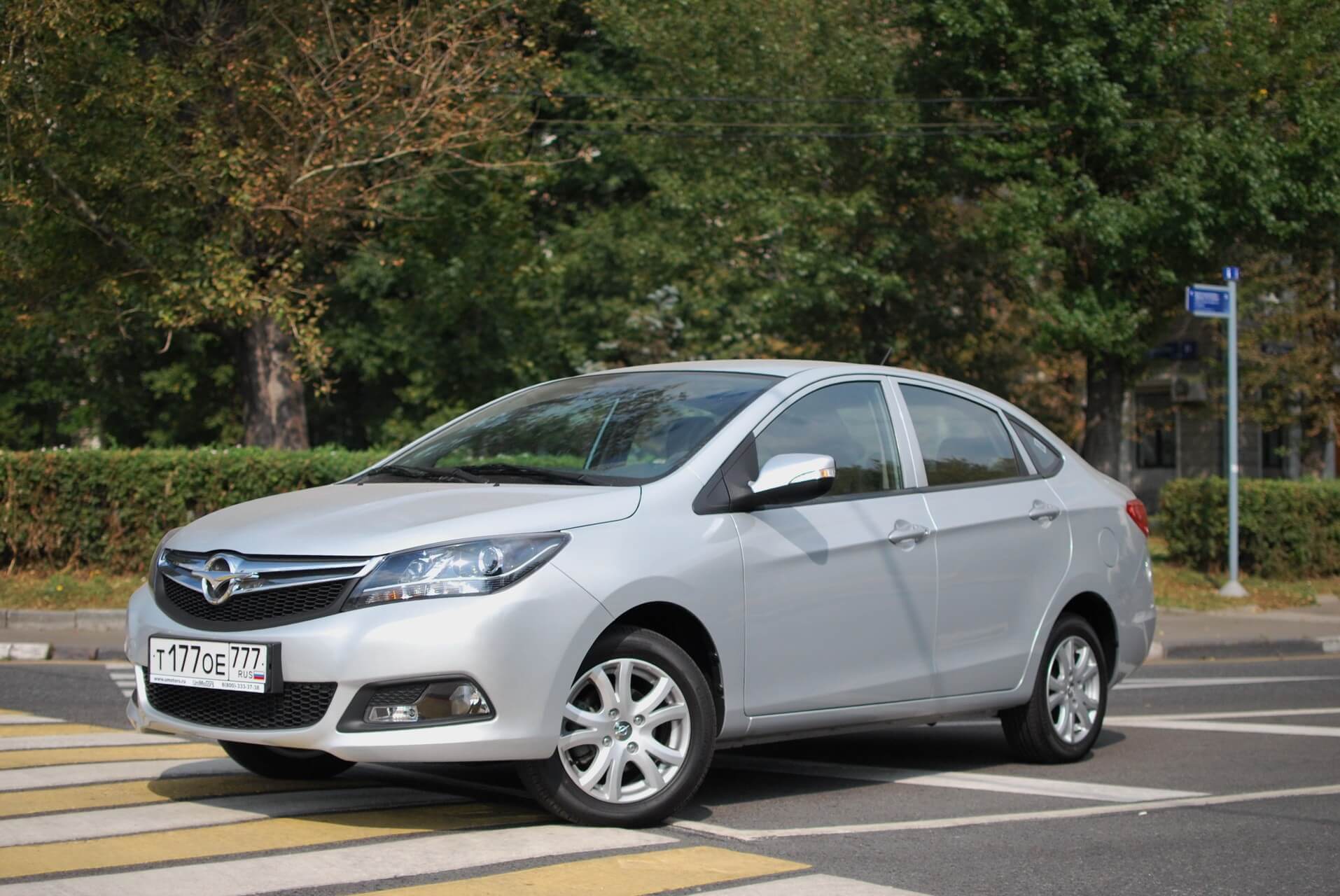
The Haima M3 is a compact four-door saloon from the Chinese maker Haima. It was shown as the Haima V30 at the Guangzhou Auto Show in November 2012 and launched at the Shanghai Auto Show on 22 April 2013. It was the first saloon designed entirely by Haima, with styling by the Italian studio IDEA, and uses a 1.5-litre engine with 82 kW (112 hp).
In short
- Production 2013–2019; built by Haima in China and exported to markets such as the Philippines.
- Body: 4,545 mm long on a 2,600 mm wheelbase; 450-litre boot; drag coefficient quoted at 0.27.
- Engine: 1.5 four-cylinder with variable valve timing, top speed about 170 km/h.
- Body made with more than 50% high-strength steel, laser welding and side-impact beams.
Specs by version
Engines
Dimensions and weight
Verified Manufacturer and type-approval data from our catalog · Sources and methodology
Haima M3 at a glance
The M3 marked a turning point for Haima, whose earlier saloons were based on Mazda models. It was aimed at buyers of affordable compact saloons who want a modern design and good standard equipment. Haima's story, from the Hainan Mazda joint venture to its own models, is told in the history of Haima. Its other models, such as the Haima 7 and Haima S5, are in the Haima catalogue.

| Fact | Value |
|---|---|
| Maker | Haima Automobile (China) |
| Concept / debut | Haima V30, Guangzhou, November 2012 |
| Launch | Shanghai Auto Show, 22 April 2013 |
| Production | 2013–2019 |
| Design | IDEA (Italy) |
| Engine | 1.5 L petrol, 82 kW (112 hp), 147 Nm |
| Gearbox | 5-speed manual or CVT |
| Drive | Front-wheel drive |
Design and body
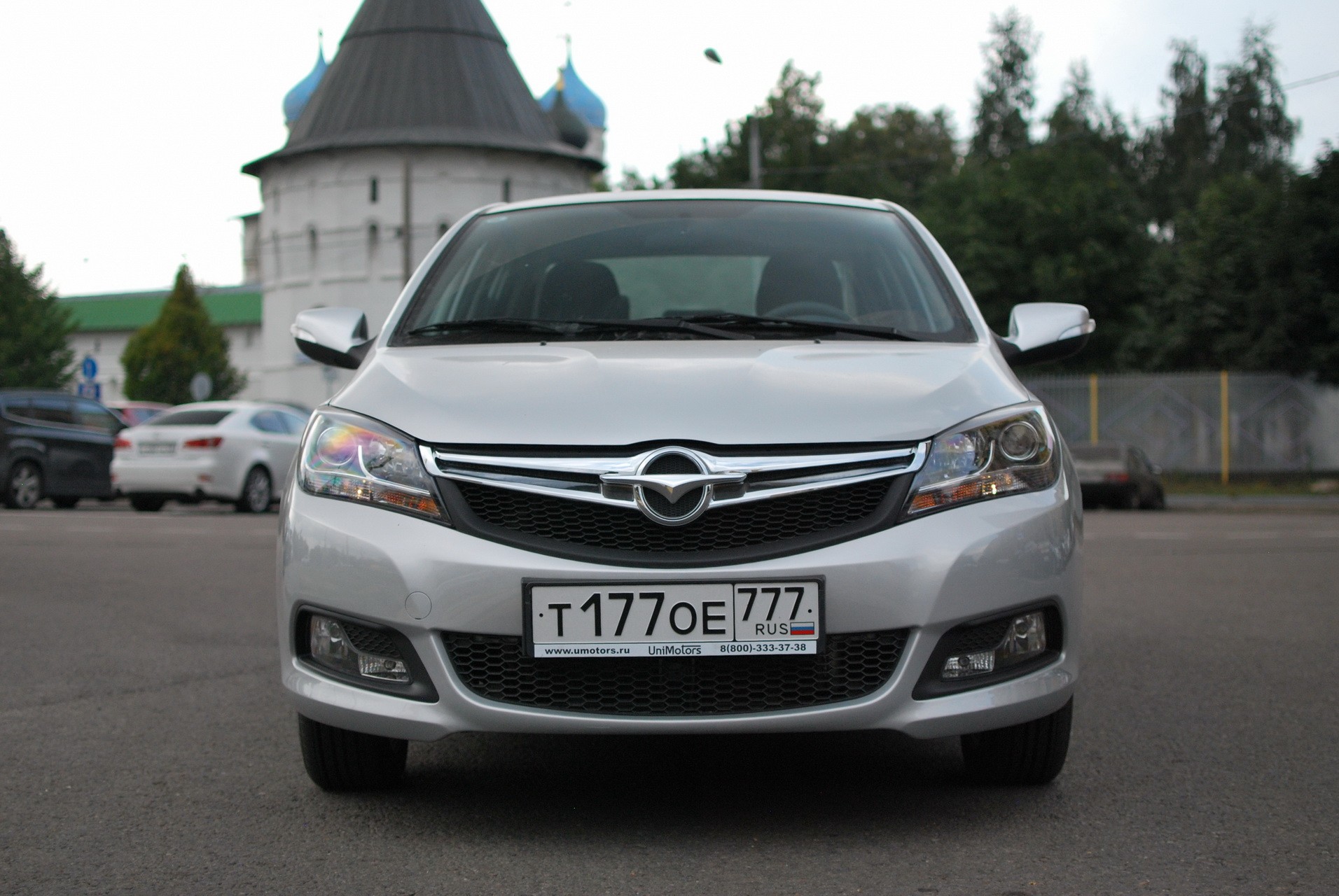
The M3's styling by IDEA gives it smooth, harmonious lines, a large lower air intake with fog lights, a wedge-shaped profile and modern headlights with daytime running lights. The rear is more conservative. Haima quoted a drag coefficient of 0.27, a good figure for a compact saloon of its time. The body uses high-strength steel for more than half of its parts and laser welding, and Haima claimed it was about 19% stronger than comparable cars in its class. Ground clearance is 130 mm, which is modest for poor roads.

Interior and boot
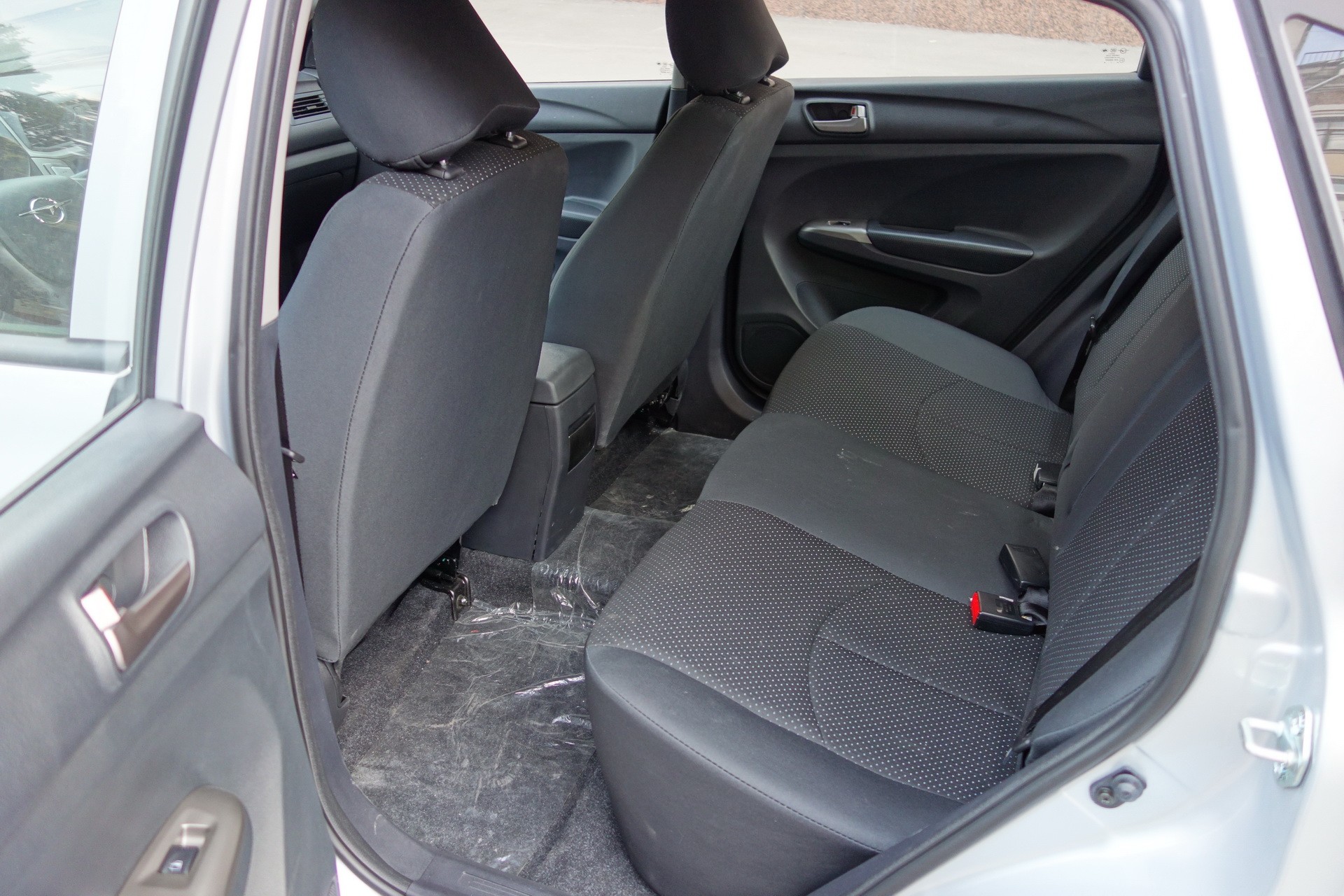
The cabin is well laid out, with clear controls and a comfortable steering wheel. The instruments sit in two cowls and are easy to read, although sunlight can cause glare. The climate control works well. Testers noted the use of hard plastics and blue screen lighting, and the front seats have limited side support. The steering wheel rim is shaped for a comfortable grip. The rear bench offers enough knee room for adults. The 450-litre boot has a neat finish and a spare wheel under the floor. The rear seat backs fold for longer loads, and the boot lid can be opened with the key or from inside the car.
Engine and transmission
| Parameter | Value |
|---|---|
| Engine | 1.5 L four-cylinder petrol, DOHC, variable valve timing |
| Power | 82 kW (112 hp) |
| Torque | 147 Nm |
| Gearboxes | 5-speed manual; CVT |
| Drive | Front wheels |
| Top speed | about 170 km/h |
| Fuel tank | 50 L |
Later Philippine data list the CVT as a six-step unit, and some sources quote up to 119 hp for later engines. The engine has an electronic throttle.
Dimensions and weight

| Parameter | Metric | Imperial |
|---|---|---|
| Length | 4,545 mm | 178.9 in |
| Width | 1,737 mm | 68.4 in |
| Height | 1,495 mm | 58.9 in |
| Wheelbase | 2,600 mm | 102.4 in |
| Ground clearance | 130 mm | 5.1 in |
| Kerb weight | 1,140–1,210 kg | 2,513–2,668 lb |
| Boot | 450 L | 15.9 cu ft |
Safety
The M3 has Bosch ABS with electronic brakeforce distribution, front airbags for the driver and passenger and, on the Elite trim, side airbags. Child-seat mountings, front seat-belt pretensioners, three-point belts for all rear seats, a collapsible steering column and a seat-belt warning are standard. So are automatic door locking once the car moves and child locks on the rear doors. The passive safety structure includes a 1.8 mm steel B-pillar, side-impact beams in the doors, a strong cross-member in the engine bay. Rear rails are designed to protect the boot area in a rear collision. Front brakes are discs and rear brakes drums.

Trims and equipment

| Trim | Gearbox | Key equipment |
|---|---|---|
| Standard | Manual | Daytime running lights, heated electric mirrors with indicators, 15-inch steel wheels, ABS and EBD, front airbags, central locking |
| Comfort | Manual | Adds rear parking sensors, trip computer, 15-inch alloy wheels, fog lights, climate control, steering-wheel audio controls, front and rear armrests |
| Elite | CVT | Standard equipment plus fog lights, rear parking sensors and a multifunction steering wheel |
| Deluxe | CVT | Comfort equipment with the CVT |
History and later versions
The M3 was first shown as the Haima V30 in Guangzhou in November 2012 and went on sale in China at the time of the Shanghai show in April 2013. It joined the M5, M6 and M8 saloons in Haima's range, which shifted from Mazda-based cars to its own designs in the early 2010s. Production continued until 2019. In its final years the M3 was also sold in export markets. In the Philippines, for example, the 2019 line-up consisted of the 1.5 Comfort with a manual gearbox and the 1.5 Flagship with the CVT. The M3 was not replaced by a direct successor, as Haima concentrated on crossovers and MPVs.

Rivals: how the Haima M3 compares
The M3 competed with budget saloons such as the Lifan Cebrium and other Chinese compact saloons, while in Haima's own range it sat above the smaller Haima 2 hatchback. Its strengths are an attractive design, good aerodynamics, a solid body structure, a large boot and rich standard equipment. Its weaknesses are hard interior plastics, dashboard glare, weak seat side support and modest ground clearance.


Rivals
Compare with…
Compare Haima M3 with
- Lifan Solano quick spec comparison

Haima M3 in our rankings
- No. 145 of 321 · Biggest boot: cars (450 l · top 47%)
- No. 700 of 1091 · Longest-running car nameplates (6 years · top 69%)
- No. 48 of 67 · Biggest boot: sedans (450 l · top 72%)
- No. 143 of 177 · Most powerful sedans (82 kW · top 81%)
- No. 558 of 644 · Biggest engines: cars (1,500 cc · top 89%)
- No. 323 of 360 · Most powerful cars of the 2010s (82 kW · top 90%)
Bigger boot than 53% of ranked cars in the 1CARS catalog (No. 145 of 321).
Haima M3 photos 18




FAQ
What engine does the Haima M3 have?
It uses a 1.5-litre four-cylinder petrol engine with variable valve timing, producing 82 kW (112 hp) and 147 Nm. It drives the front wheels through a five-speed manual or a CVT automatic.
Who designed the Haima M3?
The M3 was styled by the Italian design studio IDEA. It was the first saloon designed entirely by Haima, as earlier Haima saloons were based on older Mazda models.
How big is the Haima M3?
The M3 is 4,545 mm long, 1,737 mm wide and 1,495 mm high, with a 2,600 mm wheelbase. Its boot holds 450 litres, and the rear seat backs fold for longer items.
When was the Haima M3 launched?
It was first shown as the Haima V30 at the Guangzhou Auto Show in November 2012 and launched as the M3 at the Shanghai Auto Show on 22 April 2013. Production ran until 2019.
Is the Haima M3 safe?
It has ABS with brakeforce distribution, front airbags, side airbags on the Elite trim and a body with more than 50% high-strength steel, side-impact beams and a reinforced B-pillar.
Data sources
Data checked by an editor against the sources below.
- The text of this article (1cars archive)
- Wikipedia - Haima (Automarke)
- Carnewschina - Haima M3 Launched On The Shanghai Auto Show On The Chinese Car Market


