
KrAZ-256
Specs, engines and history
Updated Published Sources (2) Report an error
By Oleksandr Hnatiuk, Automotive Editor & Used Car Specialist Reviewed by Felix Hartmann
- Built
- 1966–1994
- Top power
- 202 kW (275 PS)
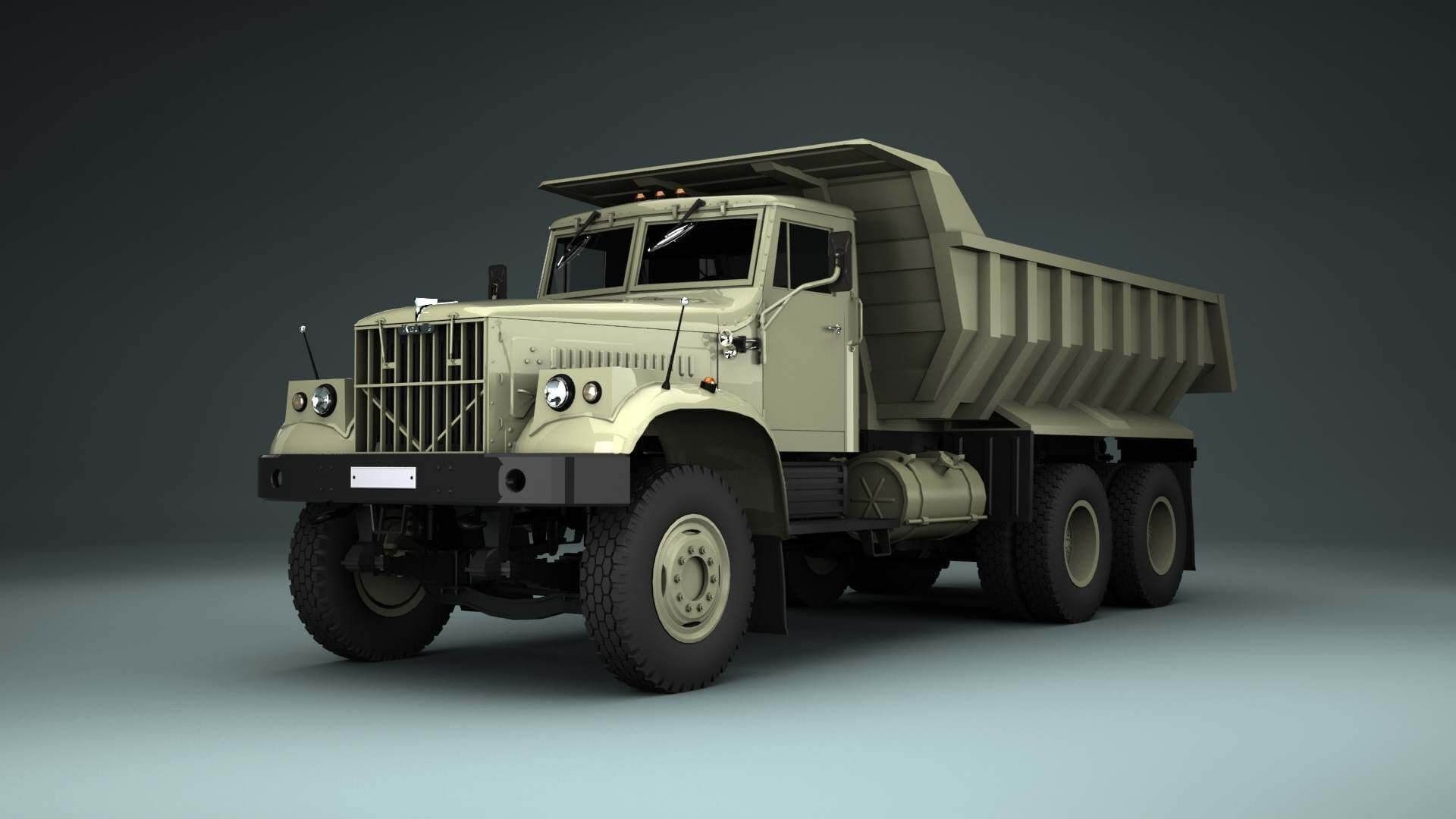
The KrAZ-256 is a three-axle (6×4) heavy dump truck built at the Kremenchuk Automobile Plant (KrAZ) in Ukraine from 1966 to 1994, mostly in its 256B and 256B1 versions. It replaced the KrAZ-222 "Dnipro", carried about 12 tonnes in a rear-tipping quarry body and was powered by a 14.86-litre YaMZ-238 V8 diesel with 176 kW (240 PS). By 1978 it had been exported to 55 countries.
In short
- Built 1966–1994; the last northern-version KrAZ-256B1S left the line in January 1994. Successor: KrAZ-6510.
- Engine: YaMZ-238 four-stroke V8 diesel, 176 kW (240 PS) at 2,100 rpm; 5-speed gearbox with a two-speed transfer case.
- Weights: about 11,000 kg empty, 23,000 kg gross; top speed 68 km/h.
- Versions included northern (S), longer-life B1 and a special B1-030 used after the Chernobyl accident.
Size at a glance
MAZ-503
The KrAZ-256 is 2,315 mm longer, 658 mm wider and 180 mm taller than the MAZ-503.
| Dimensions | KrAZ-256 | MAZ-503 | Difference |
|---|---|---|---|
| Length | 8,100 mm318.9 in | 5,785 mm227.8 in | +2,315 mm+91.1 in |
| Width | 2,628 mm103.5 in | 1,970 mm77.6 in | +658 mm+25.9 in |
| Height | 2,830 mm111.4 in | 2,650 mm104.3 in | +180 mm+7.1 in |
| Wheelbase | 4,080 mm160.6 in | 3,400 mm133.9 in | +680 mm+26.8 in |
Specs by version
Engines
Performance
Show all 1 versions
| Version | Top speed |
|---|---|
| 202 kW (275 PS) Truck | 68 km/h42 mph |
Dimensions and weight
Verified Manufacturer and type-approval data from our catalog · Sources and methodology
KrAZ-256 at a glance: maker, years and purpose
KrAZ was set up in Kremenchuk to build heavy trucks, taking over production from an older plant in the late 1950s. Its first dump truck, the KrAZ-222 "Dnipro" (1959–1966), used a two-stroke diesel. The KrAZ-256 kept the proven bonneted layout and chassis but introduced a modern four-stroke V8, and it became the standard heavy dump truck of Soviet quarries, mines, oil fields and large construction sites. The plant's story is told in the history of KrAZ, and its trucks are listed in the KrAZ catalogue.
| Fact | Value |
|---|---|
| Maker | Kremenchuk Automobile Plant (KrAZ), Ukraine |
| Production | 1966–1994 |
| Layout | Bonneted 6×4, three axles, rear wheels driven |
| Body | Rear-tipping quarry body, hydraulic |
| Engine | YaMZ-238 V8 diesel, 14,860 cc |
| Power | 176 kW (240 PS) |
| Payload | about 12,000 kg |
| Predecessor | KrAZ-222 "Dnipro" |
| Successor | KrAZ-6510 |
History and development
In 1959 the Soviet leadership instructed engine makers to replace two-stroke diesels with more economical four-stroke engines. The result was the YaMZ family of 1960–1961: the six-cylinder YaMZ-236, the eight-cylinder YaMZ-238 and the twelve-cylinder YaMZ-240. The V8 YaMZ-238 was chosen for the new KrAZ dump truck. A first batch was built in 1961, and series production of the KrAZ-256 began in 1966, with the improved 256B soon becoming the main version.

The KrAZ-256 was designed for roads of the first and second category with axle loads of up to 10,000 kg, but in practice most trucks worked in quarries and on construction sites. It was valued for its simplicity, strength and tolerance of overloading. KrAZ adapted export trucks to local conditions: right-hand-drive versions went to sand quarries in England, tropical versions to southern countries, and cold-climate versions with double-glazed cab windows, frost-resistant rubber and an engine pre-heater to northern markets. By 1978 the KrAZ-256 had been exported to 55 countries.
By the mid-1970s the design was ageing. Its heavy controls, rolled-channel frame and wood-and-metal cab compared poorly with later Western and Czechoslovak trucks such as Magirus-Deutz and Tatra models. A planned successor, the KrAZ-251, was postponed, and a modern replacement arrived only with the KrAZ-6510 in the 1990s.
| Year | Event |
|---|---|
| 1959 | KrAZ-222 "Dnipro" in production; order to develop four-stroke diesels |
| 1961 | First batch of trucks with the new V8 |
| 1966 | Series production of the KrAZ-256 and 256B |
| 1969 | Northern version 256BS; headlights moved into boxes on the wings |
| 1978 | KrAZ-256B1 with longer service life and split brake circuits; exports to 55 countries |
| 1981 | Northern KrAZ-256B1S |
| 1994 | Last KrAZ-256B1S built in January; dump truck production of this family ends |
Cab and body
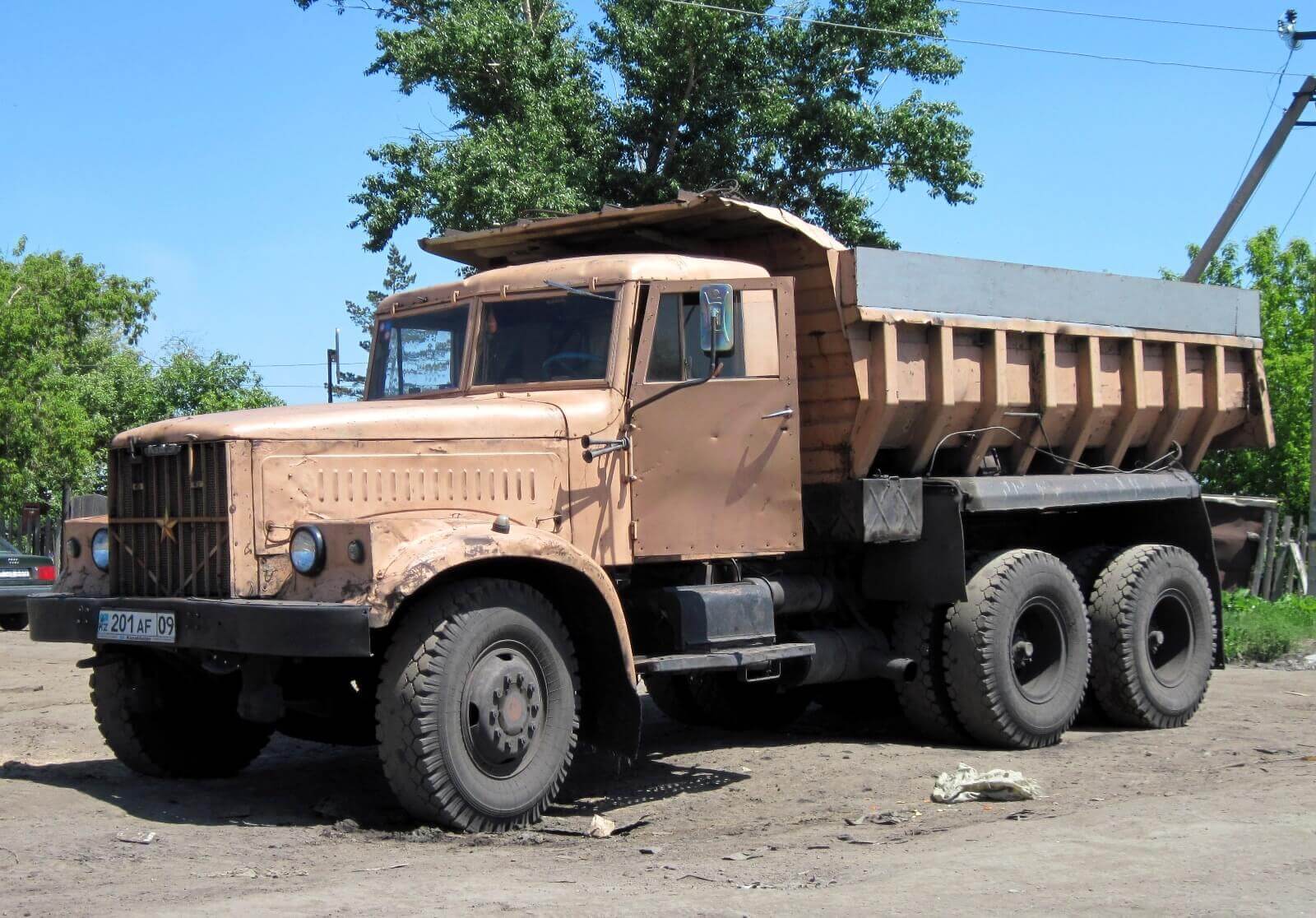
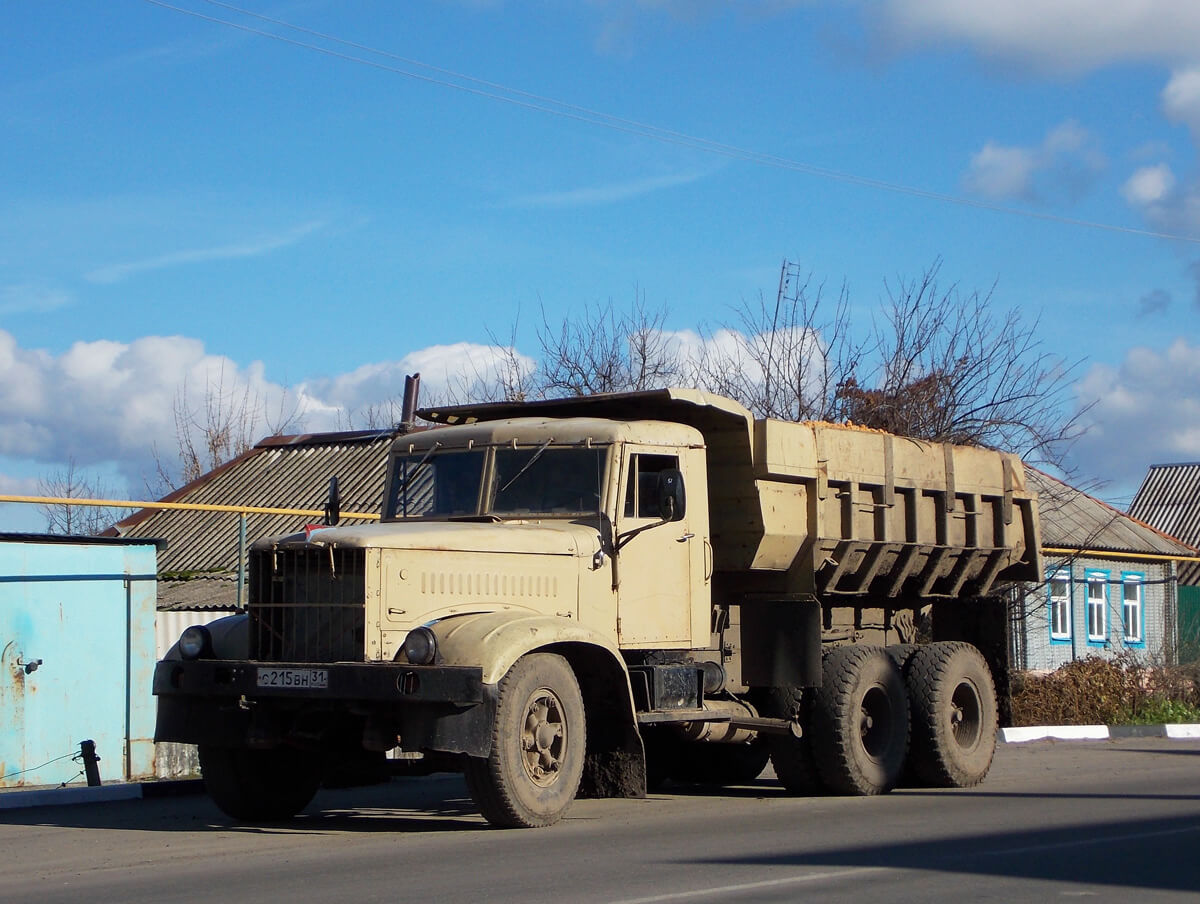
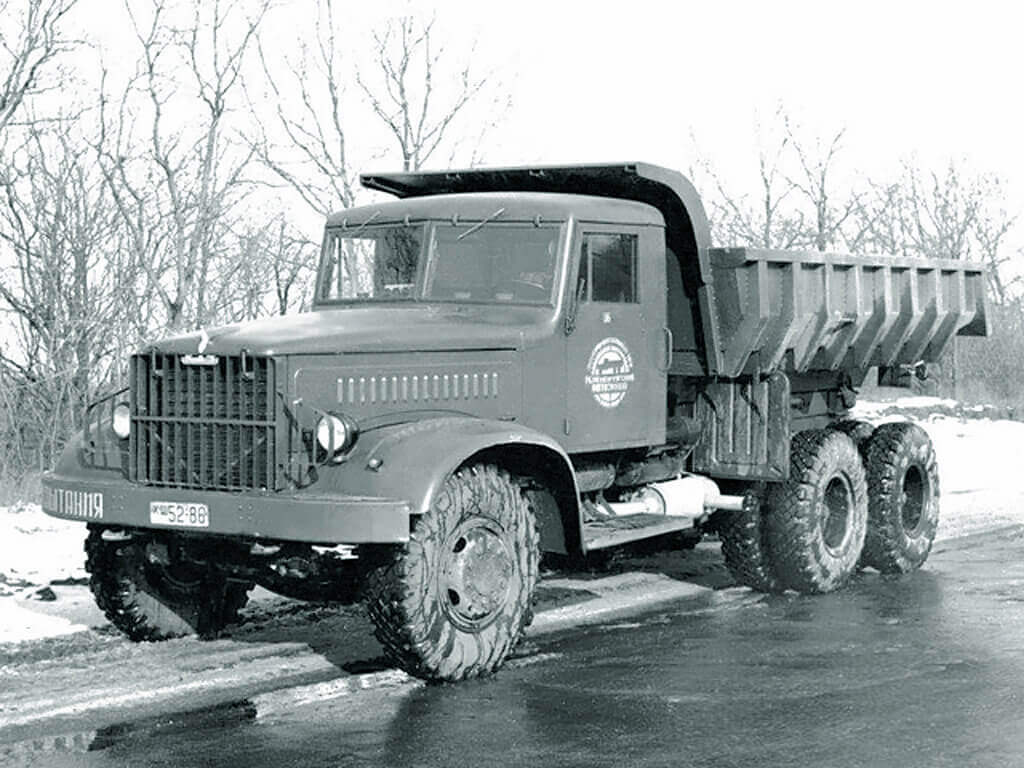
The three-seat cab sits behind the engine. The driver's seat is sprung and adjustable for reach, weight, backrest angle and height, and there is room for two passengers. In 1969 the headlights and indicators were moved into boxes on the front wings; at the end of the 1970s their mounting was simplified.

The standard body is a bucket-type quarry body without a tailgate, tipped rearwards by two hydraulic cylinders. It lifts in about 20 seconds and lowers in about 30 seconds. Flatbed versions were also built on the same chassis, but they were not developed further.
Engine, gearbox and running gear
| Parameter | Value |
|---|---|
| Engine | YaMZ-238, four-stroke V8 diesel, overhead valves, cast-iron block |
| Displacement | 14,860 cc |
| Power | 176 kW (240 PS) at 2,100 rpm; some data list later versions at up to 202 kW (275 PS) |
| Torque | 882 Nm |
| Gearbox | 5-speed manual, fifth gear an overdrive |
| Transfer case | Two-speed, with lockable centre differential |
| Clutch | Dry twin-plate with peripheral springs |
| Drive | 6×4, rear two axles driven |
The front axle sits on two semi-elliptic leaf springs with rubber-cushioned ends; the rear bogie uses a balanced suspension on semi-elliptic springs with sliding ends, which improves ride on rough ground. Steering is screw-and-ball-nut with a toothed sector and hydraulic power assistance.

The air brakes use 440 mm drums and two circuits: one for the front and middle axles and one for the rear. The parking brake is a mechanically operated drum on the transmission. The early brake system had a known weakness: on long descents with the engine idling, the compressor and power steering pump slowed down, air pressure fell and the truck became hard to stop. The 256B1 of 1978 added split brake circuits and other improvements.
KrAZ-256 specifications

| Parameter | Metric | Imperial |
|---|---|---|
| Length | 8,100 mm | 318.9 in |
| Width | 2,628 mm | 103.5 in |
| Height | 2,830 mm | 111.4 in |
| Wheelbase | 4,080 mm (to the bogie centre) | 160.6 in |
| Kerb weight | about 11,000 kg | about 24,251 lb |
| Gross weight | about 23,000 kg | about 50,706 lb |
| Payload | about 12,000 kg | about 26,455 lb |
| Top speed | 68 km/h | 42 mph |
| Fuel consumption | about 39 L/100 km | about 6.0 mpg US |
| Fuel tanks | 2 × 165 L | 2 × 43.6 US gal |
| Approach / departure angle | 42° / 54° | – |
| Maximum climb | 38° (per factory data) | – |
KrAZ-256 versions and modifications
| Version | Year | Notes |
|---|---|---|
| KrAZ-256 | 1966 | Base dump truck |
| KrAZ-256B | 1966 | Main series version with the 240 PS engine |
| KrAZ-256BS | 1969 | Northern version with heated cab and engine bay |
| KrAZ-256B1 | 1978 | Longer service life, split brake circuits, starting pre-heater |
| KrAZ-256B1S | 1981 | Northern version of the B1, built until January 1994 |
| KrAZ-256B1-030 | – | Special version used in the clean-up after the Chernobyl accident |
| KrAZ-256BM / B1M | 2009 | Rebuilt in Cuba by the SOMEC repair plant with an all-metal cab, YaMZ-238M2 engine and KrAZ-6510 parts |
Some operators also converted trucks into tractor units for towing heavy trailers.

In service: strengths and weaknesses
Strengths:
- Strong, simple design that tolerates overloading and extreme temperatures.
- Fast tipping body and good approach and departure angles.
- Easy maintenance and wide availability of parts, many still made today.
Weaknesses:
- High fuel consumption and heavy controls that tire the driver.
- Limited visibility past the long bonnet and a dated cab.
- Rear-wheel drive only, so it can get stuck on soft ground.
- Brake weaknesses on early trucks.
The KrAZ-256 and the Kremenchuk plant
The dump truck grew up with the plant. KrAZ was already exporting its trucks early on: by 1961 more than 500 vehicles had gone to 26 countries, including Argentina, Bulgaria, China, India and Vietnam. With the KrAZ-256B as one of its main products, the plant built its 100,000th truck in 1968 and its 500,000th in 1984, and annual output reached 30,655 vehicles in 1986. The 256B1 of 1978 reflected the lessons of the first decade, with a longer service life between overhauls, split brake circuits and a starting pre-heater as standard. Its successor, the KrAZ-6510, went into production in 1992, also as a 6×4 dump truck, with a 179 kW (240 hp) engine.

Successors and legacy
The KrAZ-256 was the first mass-produced heavy dump truck of its class in the Soviet Union and remained in production for almost three decades. Its components and layout were shared with the all-wheel-drive KrAZ-255 and later the KrAZ-260, and its role passed to the KrAZ-6510. Many trucks still work in quarries, and spare parts are still made both at KrAZ and by other suppliers. More heavy vehicles are listed among trucks.


Rivals
Compare with…
Compare KrAZ-256 with
- MAZ-503 quick spec comparison
- KamAZ-5511 quick spec comparison
- MAZ-5551 quick spec comparison


Popular comparisons
KrAZ-256 in our rankings
- No. 6 of 17 · Longest trucks (8,100 mm)
- No. 23 of 56 · Most powerful trucks (202 kW · top 42%)
- No. 11 of 16 · Most torque: trucks (882 Nm · top 69%)
- No. 18 of 21 · Fastest trucks (68 km/h · top 86%)
Longer than 64% of ranked trucks in the 1CARS catalog (No. 6 of 17).
KrAZ-256 photos 15


FAQ
When was the KrAZ-256 produced?
The KrAZ-256 family was built at KrAZ in Kremenchuk from 1966 to 1994. The last version, the northern KrAZ-256B1S, left the line in January 1994, and the KrAZ-6510 took its place.
What engine does the KrAZ-256 have?
It has a YaMZ-238 four-stroke V8 diesel of 14,860 cc producing 176 kW (240 PS) at 2,100 rpm. The engine drives the two rear axles through a 5-speed gearbox and two-speed transfer case.
What is the payload of the KrAZ-256?
The KrAZ-256B carries about 12 tonnes in its quarry body. It weighs about 11,000 kg empty and 23,000 kg fully loaded, and the body tips in about 20 seconds.
Is the KrAZ-256 all-wheel drive?
No. The KrAZ-256 is a 6×4 truck: only the middle and rear axles are driven, which is enough for quarry roads. The all-wheel-drive KrAZ-255 used similar components for military and off-road work.
How fast is the KrAZ-256?
Its top speed is 68 km/h. Fuel consumption is about 39 L/100 km, and two 165-litre tanks give it a working range suited to long shifts in quarries and on construction sites.
Data sources
Data checked by an editor against the sources below.
- The text of this article (1cars archive)
- Wikipedia - List of KrAZ vehicles


