
AeroMobil 3.0
Specs, engines and history
Updated Published Sources (1) Report an error
By Oleksandr Hnatiuk, Automotive Editor & Used Car Specialist
- Built
- 2014
- Top power
- 75 kW (102 PS)
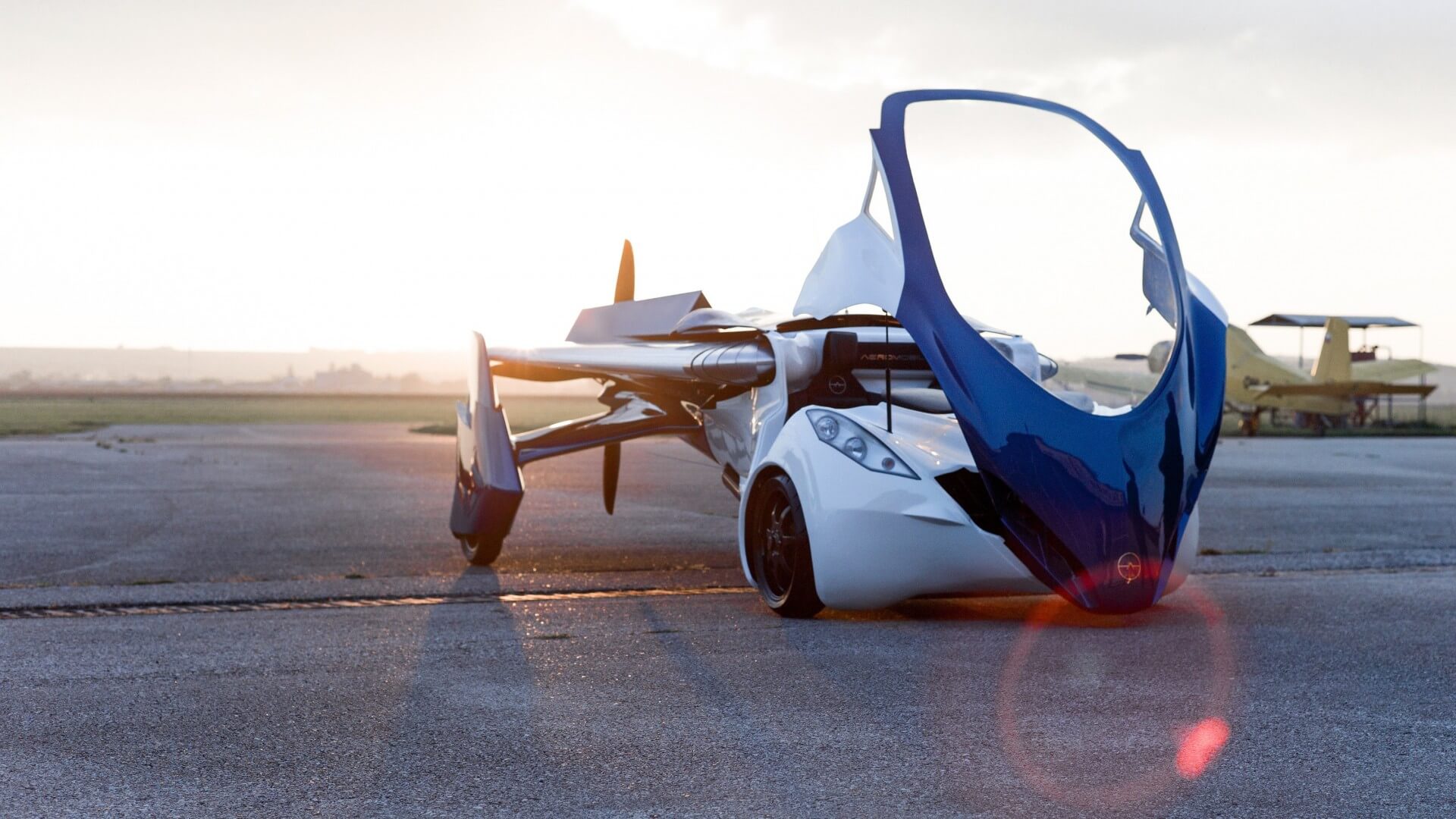
The AeroMobil 3.0 is a two-seat flying car developed by AeroMobil of Bratislava, Slovakia, which first flew in October 2014 and entered flight testing as a pre-production prototype. It could drive at 160 km/h on the road and fly at 200 km/h. The company later showed the AeroMobil 4.0, but it closed in February 2023 without starting series production.
In short
- Designed by Štefan Klein, whose flying-car work began with the AeroMobil 1.0 of 1990–1994; the company was co-founded with CEO Juraj Vaculík.
- AeroMobil 3.0: Rotax 912 engine with 75 kW (100 hp), 6 m long, 2.24 m wide with wings folded, 8.32 m wingspan.
- A test flight ended in a spin on 8 May 2015; the ballistic parachute opened and the pilot was only slightly hurt.
- The AeroMobil 4.0 followed in April 2017; the company closed in February 2023 after failing to raise new funding.

Specs by version
Performance
Show all 1 versions
| Version | Top speed |
|---|---|
| Rotax 912 (75 kW) | 160 km/h99 mph |
Dimensions and weight
Show all 1 versions
| Version | Length | Width | Kerb weight |
|---|---|---|---|
| Rotax 912 (75 kW) | 6,000 mm236.2 in | 2,240 mm88.2 in | 600 kg1,323 lb |
Verified Manufacturer and type-approval data from our catalog · Sources and methodology
What AeroMobil announced in 2014
AeroMobil presented the 3.0 at the Pioneers Festival in Vienna in October 2014, the same month it made its first flight. It was described as a pre-production prototype that would form the basis of a small series, with production then planned for 2017. Earlier versions included the 2.5, which first flew in 2013. According to the old 1cars text, the target price at the time was about €200,000.

AeroMobil 3.0 specifications
| Parameter | Value |
|---|---|
| Maker | AeroMobil s.r.o., Bratislava, Slovakia |
| First flight | October 2014 |
| Engine | Rotax 912, four-cylinder boxer, 75 kW (100 hp) |
| Seats | Two |
| Length | 6 m |
| Width, wings folded | 2.24 m |
| Wingspan | 8.32 m |
| Empty weight | 600 kg |
| Top speed | 200 km/h in the air; 160 km/h on the road |
| Stall speed | 60 km/h |
| Range | 700 km in the air; 875 km on the road |
| Fuel use | 8 l/100 km on the road; 15 l per hour in flight |
The body used a steel frame with composite panels, a method borrowed from sports cars and light aircraft. With its wings folded, the car is 2.24 m wide, which the old 1cars text says kept it within the EU size rules for passenger cars. The garage fit tool shows how a 6 m vehicle compares with a typical garage. The cabin had an autopilot and a ballistic parachute. The fuel economy converter translates its road consumption into other units.

Context: an old idea with new technology
Engineers have tried to build flying cars for decades, and none has reached mass production. Comparable projects included Terrafugia's Transition (USA) and PAL-V (Netherlands). See also the steps that make the cars of the future and Mercedes-Benz's car of the future.

What happened next
On 8 May 2015, the 3.0 prototype entered a spin during a test flight from Nitra airport. Štefan Klein, who was flying, deployed the parachute, and he escaped with minor injuries. The company announced a new prototype a month later.
In April 2017 AeroMobil showed the AeroMobil 4.0 at Top Marques Monaco, as a limited first edition of no more than 500 vehicles, with the first 25 sold as a "Founders Edition". It used hybrid power. In 2019 the company applied to the European Aviation Safety Agency for type certification of a vertical take-off version. Despite these steps, AeroMobil failed to find new financing and closed in February 2023, after total investment of about €25 million.
After leaving AeroMobil, Klein founded Klein Vision, whose AirCar flew between Nitra and Bratislava airports in June 2021 in 35 minutes. In January 2022 the AirCar was type-certified as an aircraft in Slovakia, using a 1.6-litre BMW engine with 104 kW (139 hp); it still needed approval as a road vehicle.
Availability today and our view
No AeroMobil was ever sold to private customers, and the only price was the early target of about €200,000 for the 3.0. Our view: the AeroMobil 3.0 is a milestone in the history of flying cars rather than a product you can buy, and its ideas live on in the Klein Vision AirCar. By our calculation, 15 litres per hour at 200 km/h equals about 7.5 l/100 km, so in cruise flight it was no thirstier than on the road at 8 l/100 km. Other unusual concepts of the period are covered in Honda's cars of the future.


AeroMobil 3.0 photos 8


FAQ
Can you buy an AeroMobil flying car?
No. AeroMobil built prototypes, including the 3.0 and the 4.0, and took pre-orders, but it never started series production. The company closed in February 2023 after failing to raise new funding.
How fast is the AeroMobil 3.0?
According to the maker, it reaches 200 km/h in the air and 160 km/h on the road. Its stall speed is 60 km/h, and the flying range is about 700 km, against about 875 km when driving.
What engine does the AeroMobil 3.0 use?
It uses a Rotax 912, a four-cylinder horizontally opposed aircraft engine with 75 kW (100 hp). It runs on 95-octane petrol, according to the old 1cars text.
What happened in the AeroMobil crash?
On 8 May 2015, the prototype entered a spin during a test flight near Nitra in Slovakia. The pilot, designer Štefan Klein, deployed the ballistic parachute and suffered only minor injuries.
Data sources
Data checked by an editor against the sources below.
- Wikipedia - AeroMobil s.r.o. AeroMobil


