Dacia: From a Romanian State Plant to Renault's Value Brand
Dacia is a Romanian carmaker founded in 1966 as a state enterprise, and since 1999 it has belonged to Renault. It began by building the Renault 8 and Renault 12 under licence, kept the 1300 family in production for 35 years, and then reinvented itself with the 2004 Logan. Today its Sandero, Duster, Jogger, Spring and Bigster sell across Europe.

Key takeaways
- Founded in September 1966 as Uzina de Autoturisme Pitești; the factory at Colibași, now Mioveni, opened in 1968.
- The first Dacia 1300, a licensed Renault 12, was built on 23 August 1969, and the 1300 family ran until July 2004.
- Renault bought a 51 % stake in 1999 and is usually quoted as owning about 99 % today.
- The Logan (2004), Sandero (2008) and Duster (2010) built Dacia's modern low-cost range.
Dacia today: Renault's Romanian budget brand
Dacia is the low-price brand of Renault Group, built around simple, practical cars that share parts with Renault models. Its headquarters and main plant are at Mioveni, near Pitești in Romania. The table gives the position in October 2026:
| Fact | Value |
|---|---|
| Founded | 1966 (company), 1968 (factory) |
| Country | Romania |
| Headquarters and main plant | Mioveni (formerly Colibași), near Pitești |
| Parent company | Renault Group, since 1999; stake usually quoted as about 99 % |
| Chief executive | Katrin Adt (appointed September 2025) |
| Other plants | Tangier and Casablanca, Morocco |
| Mioveni capacity | about 350,000 vehicles a year |
| Best-known models | 1300, Logan, Sandero, Duster |
| Sold since 2004 | more than 10 million vehicles (Renault Group) |

All Dacia models covered on the site are listed in our Dacia catalogue.
Origins: a state car plant and two Renault licences (1966–1969)
Dacia started as a Romanian state project, not as the work of a single founder. The company was set up in September 1966 as Uzina de Autoturisme Pitești, the Pitești car works. The site at Colibași had existed since the 1950s as a supplier to the truck industry, and it was rebuilt as a car factory, which opened in 1968. Some sources therefore give 1968 as the founding year.

The government wanted a modern family car and chose Renault's offer over those of other makers. By 1968 Dacia had acquired the tooling and basic designs of the Renault 12, with engine size limited to 1.3 litres. Because the new car would take time to prepare, the plant began with a licensed Renault 8, sold as the Dacia 1100. Between 1968 and 1972, 37,546 were built.
The first Dacia 1300 left the line on 23 August 1969 (a French source gives 20 August), nine days before Renault launched the Renault 12 itself. It used a 1,289 cc four-cylinder engine producing 40 kW (54 PS), weighed about 930 kg (2,050 lb) as a saloon, and reached 140 km/h (87 mph).
From the 1300 to the Logan: Dacia decade by decade
1969–1978: building the Renault 12 under licence
The 1300 quickly became a family of models. An estate arrived in 1973, and better-equipped Lux and Lux Super versions followed, though sources date the 1301 Lux Super differently. A pick-up was added in the 1970s and stayed in production until 8 December 2006, with 318,969 built. Exports went to the Eastern Bloc, South America, Canada and China, and also to the UK, Denmark and the Netherlands. The licence agreement with Renault ended in 1978.

1979–1998: going it alone with the 1310 and the Nova
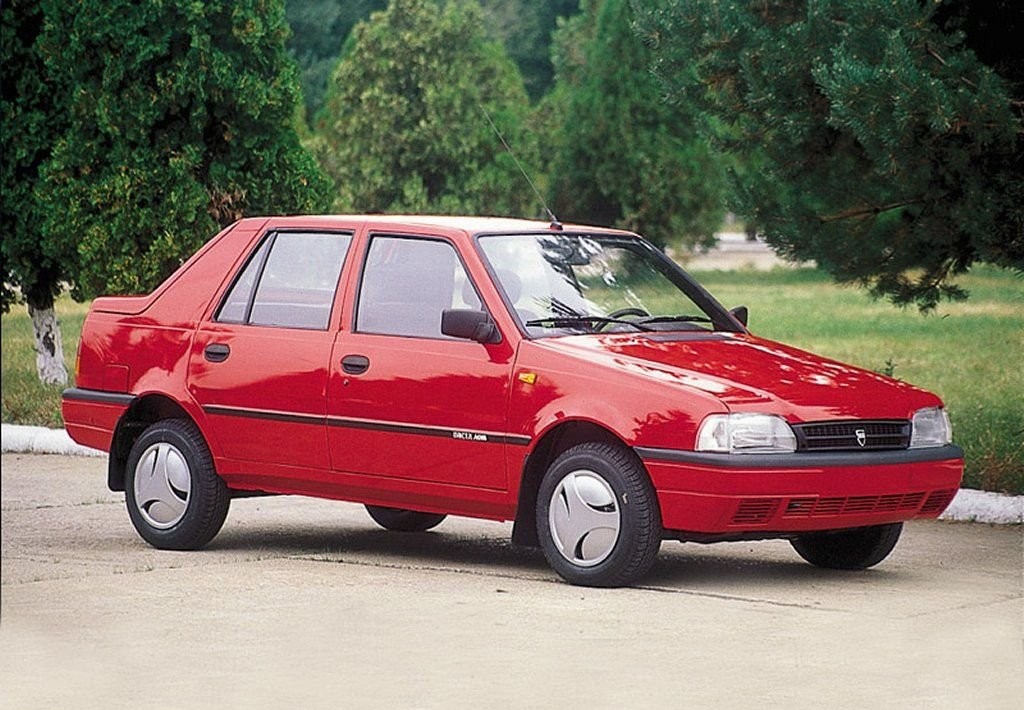
After 1978 Dacia developed the car on its own. A revised model was shown in Bucharest in 1979 and took the 1310 name in 1982. The two-door 1410 Sport appeared in 1983, the 1320 liftback in the late 1980s and the 1325 Liberta hatchback in the early 1990s. Body corrosion was the main weakness, and air conditioning, airbags and ABS were never offered.
The Nova of the mid-1990s was described as the first almost entirely Romanian-designed Dacia; sources disagree on whether it arrived in 1994 or 1996. In 1998 the plant built its two millionth car.
1999–2003: the Renault takeover
In 1999 the Romanian state sold a 51 % majority stake to Renault, and from September of that year Dacia became the third brand of the Renault group. The parent company's story is told in the history of Renault. The SupeRNova of 2000 and the Solenza of 2003 were interim models.
The 1300 family was retired on 21 July 2004 at Mioveni. The last car was number 1,959,730, built almost 35 years after the first.
2004–2012: the Logan and the low-cost formula
The Logan was designed at Renault's Technocentre as project X90 after the takeover, with about four years of development. Its aim was a modern car at a low price, and it is said to use about half as many parts as a high-end Renault, with simple electronics. It rode on the B0 platform shared with Renault and Nissan models.
Dacia launched the Logan in 2004 and brought it to Western Europe in June 2005. The Logan MCV estate, with five or seven seats, was unveiled at the Paris Motor Show in 2006, and 300,000 had been built by June 2010. By 3 September 2009 Mioveni had produced its millionth car on the Logan platform. In markets outside Europe the same car was sold with Renault badges, for example as the Renault Logan.
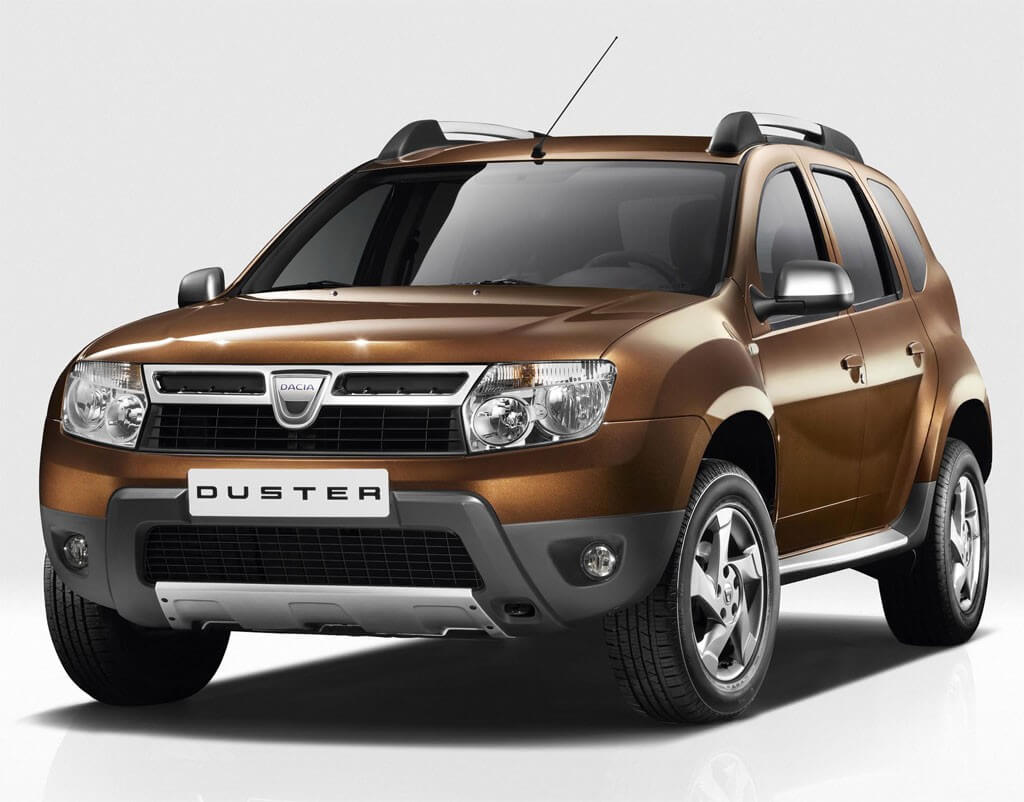
The Sandero hatchback followed. It was revealed in 2007, made its Renault debut in Brazil that December, and appeared as a Dacia at the Geneva show in March 2008. The Duster SUV went on sale in Europe in March 2010, after a concept at Geneva in 2009. The Lodgy MPV and the Dokker van followed in 2012, both built at the new Tangier plant in Morocco.
2013–2020: Sandero, Duster and record sales
These were Dacia's volume years. Brand sales grew from 511,419 in 2014 to 736,486 in 2019, the highest figure on record. Mioveni built its five millionth car on 6 May 2014. The second Duster was shown at Frankfurt in September 2017, and the third-generation Logan and Sandero were presented on 29 September 2020, now on the CMF-B platform. In 2020 sales fell to 522,635.
2021–2026: Spring, Bigster and the new identity
Electrification and a bigger range defined the 2020s. The Spring, Dacia's first electric car, was revealed as a concept on 3 March 2020 and as a production model on 15 October 2020. Derived from the Renault City K-ZE and built in China, it reached private customers in October 2021 with 33 kW (45 PS), and later 48 kW (65 PS) in the Extreme version.
In January 2021 Dacia presented a new logo together with the Bigster concept. The seven-seat Jogger was revealed on 3 September 2021. The third Duster was unveiled on 29 November 2023 and reached customers from mid-2024. The production Bigster, 4,570 mm (179.9 in) long, was presented at the Paris Motor Show in October 2024 and entered production at Mioveni in December 2024.
A second-generation Spring was announced for 2026 and is scheduled to be shown at the Paris Motor Show (12–18 October 2026), alongside the Striker, a new C-segment crossover. Its battery is quoted as 27.5 kWh and its motor as 60 kW (80 hp), and it is reported to be built at Revoz in Slovenia on Renault Twingo E-Tech underpinnings.
Cars that shaped Dacia, from the 1100 to the Bigster
Ten models trace the path from licence production to the Renault era.

| Model | Years | Why it matters |
|---|---|---|
| Dacia 1100 | 1968–1972 | First Dacia; licensed Renault 8, 37,546 built |
| Dacia 1300 / 1310 | 1969–2004 | Licensed Renault 12; 1,959,730 built over 35 years |
| Nova | mid-1990s | First largely Romanian-designed Dacia |
| Logan | 2004– | Renault-developed low-cost saloon on the B0 platform |
| Logan MCV | 2006–2020 | Five- or seven-seat estate; 300,000 by June 2010 |
| Sandero | 2008– | Europe's best-selling car in 2025, according to Renault Group |
| Duster | 2010– | Low-priced SUV; European sales peaked at 220,167 in 2019 |
| Lodgy / Dokker | 2012–2022 / 2012–2021 | Built at the new Tangier plant in Morocco |
| Spring | 2021– | First electric Dacia |
| Bigster | 2024– | Mid-size SUV that entered production at Mioveni in December 2024 |
Dakar, Andros and Euro NCAP: Dacia's record in competition and testing
Dacia's motorsport has been modest but steady, and its crash-test record reflects its low-price brief. Rally-raid entries were based on the Duster: it ran in the Dakar from 2013 to 2018, with a best finish of 14th in 2014, and also contested Pikes Peak in 2011. In the 2009–10 Andros Trophy ice-racing series it finished second.

In 2025 Dacia returned to the Dakar with the Sandrider, a prototype built by Prodrive. Three cars were entered in the Dakar and the World Rally-Raid Championship.
Euro NCAP results show the cost of simplicity. The first Logan scored three stars in June 2005, as did the Duster in 2011 and again in 2017. In 2021 the Logan III received two stars, while the Spring and the Jogger received one star each; the Spring result was published in December 2021. The Duster and Bigster hybrids tested in 2024 recorded adult-occupant results of 70 % and 69 %. The Duster won the Autobest award in 2011, as the Logan had in 2005.
Romanian state to Renault: ownership and the Mioveni and Morocco plants
Renault controls Dacia through Dacia S.A., in which it holds about 99 %; the figure most often quoted is 99.43 %. The 51 % bought from the Romanian state in 1999 has since been raised to that level.

Mioveni remains the brand's centre. It builds the Duster and the Bigster, and its capacity is put at about 350,000 vehicles a year. The two Moroccan plants, Tangier and Casablanca, build Logan, Sandero and Jogger models; the Jogger moved from Mioveni to Tangier in July 2024. The first Spring came from China, and the second generation is reported to be built in Slovenia.
The Logan platform also spread beyond the brand. Related models include the Renault Symbol and Taliant, the Nissan NP200, the Mahindra Verito and the Lada Largus, built by AvtoVAZ from 2012 and covered in the Lada history. The Duster also became a Renault outside Europe, as the Renault Duster. In September 2023 Dacia was active in 44 countries.
Dacia range in October 2026
The current range runs from the electric Spring to the Bigster, with the Striker announced but not yet on sale.

| Model | Segment | Body | Years |
|---|---|---|---|
| Spring | City car, electric | Hatchback | 2021– (second generation announced for 2026) |
| Sandero / Sandero Stepway | Supermini | Hatchback | 2008– |
| Jogger | Compact MPV | Estate, five or seven seats | 2021– |
| Duster | Compact SUV | SUV | 2010– (third generation from 2024) |
| Bigster | Mid-size SUV | SUV | 2024– |
| Striker | C-segment crossover | Crossover | planned for 2027 |
The Logan saloon does not appear on the Renault Group brand list consulted in October 2026, and its status depends on the market. Both the Sandero and the Jogger received a facelift on 6 October 2025.
Dacia timeline 1966–2026
| Year | Event |
|---|---|
| 1966 | Uzina de Autoturisme Pitești set up (September) |
| 1968 | Colibași plant opens; Dacia 1100 (Renault 8) in production |
| 1969 | First Dacia 1300 (Renault 12) built on 23 August |
| 1978 | Renault licence agreement ends |
| mid-1990s | Nova launched |
| 1999 | Renault buys 51 %; Dacia becomes its third brand |
| 2004 | Logan launched; last 1300-series car on 21 July |
| 2006 | Logan MCV unveiled in Paris |
| 2008 | Sandero launched at Geneva |
| 2010 | Duster on sale in Europe |
| 2014 | Five millionth Mioveni car on 6 May |
| 2020 | Logan III and Sandero III; Spring unveiled |
| 2021 | New logo; Spring on sale; Jogger revealed |
| 2023 | Third-generation Duster unveiled |
| 2024 | Bigster presented and in production |
| 2026 | New Spring and Striker scheduled for the Paris Motor Show |
Dacia by the numbers: 1300 output, sales and Mioveni milestones
Figures are usually quoted values from Wikipedia's tables and Renault Group.

- Dacia 1100: 37,546 built (1968–1972).
- 1300 family: 1,959,730 cars by 21 July 2004; pick-up: 318,969 (to 2006).
- Brand sales: 94,720 (2004), 230,473 (2007), 309,457 (2009), 736,486 (2019, the peak), 626,430 (2023), 676,340 (2024).
- Duster in Europe: 57,438 (2010), peak 220,167 (2019), 215,024 (2024).
- Sandero in Europe: 25,947 (2008), 234,715 (2023); Renault Group calls it Europe's best-selling car across all sales channels in 2025.
- Spring: more than 210,000 sold in over 40 countries since 2021.
- Bigster: described by Renault Group as the best-selling SUV in the retail market in 2025.
FAQ
Who owns Dacia today?
Renault Group. It bought a 51 % majority stake from the Romanian state in 1999 and now holds about 99 % of Dacia S.A., usually quoted as 99.43 %.
When was Dacia founded, and by whom?
Dacia was set up by the Romanian state in September 1966 as Uzina de Autoturisme Pitești. Its factory opened in 1968, so both years appear in histories. There was no individual founder.
Where are Dacia cars made?
Mainly at Mioveni in Romania, which builds the Duster and the Bigster, and at Tangier and Casablanca in Morocco, which build Sandero, Logan and Jogger models. The first Spring was built in China; the second is reported to be built in Slovenia.
What does the Dacia name mean, and has the logo changed?
The name comes from Dacia, the historical region that covered much of present-day Romania. The badge was redesigned in 2008 with the Sandero and again in January 2021, when Dacia introduced its current logo.
Is the Dacia Logan a Renault?
It was engineered by Renault at its Technocentre as project X90 and uses the B0 platform shared with Renault and Nissan. The earlier Dacia 1300 was a licensed Renault 12.
What is Dacia's best-selling model?
In recent years the Sandero. Renault Group says it was Europe's best-selling car across all sales channels in 2025, and its European sales reached 234,715 in 2023.
Photos (2)