
The History of Artega: a German Sports-Car Maker That Turned Electric
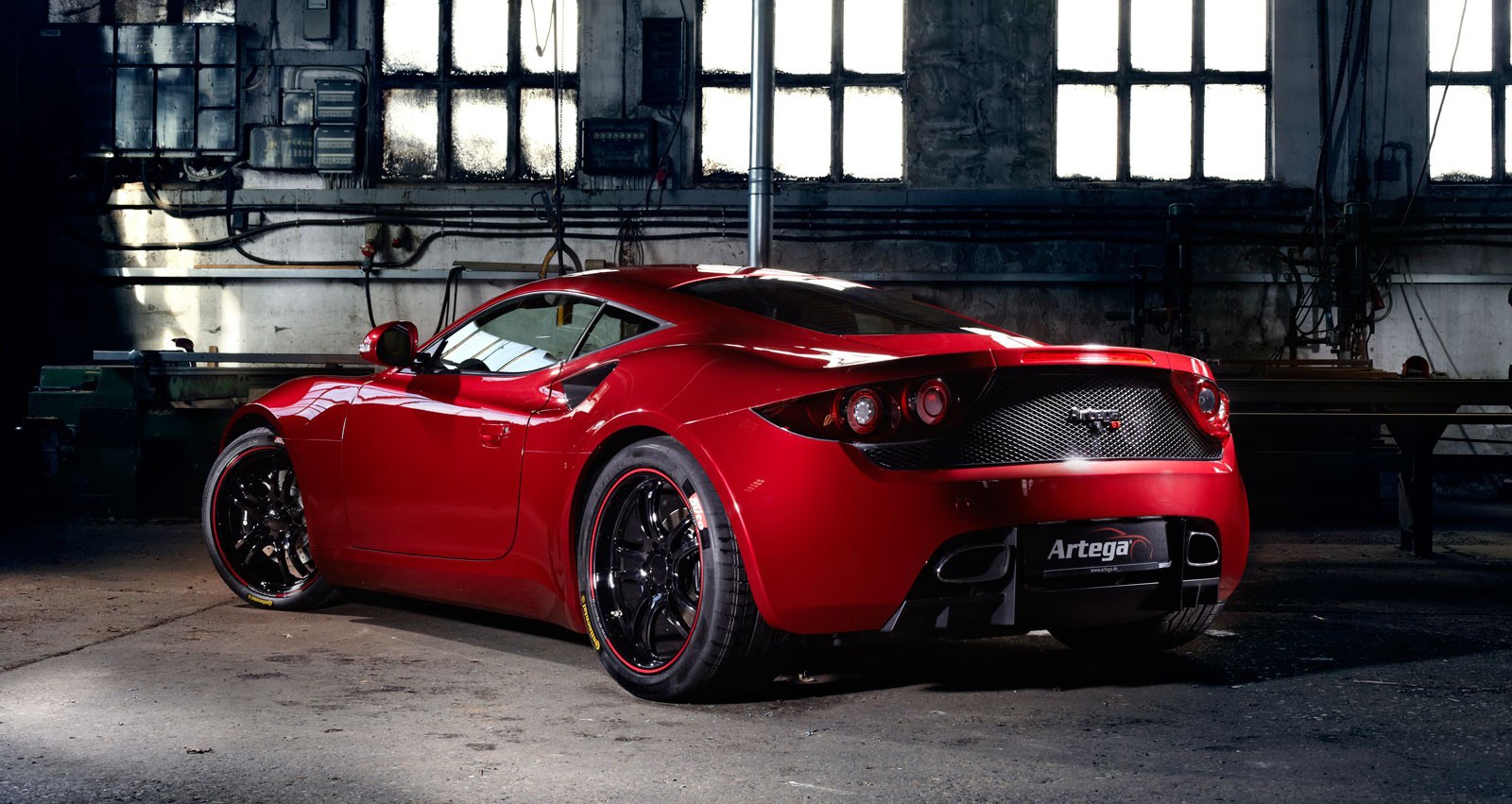
Artega Automobile was a small German carmaker from Delbrück, near Paderborn, founded in 2006 by the engineer Klaus Dieter Frers. Its only series car, the Henrik Fisker-styled Artega GT, was built from 2009 to 2012. After an insolvency in 2012 the brand passed to the supplier paragon, turned to electric cars and ended when ElectricBrands bought it in 2022.
Key takeaways
- Founded 2006 in Delbrück, Germany, by Klaus Dieter Frers, who had set up the automotive supplier paragon AG in 1999.
- One production model: the Artega GT, a mid-engined coupé with a 223.7 kW (300 hp) Volkswagen VR6, built 2009–2012.
- Owned by the Mexican investor Tresalia Capital from January 2010, insolvent in July 2012, taken over by paragon in October 2012.
- Later projects were electric: the Artega SE, the Scalo and Scalo Superelletra, and the Karo-Isetta bubble car.

Artega timeline
| Year | Event |
|---|---|
| 2006 | Klaus Dieter Frers founds Artega Automobile in Delbrück |
| 2007 | engineless GT prototype previewed at the Frankfurt motor show |
| 2008 | production-ready GT shown at Geneva as the "Intro 2008" edition |
| 2009 | series production of the GT begins |
| 25 January 2010 | Tresalia Capital of Mexico takes control; Wolfgang Ziebart becomes chief executive |
| March 2011 | electric Artega SE unveiled |
| July 2012 | Artega files for insolvency |
| September 2012 | the last GT leaves the line |
| 1 October 2012 | paragon AG takes over technology, staff and assets |
| 2015 | Scalo electric coupé and Karo concept shown at Frankfurt |
| 2017 | Scalo Superelletra shown at Geneva |
| December 2018 | Artega acquires production rights for the Swiss Microlino |
| 2022 | ElectricBrands buys Artega; the brand ends |
Klaus Frers and the idea behind the company
Klaus Dieter Frers was a mechanical engineer who had built paragon AG, a Delbrück supplier of car electronics, sensors and interior parts, since 1999. Artega was his attempt to show what a small German team could do with bought-in parts and modern materials: a light, mid-engined two-seater built in small numbers. By its price and layout, our comparison places it close to the Porsche Cayman of the same years.

Frers did not start from a blank sheet. The design came from Henrik Fisker, the Danish designer known for his work on the Aston Martin DB9 and V8 Vantage, and the mechanical layout was handled by Hardy Essig. The engine and gearbox came from Volkswagen, which spared the company the cost of developing its own drivetrain.
The Artega GT: the only series car
An engineless GT prototype was previewed at the Frankfurt motor show in 2007. A production-ready car followed at Geneva in March 2008, offered as a special "Intro 2008" edition, and regular production began in 2009. The old version of this page dated the Geneva debut to 2006 and called the engine an "Infiniti" unit; both claims were wrong.

| Artega GT | Data |
|---|---|
| Layout | mid-engine, rear-wheel drive, two-seat coupé |
| Engine | 3,598 cc direct-injection Volkswagen VR6 |
| Power | 223.7 kW (300 hp) |
| Torque | 350 Nm at 2,400 rpm |
| Weight | about 1,100 kg without occupants |
| 0–100 km/h | under 5 seconds (manufacturer claim) |
| Top speed | above 270 km/h (manufacturer claim) |
| Price in Germany | €74,948 |
By our calculation the GT carried about 4.9 kg per kW, close to the figures of sports cars that cost far more. Our power-to-weight calculator puts the number next to other coupés, and the full technical story of the car is on our Artega GT page.
Mexican ownership and the electric Artega SE
On 25 January 2010 Tresalia Capital, a Mexican investment firm, took control of Artega. Frers later left the company, and Wolfgang Ziebart, a former chief executive of the chip maker Infineon, became its head.

Under the new owners Artega presented an all-electric version of the GT in March 2011. The Artega SE had 280 kW (375.5 hp), a 37 kWh battery, a weight of about 1,400 kg and a range of 200–300 km. The announced price was €150,000, about twice that of the petrol GT. The old version of this page described the SE as a 380 hp hybrid costing 700,000–790,000 euros; neither figure matches the published data.
| Version | Drive | Power | Weight | Price |
|---|---|---|---|---|
| Artega GT (2009) | 3.6 l VR6 petrol | 223.7 kW | about 1,100 kg | €74,948 |
| Artega SE (2011) | electric, 37 kWh | 280 kW | about 1,400 kg | €150,000 (announced) |
Insolvency in 2012 and the paragon takeover
Sales of the GT never reached the numbers a stand-alone carmaker needed. Artega filed for insolvency in July 2012, and the last GT was built in September 2012. No official production total has been published.
On 1 October 2012 paragon AG bought Artega's technology, staff and assets. At first paragon said that it had no plan to restart car production, and Frers was back in charge. The old version of this page claimed that Volkswagen had bought Artega's property and patents. In fact, Volkswagen supplied engines but never owned the company.
Electric concepts: Scalo, Superelletra and Karo
Under paragon, Artega came back as a developer of electric vehicles:
- Scalo (Frankfurt 2015): an electric sports coupé on the GT's lines, with two motors producing 300 kW and a 37 kWh battery.
- Scalo Superelletra (Geneva 2017): a far more extreme concept with four in-wheel motors and 760.6 kW (1,020 hp).
- Karo (Frankfurt 2015): a small electric bubble car concept, later renamed Karo-Isetta for production. It was a quadricycle with a 5.3 kWh battery.
In December 2018 Artega acquired the production rights for the Microlino, a Swiss electric microcar inspired by the 1950s Isetta.
Every Artega model in one table
| Model | Shown | Drive | Power | Battery | Status |
|---|---|---|---|---|---|
| GT | Frankfurt 2007 / Geneva 2008 | 3.6 l VR6 petrol, rear-wheel drive | 223.7 kW (300 hp) | – | built 2009–2012 |
| SE | 2011 | electric | 280 kW (375.5 hp) | 37 kWh | announced at €150,000, not series-built |
| Scalo | Frankfurt 2015 | electric, two motors | 300 kW | 37 kWh | concept |
| Scalo Superelletra | Geneva 2017 | electric, four in-wheel motors | 760.6 kW (1,020 hp) | – | concept |
| Karo / Karo-Isetta | Frankfurt 2015 | electric quadricycle | – | 5.3 kWh | pre-production, renamed Evetta |
The table shows the shift in Artega's work after 2012. Under its founder and the Mexican owners it was a sports-car maker with one petrol model. Under paragon it became a showcase for electric drive, first in sports cars and then in a city microcar. By our calculation the Superelletra had about 3.4 times the GT's output, and the SE's battery added roughly 300 kg to the GT's weight.
Why a supplier owned a car brand
In our reading, owning Artega was for paragon less about selling cars than about showing technology. The company supplied electronics, sensors and interior parts to large carmakers, and an in-house brand gave it a place to show battery systems and electric drives at motor shows. This would explain why the post-2012 Artega built concepts rather than production cars, and why the brand could be sold in 2022 without a factory or a dealer network to close.
ElectricBrands and the end of the brand
In 2022 the German start-up ElectricBrands bought Artega to build the Karo-Isetta, renamed Evetta. With that sale Artega ceased to exist as a car brand. ElectricBrands filed for insolvency under self-administration in 2024, and neither its XBUS van nor the Evetta reached the market.
So in sixteen years the name Artega stood for one petrol sports car, one electric prototype that never went on sale and a bubble car that never left the pre-production stage.
How Artega compares with other small German makers
| Maker | Founded | Main model | Fate |
|---|---|---|---|
| Artega | 2006 | GT (2009–2012) | insolvent 2012, sold 2012 and 2022 |
| Gumpert | 2004 | Apollo | insolvent 2013, revived as Apollo Automobil |
Like Gumpert, Artega shows how hard it is for a small German maker to build and sell a few hundred sports cars a year without a large partner. More brands are in our car catalogue, and the car comparison tool lets you line up the GT against rivals of its time.
Verdict: what Artega leaves behind
Artega's legacy is the GT: a light, well-proportioned mid-engined coupé with a reliable Volkswagen engine and a body by one of the best-known designers of the 2000s. For an enthusiast it is a rare and interesting alternative to a Porsche Cayman of the same years. Parts for the VR6 drivetrain are easy to find, while body and trim parts are scarce. The electric projects matter mainly as an early sign of where small carmakers were heading.
FAQ
Who founded Artega?
Klaus Dieter Frers, a German mechanical engineer, founded Artega Automobile in Delbrück in 2006. He had already set up the automotive supplier paragon AG in 1999, and paragon took Artega over after its 2012 insolvency.
What engine does the Artega GT use?
A 3,598 cc direct-injection Volkswagen VR6 with 223.7 kW (300 hp) and 350 Nm, mounted behind the seats. It drives the rear wheels, and Artega quoted under 5 seconds to 100 km/h.
Why did Artega go bankrupt?
The GT did not sell in the numbers a stand-alone manufacturer needed, even under Mexican ownership from 2010. Artega filed for insolvency in July 2012 and built its last GT in September that year.
Did Volkswagen buy Artega?
No. Volkswagen supplied the VR6 engine and gearbox, but the assets went to paragon AG in October 2012. In 2022 the brand was sold to ElectricBrands.
Does Artega still exist?
No. After the 2022 sale to ElectricBrands the brand was discontinued, and ElectricBrands itself filed for insolvency in 2024 without bringing its cars to market.



