Archive first published
Driving on Ice: Seven Rules Every Driver Should Know
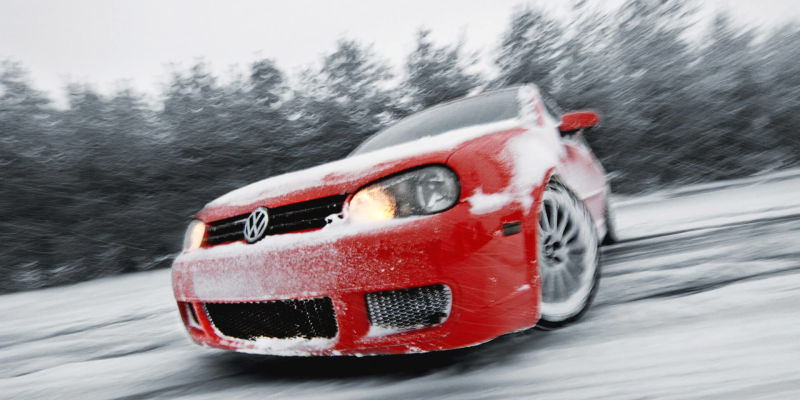
Ice is the most dangerous surface a driver meets in winter, because the tyres have very little grip and stopping distances can grow to ten times their normal length. Most loss-of-control accidents on ice come from sudden steering, braking or acceleration. These seven rules, based on advice from driving instructors, motoring publications and tyre specialists, explain how to start, drive, brake and recover from a skid on icy roads.
Key takeaways
- Slow down and leave a far bigger gap: stopping distances on ice can be up to ten times longer than on a dry road.
- Do everything smoothly: steering, braking, accelerating and changing gear.
- Pull away in second gear and stay in higher gears to avoid wheelspin.
- With ABS, press the brake firmly and let the system work; without ABS, brake in gentle pulses.

How we chose these rules
Each rule appears in the guidance of several independent sources, including the IAM's Drive & Survive training team, What Car? and a tyre and parts specialist's braking guide. We kept only advice that applies to ordinary cars with or without ABS and stability control, and we left out techniques that need special training on a closed track.
The rules at a glance
| # | Rule | What to do | Why it matters |
|---|---|---|---|
| 1 | Prepare the car | Clear all windows, check tyres, carry a scraper | You need full visibility and grip from the start |
| 2 | Be smooth | Gentle steering, throttle and brakes | Sudden inputs break the tyres' grip |
| 3 | Use higher gears | Pull away in second, avoid high revs | Less torque at the wheels means less wheelspin |
| 4 | Increase the gap | Leave far more space than usual | Stopping distances can be up to 10 times longer |
| 5 | Brake correctly | ABS: firm pressure; no ABS: gentle pulses | Locked wheels cannot steer |
| 6 | Read the road | Watch for icy patches, shade and bridges | Treated roads can still be icy |
| 7 | Recover from a skid | Ease off, clutch down, steer where you want to go | Grip returns once the wheels roll again |
1. Prepare the car before you set off
Remove ice and condensation from every window, not just a small hole in the windscreen; the air conditioning clears misted glass quickly. Carry de-icer and a scraper. What Car? recommends at least 3 mm of tread on each tyre and warns against lowering tyre pressures in the hope of more grip. Winter tyres make a real difference on snow and ice, and our guide on how to choose winter tyres explains what to look for. Check the traffic reports, stick to main roads where possible and consider whether the journey is essential, especially early in the morning and late in the day.
2. Be smooth with every control
On ice the tyres have only a small reserve of grip, and any sudden action can use it up. Pull away gently, turn the steering wheel slowly and brake progressively. If the wheels start to spin or lock, the car can slide in almost any direction and the driver has little control. The old 1cars text puts it simply: every action on ice must be done carefully and smoothly.
3. Pull away in second and stay in a higher gear
If the car struggles to pull away, select second gear, release the clutch gently and use very little throttle. The IAM advises doing this on level ground or downhill, and parking where you will not need to start uphill. While driving, stay in the highest gear that is safe: less torque reaches the wheels, so wheelspin is less likely. In an automatic, many cars offer a winter or snow mode that does the same job.
4. Leave a much bigger gap to the car in front
Stopping distances on ice can be up to ten times longer than on a dry road, while on a wet road they are usually about twice as long. A braking guide from a car-parts specialist gives an example: a car that needs about 12 metres (40 ft) to stop from 20 mph on a clear road may need about 120 metres (400 ft) on ice. Slow down and leave far more space than you would on a dry road, so that you have time to react if the car ahead slides or brakes suddenly.
5. Brake the right way for your car
Find out from the handbook whether your car has ABS and stability control, because the technique differs.
- With ABS: press the brake pedal firmly and keep it pressed. The system detects a wheel that is about to lock and pulses the brake pressure automatically, so you can still steer. A buzzing or pulsing pedal is normal.
- Without ABS: do not stamp on the pedal. Brake in short, gentle, repeated pulses so the wheels keep turning and you keep steering control, and continue until the car stops.
In both cases, brake earlier and more gently than on a dry road, and use engine braking by easing off the accelerator well before junctions and bends.
6. Read the road and expect hidden ice
Gritted roads can still have icy patches, and in very cold conditions road salt stops working. Ice often lingers in shaded areas, on bridges and in dips, and a road that looks wet may be frozen. Keep your eyes well ahead so that you see hazards early. On ice a driver who is distracted for a moment and spots an obstacle just a few metres ahead has almost no chance of stopping in time.
7. Know what to do in a skid
Skids are almost always caused by driving too fast or too abruptly for the conditions, so slowing down is the best prevention. If the car does start to slide:
- Do not slam on the brakes.
- Ease off the accelerator, or off the brake if you were braking, and press the clutch in a manual car.
- Steer gently in the direction you want the car to go, which usually means steering into the skid.
- Once the tyres grip again, straighten up smoothly. If control does not return after a few seconds, brake gently.
Steering hard the other way can make the car fishtail. Winter driving courses on closed ice tracks are a safe way to practise these reactions.
If you get stuck
If the wheels spin on ice, stop accelerating, because spinning only polishes the surface. A sack or mat placed under the driven wheels gives extra grip; once the car moves, keep going gently until you reach firmer ground. Choosing a suitable vehicle also helps: our guide to SUVs for price and quality explains the difference between permanent and on-demand four-wheel drive.
Tyres, wheels and maintenance
Good tyres are the single most important piece of winter equipment. Compare current models in our overview of the best winter tyres, and see how tyre types differ in our article on tyre varieties and selection. A well-maintained engine starts reliably in the cold; our list of reliable modern engines shows which simple petrol units have the best record.
FAQ
How much longer are stopping distances on ice?
Stopping distances on ice can be up to ten times longer than on a dry road. On a wet road they are usually about twice as long, so slow down and leave far more space.
Should I pump the brakes on ice?
Only if your car has no ABS. With ABS, press the pedal firmly and hold it, because the system pulses the brakes for you. Without ABS, brake in short, gentle pulses to stop the wheels locking.
Which gear should I use on ice?
Pull away in second gear with gentle throttle, and stay in the highest safe gear while driving. Less torque at the wheels reduces the risk of wheelspin and loss of grip.
What should I do if my car skids on ice?
Do not brake hard. Ease off the accelerator, press the clutch in a manual car and steer gently in the direction you want to go. Straighten up smoothly once the tyres grip again.
Do winter tyres help on ice?
Yes. Winter tyres grip far better on snow and ice than summer tyres, and What Car? advises at least 3 mm of tread. Do not lower tyre pressures, because that does not improve grip.