 Scion xB
All generations, specs and history
Updated Published Sources (2) Report an error
By Sarah Whitmore, Senior Automotive Writer Reviewed by Oleksandr Hnatiuk

- Built
- 2003–2015
- Generations
- 2 · XP30 to E150
- Top power
- 118 kW (160 PS)
Timeline
xB generations
Click a generation for its own page


- xB XP30 2003–2007 · Minivan / MPV · 81 kW (110 PS)
- xB E150 2007–2015 · Minivan / MPV · 118 kW (160 PS)
Newest first · 2 generations since 2003
-
2007

-
2003

All generations by year: xB E150 (2007–2015) · xB XP30 (2003–2007)
Which one is mine?
Pick the year of first registration to see which generation it is.
Check by VINWhich Scion xB to buy: verdict
Our verdict · Sarah Whitmore
The first-generation xB suits buyers who want a small, cheap and economical city car with a lot of room; other practical small cars are grouped under hatchbacks. The second generation is the better choice for safety and motorway driving. Similar boxy compacts include the Kia Soul and the Nissan Cube, while the Toyota Corolla shares much of the second xB's hardware. More cars of the brand are listed in the Scion catalogue, and the two generations can be set against rivals in the comparison tool.
The Scion xB is a boxy compact car sold by Toyota's youth brand Scion in North America from June 2003 to 2015. The first generation (2003–2007) was a lightly modified Japanese Toyota bB with a 1.5-litre engine. The second generation (2007–2015) grew into a larger car on the Corolla E150 platform, with a 2.4-litre engine of 118 kW (158 hp).
In short
- First generation (XP30, model years 2004–2007): Toyota bB-based, 1.5-litre 1NZ-FE with 81 kW (108 hp), 3,945 mm long.
- Second generation (E150, 2008–2015 model years): 2.4-litre 2AZ-FE with 118 kW (158 hp), 4,250 mm long, sold as the Toyota Corolla Rumion in Japan.
- Front-wheel drive only, five-speed manual or four-speed automatic.
- US sales peaked at 61,306 cars in 2006; production ended in December 2015, and the Scion iM replaced it.

Specs by version
Verified Manufacturer and type-approval data from our catalog · Sources and methodology
Scion xB generations
Toyota launched Scion in 2003 to win younger buyers in the United States. The xB was its signature model: a tall, square-cut box with the wheels pushed out to the corners and a low price. It became the brand's best-selling model in the US until 2011, when the Scion tC overtook it. The background of the brand is in the history of Scion.

| Generation | Code | Model years | Engine | Power | Basis |
|---|---|---|---|---|---|
| First | XP30 | 2004–2007 | 1.5 l 1NZ-FE I4 | 81 kW (108 hp) | Toyota bB (Yaris/Echo platform) |
| Second | E150 | 2008–2015 | 2.4 l 2AZ-FE I4 | 118 kW (158 hp) | Toyota Corolla E150 platform |
First generation (2003–2007)
Sales began in June 2003 as 2004 model-year cars. The xB was a rebadged Japanese-market Toyota bB, built on the platform of the Yaris (Echo in North America). Toyota changed it for the American market: it moved the controls from right- to left-hand drive and replaced the front bench with two bucket seats. The column shifter gave way to a floor-mounted one, and the spare wheel moved under a raised boot floor.

The 1.5-litre 1NZ-FE engine produced 81 kW (108 hp) and 142 Nm. With a kerb weight of about 1,086 kg the xB was slow on the motorway and economical in town. Buyers could choose a five-speed manual or a four-speed automatic.
| Dimension | First generation | Second generation |
|---|---|---|
| Length | 3,945 mm | 4,250 mm |
| Width | 1,690 mm | 1,760 mm |
| Height | 1,640 mm | 1,645 mm |
| Wheelbase | 2,500 mm | 2,600 mm |
| Kerb weight | About 1,040–1,105 kg | About 1,370–1,400 kg |
| Fuel tank | 45 l | 53 l |
By our calculation, the first xB carries about 13.4 kg per kW, while the heavier but stronger second generation needs only about 11.6 kg per kW. The square body gave the small car a huge cabin for its length. Wheels at the corners keep the wheel arches out of the passenger space, and the rear seat folds 60/40. Its weak point was side impact safety: in IIHS tests the first xB scored "Good" in the frontal offset test but "Poor" in the side test, because 2003–2006 cars had no side airbags.
Second generation (2007–2015)
The second xB was unveiled at the 2007 Chicago Auto Show. It moved to the Corolla E150 platform and grew substantially: it was 300 mm longer, 71 mm wider and about 270 kg heavier than the first car. It lost some of the original's compact, quirky feel but gained space, power and safety equipment. Toyota sold the same car as the Corolla Rumion in Japan and the Toyota Rukus in Australia, and built it at Kanto Auto Works in Kanegasaki, Japan.

Under the bonnet sat the 2.4-litre 2AZ-FE four-cylinder from the Camry, with 118 kW (158 hp) and 220 Nm. It made the xB much quicker, but fuel economy got worse: 22 mpg in the city and 28 mpg on the highway, about 10.7 and 8.4 l/100 km. Gearboxes were a five-speed manual or a four-speed automatic with sequential shifting. Standard safety equipment was generous for the class: four-wheel ABS with brake assist and EBD, stability control, and front, side and curtain airbags.
Updates and Release Series
| Model year | Change |
|---|---|
| 2011 | Facelift (on sale March 2010): new bumpers, grille, headlights and tail lights, new instruments, console and seats; xB launched in Canada |
| 2012 | Bluetooth radio standard |
| 2013 | Revised bumpers, interior upgrades, new colours, optional BeSpoke radio |
| 2014 | 6.1-inch touchscreen audio standard |
| 2015 | Rear-view camera standard |
Scion offered numbered Release Series editions, each in a single colour and a limited run, in most model years.

| Model year | Edition | Colour | Units |
|---|---|---|---|
| 2004 | RS 1.0 | Hot Lava Orange | 2,100 |
| 2005 | RS 2.0 | Solar Yellow | 2,500 |
| 2006 | RS 3.0 | Envy Green | 2,200 |
| 2008 | RS 5.0 | Gold Rush Mica | 2,500 |
| 2010 | RS 7.0 | Murasaki (purple) | 2,000 |
| 2013 | 10 Series | Silver Ignition | 2,100 |
| 2015 | Parklan Edition | Cocoa Bean Metallic | 686 |
Inside the xB: cabin and equipment
Toyota's quality standards applied in full. The dashboard is made of good plastics, the seats are trimmed in hard-wearing fabric, and the glovebox is large. In the second generation the instruments sit in the middle of the dashboard, which the old 1cars text finds awkward because the driver must look away from the road. Standard equipment included air conditioning, electric windows and mirrors, remote central locking and a CD and MP3 audio system. Options included an upgraded audio system with a subwoofer, USB port and Bluetooth, sports suspension parts and alloy wheels. The 3.0 Release Series even had 7-inch screens in the front headrests.

Driving and practicality
The xB uses MacPherson struts at the front and a torsion-beam rear axle, with a rear anti-roll bar to limit body roll in corners. The front brakes are ventilated discs and the rear brakes drums. The first generation suits city driving best, with light controls and compact dimensions. The second is calmer on the motorway thanks to the 2.4 engine but uses more fuel. The boxy shape makes both easy to load, and the high roof suits tall passengers and bulky items. Boot space of today's practical small cars is compared in the biggest-boot hatchback ranking.

Safety ratings
The second-generation xB was named an IIHS Top Safety Pick six years in a row. It scored "Good" in every measured category of the frontal offset and side impact tests and "Good" in the roof-strength test. Car and Driver listed the 2008 xB among its ten safest affordable vehicles. This was a big step from the first car's poor side-impact score.

Sales and the end of the xB
| Year | US sales |
|---|---|
| 2003 | 6,936 |
| 2004 | 47,013 |
| 2005 | 54,037 |
| 2006 | 61,306 |
| 2008 | 45,220 |
| 2010 | 20,364 |
| 2013 | 17,849 |
| 2015 | 15,223 |
Production ended in December 2015. Scion replaced the xB with the iM hatchback for the 2016 model year, and when Toyota closed the Scion brand, the iM became the Toyota Corolla iM. The Australian Rukus ended in October 2015 and the Japanese Corolla Rumion in December 2015.

| Strengths | Weaknesses |
|---|---|
| Huge cabin for the car's size | Polarising boxy styling |
| Toyota reliability and parts supply | First generation lacks side airbags before 2007 |
| Economical 1.5 in the first generation | Second generation uses more fuel |
| Strong crash results for the second generation | Centre-mounted instruments in the second generation |
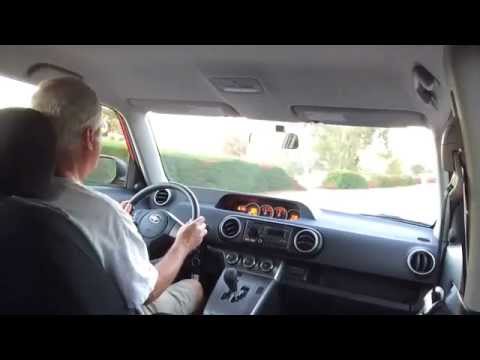
Scion xB: first vs latest generation
| Spec | xB XP30 | xB E150 | Change |
|---|---|---|---|
| Years | 2003–2007 | 2007–2015 | 4 years apart |
| Most powerful version | 81 kW (110 PS) | 118 kW (160 PS) | +37 kW (+46%) |
Oldest and newest generation in the 1cars catalog. Power is the strongest version of each; other rows are shown only when both generations have the figure.
Scion xB in our rankings
- No. 304 of 912 · Longest-running car nameplates (12 years · top 35%)
- No. 652 of 859 · Most powerful cars (118 kW · top 76%)
- No. 135 of 154 · Most powerful American cars (118 kW · top 88%)
- No. 153 of 170 · Most powerful cars of the 2000s (81 kW · top 91%)
- No. 501 of 557 · Biggest engines: cars (1,500 cc · top 91%)
- No. 271 of 345 · Cars with the most generations (2 generations)
In production longer than 65% of ranked nameplates in the 1CARS catalog (No. 304 of 912).
Scion xB photos 15


FAQ
What is the Scion xB based on?
The first generation was a modified Japanese-market Toyota bB on the Yaris platform. The second generation used the Corolla E150 platform and was sold in Japan as the Toyota Corolla Rumion and in Australia as the Toyota Rukus.
What engine does the Scion xB have?
The first generation has a 1.5-litre 1NZ-FE four-cylinder with 81 kW (108 hp). The second generation uses a 2.4-litre 2AZ-FE with 118 kW (158 hp) and 220 Nm, the engine from the Camry.
Is the Scion xB all-wheel drive?
No. Every xB sold by Scion is front-wheel drive. All-wheel-drive versions of the related Toyota bB existed in Japan, but they were not offered under the Scion badge.
Is the Scion xB a safe car?
The second generation was an IIHS Top Safety Pick six years in a row, with "Good" ratings in frontal, side and roof tests. The first generation scored "Poor" in the side test because 2003–2006 cars had no side airbags.
Why was the Scion xB discontinued?
Sales fell from more than 61,000 in 2006 to about 15,000 in 2015, and Toyota was preparing to close the Scion brand. Production ended in December 2015, and the Scion iM took its place for 2016.
Data sources
Data checked by an editor against the sources below.
- The text of this article (1cars archive)
- Wikipedia - Scion xB