 Rover 75
Specs, engines and history
Updated Published Sources (1) Report an error
By Felix Hartmann, Automotive Technology & EV Contributor Reviewed by Oleksandr Hnatiuk
- Built
- 1998–2005
- Top power
- 191 kW (260 PS)
Which Rover 75 to buy
Our verdict · Felix Hartmann
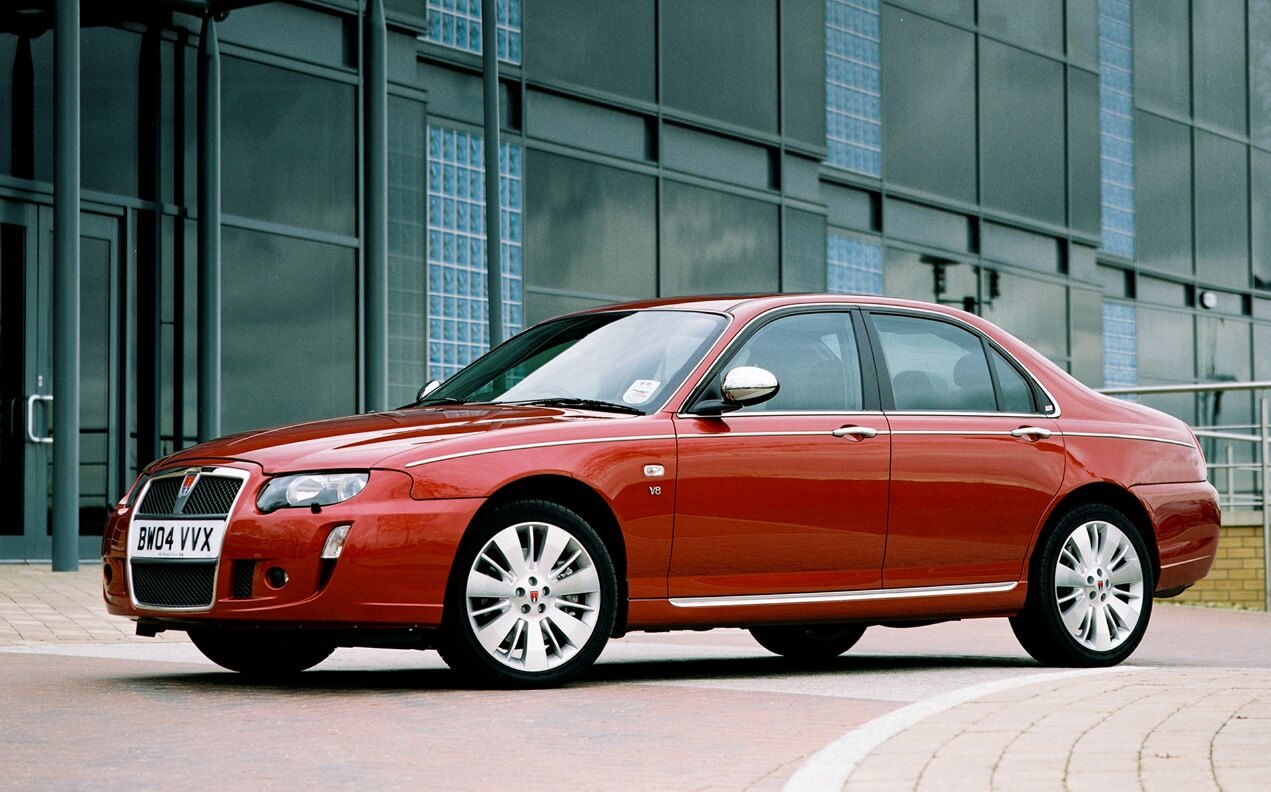
The 1.8 Turbo is the best balance of performance and running costs among the petrol cars, while the 2.5 V6 automatic suits drivers who want smooth, relaxed cruising. The diesel is the choice for high mileage. The V8 is a rare collector's car: only 166 Rover 75 V8s were built, or 883 including the MG ZT 260. More 1990s cars are in the 1990s classics section, and other Rover models in the Rover catalogue.
The Rover 75 is a British executive saloon and estate built from 1998 to 2005, the last all-new car to wear the Rover badge. Developed while BMW owned Rover, it offered petrol engines from 88 kW to a 191 kW V8 and a BMW diesel. Production ended in April 2005 after 211,175 cars, when MG Rover collapsed.
In short
- Shown at the Birmingham Motor Show on 20 October 1998; built at Cowley until 2000, then at Longbridge.
- Saloon, Tourer estate (2001), long-wheelbase Vanden Plas (2002) and a rear-wheel-drive V8 (2003–2005).
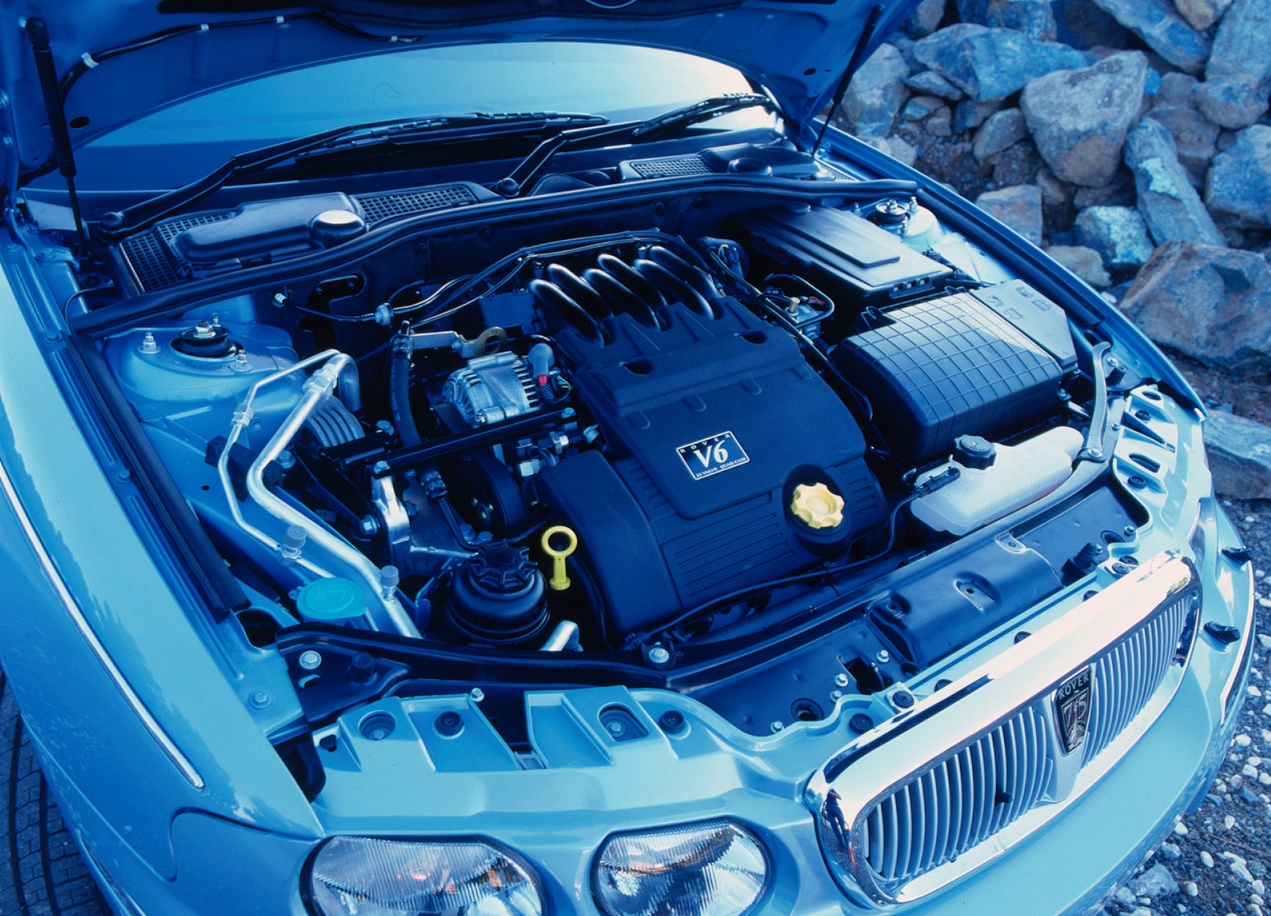
- Engines: 1.8 and 1.8 Turbo K-series, 2.0 and 2.5 V6, BMW 2.0 diesel and a Ford 4.6 V8.
- Euro NCAP 2001: 30 of 36 points for adult protection, a four-star result; the MG ZT is its sporty twin.

Rover 75 at a glance
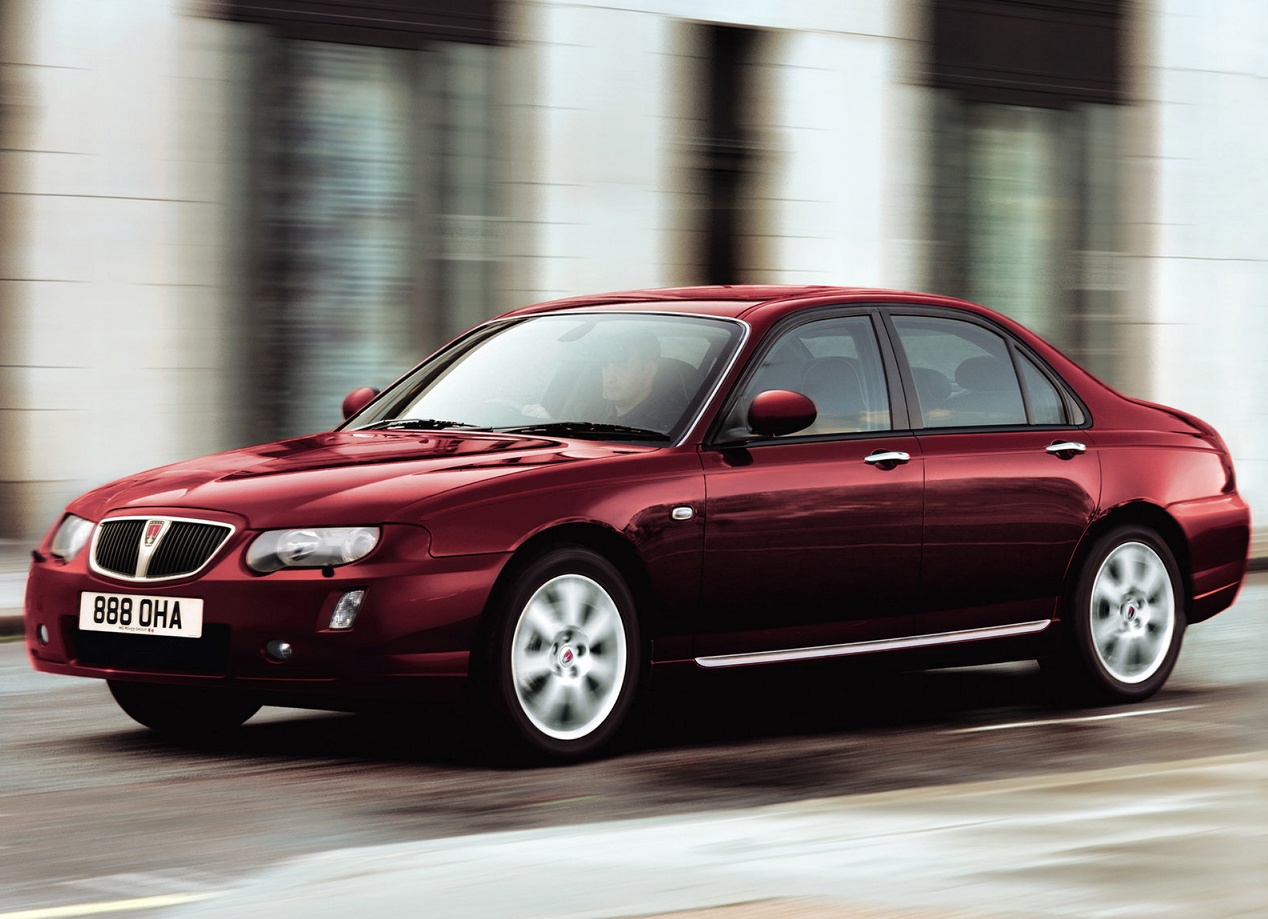
The 75 was designed under Richard Woolley on a new platform, codenamed R40, after BMW bought Rover in 1994. Its retro styling, with chrome details, oval headlamps and a wood-and-cream cabin, set it apart from German rivals. The launch went badly: at the 1998 show, BMW's chairman criticised the UK government's support for Longbridge, which hurt confidence in the brand. Sales started slowly behind the BMW 3 Series and Audi A4, then picked up in 2000.

In 2000 BMW sold Rover to the Phoenix consortium, and production moved from Oxford to Longbridge in Birmingham as MG Rover. The story of the brand is told in the history of Rover, and BMW's side in the BMW history.
| Parameter | Metric | Imperial |
|---|---|---|
| Length (saloon / Tourer / Limousine) | 4,747 / 4,791 / 4,950 mm | 186.9 / 188.6 / 194.9 in |
| Wheelbase (standard / long) | 2,746 / 2,946 mm | 108.1 / 116.0 in |
| Layout | Front engine, front-wheel drive (V8: rear-wheel drive) | – |
| Suspension | MacPherson struts front, Z-axle rear | – |
| Body | 4-door saloon, 5-door estate (Tourer) | – |
| Production | 1998–2005, 211,175 built | – |
Rover 75 engines: K-series, KV6, BMW diesel and V8
The 75 used Rover's own K-series four-cylinder and KV6 engines, a BMW diesel and, late in life, a Ford V8.

| Engine | Fuel | Power | Notes |
|---|---|---|---|
| 1.8 K-series | Petrol | 88 kW (120 PS) | Entry engine |
| 1.8 Turbo | Petrol | 110 kW (150 PS) | From 2002 |
| 2.0 V6 | Petrol | 110 kW (150 PS) | Dropped in 2002 |
| 2.5 V6 | Petrol | 130 kW (177 PS) | Top engine until the V8 |
| 2.0 CDT / CDTi | Diesel (BMW M47) | 85 kW (116 PS) / 96 kW (131 PS) | – |
| 4.6 V8 | Petrol (Ford Modular) | 191 kW (260 PS) | Rear-wheel drive, 2003–2005 |
Manual cars have a Getrag 283 five-speed gearbox. The four-cylinder and V6 engines could also have a JATCO five-speed automatic with a sport mode, and the V8 used a Ford four-speed automatic. In period tests the 1.8 reached 60 mph in 10.9 seconds and a top speed of about 195 km/h (121 mph), the diesel took 11.0 seconds, and the 2.5 V6 needed 8.2 seconds on its way to about 220 km/h (137 mph).
Body, cabin and space
The Tourer, designed by Ian Callum's team and launched in July 2001, is 44 mm longer than the saloon and shares its wheelbase. The Vanden Plas and later the Limousine stretched the wheelbase by 200 mm, mostly for rear legroom. More than 40% of the body used high-strength steel, and Rover gave a six-year anti-corrosion warranty.

Inside, the dashboard has wood veneer, oval dials and soft-touch plastics. Rover added extra soundproofing around the engine bay and thicker glass to keep the cabin quiet. The trip computer reminded the driver when a service was due and what work it needed. Taller rear passengers find the sloping roofline limits headroom, and a split-folding rear seat was an option rather than standard on some versions.
Economy, reliability and the K-series head gasket
The 2.0 CDT diesel is the economical choice: road testers reported close to 50 mpg (UK), about 5.7 l/100 km, in everyday driving. The petrol V6 and V8 engines are much thirstier. Parts are still easy to find through specialists and owners' clubs, and the RAC described the 75 as a reliable car. On the 1.8 and 1.8 Turbo, check the cooling system and head gasket, a known weak point of the K-series engine.

Classic, Club and Connoisseur trims
From 1998 to 2004 the trims were Classic, Classic SE, Club, Club SE, Connoisseur and Connoisseur SE, plus the long Vanden Plas. After the 2004 facelift, which brought a new grille, bumper and headlights, the line-up became Classic, Contemporary, Contemporary SE, Connoisseur, Connoisseur SE and Limousine. Higher trims have automatic climate control, xenon headlamps, rain-sensing wipers and leather.

Euro NCAP and ANCAP results
Euro NCAP tested the Rover 75 in 2001. It scored 30 of 36 points for adult occupant protection, which gave four stars, and 13 of 36 for pedestrian protection. The Australian ANCAP test of the same year recorded 13.78 of 16 points in the frontal offset test and the full 16 points in the side impact test.

Rivals: how the Rover 75 compared
When new, the 75 competed with the BMW 3 Series, the Audi A4 and the Mercedes-Benz C-Class. It was softer and more traditional than these rivals, with a comfortable ride and an old-fashioned luxury feel rather than sporty handling. The MG ZT and ZT-T, launched in 2001, used the same body with firmer suspension and sportier styling; the history of MG covers them. Compare the 75 with other 1990s saloons in the 1cars comparison tool or check versions in the specifications section.

The design did not die with MG Rover. SAIC bought the rights in 2005 and launched the Roewe 750 in November 2006, while Nanjing Automobile used the tooling for the MG 7 from March 2007.
Rover 75 in our rankings
- No. 501 of 859 · Most powerful cars (191 kW · top 59%)
- No. 504 of 912 · Longest-running car nameplates (7 years · top 60%)
- No. 81 of 109 · Most powerful British cars (191 kW · top 75%)
More powerful than 41% of ranked cars in the 1CARS catalog (No. 501 of 859).
Rover 75 photos 14


Rover 75 videos 2

Test drive

Video overview
FAQ
What is the fuel consumption of the Rover 75?
The 2.0 CDT diesel is the most economical version, with real-world figures close to 50 mpg (UK), or about 5.7 l/100 km. The petrol engines use noticeably more, and the 4.6 V8 is the thirstiest of all.
Is the Rover 75 available with all-wheel drive?
No. Every Rover 75 has two-wheel drive: the four-cylinder, V6 and diesel cars are front-wheel drive, while the rare 4.6 V8 of 2003–2005 drives the rear wheels. There was no hybrid or four-wheel-drive version.
Who built the Rover 75?
Rover developed it while owned by BMW, and production started at Cowley, Oxford. After BMW sold Rover in 2000, MG Rover built it at Longbridge, Birmingham, until the company went into administration in April 2005.
What are the main rivals of the Rover 75?
When new, it competed with the BMW 3 Series, Audi A4 and Mercedes-Benz C-Class. It offered more traditional luxury and a softer ride, while its German rivals were sportier and sold in larger numbers.
What replaced the Rover 75?
No Rover replaced it in Europe. SAIC bought the design and launched the Roewe 750 in November 2006, and Nanjing Automobile used the tooling for the MG 7 from March 2007.
Data sources
Data checked by an editor against the sources below.