
 Daihatsu Terios
All generations, specs and history
Updated Published Sources (2) Report an error
By Oleksandr Hnatiuk, Automotive Editor & Used Car Specialist

- Built
- 1997–present
- Generations
- 3 · J100 to F800
- Top power
- 80 kW (109 PS)
Timeline
Terios generations
Click a generation for its own page


- Terios J100 1997–2006 · SUV
- Terios J200 2006–2017 · SUV · 68–80 kW (92–109 PS)
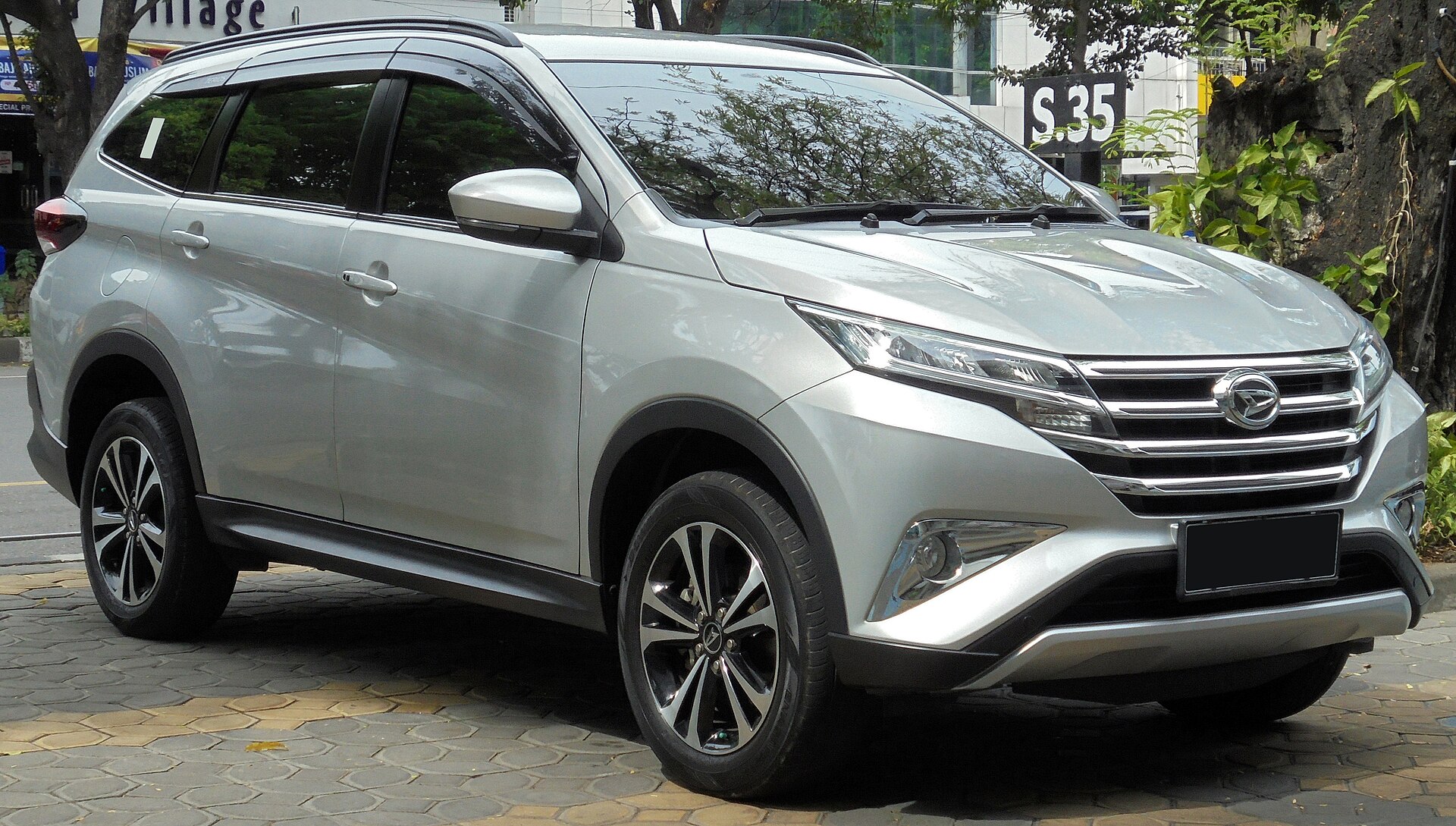
- Terios F800 Current 2017–now · SUV
Newest first · 3 generations since 1997
-
2017
-
2006

-
1997
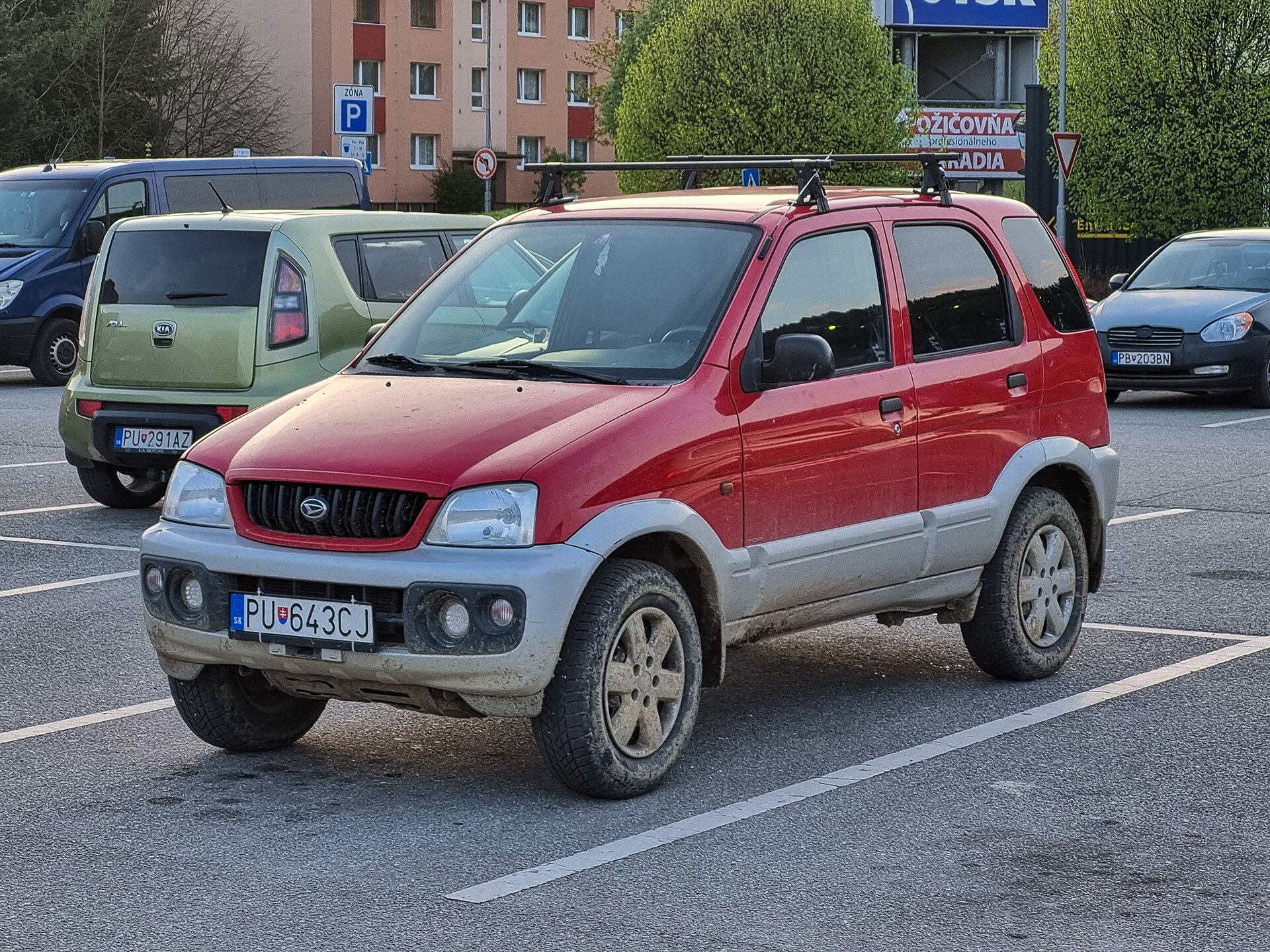
All generations by year: Terios F800 (2017–now) · Terios J200 (2006–2017) · Terios J100 (1997–2006)
Which one is mine?
Pick the year of first registration to see which generation it is.
- F800 2017–present
- J200 2006–2017
- J100 1997–2006
Which Daihatsu Terios to buy
Our verdict · Oleksandr Hnatiuk
For European buyers, the 1.5 4WD with the manual gearbox is the version to choose: it has the lockable centre differential and the best off-road ability. Check for a regular service history, rust under the body on cars used off-road, and the operation of the centre-differential lock.
The second-generation Daihatsu Terios (J200) is a compact SUV built from January 2006, sold in Europe with a 1.5-litre petrol engine of 77–80 kW (105–109 PS). Unusually for its class, it is rear-wheel drive as standard, with permanent four-wheel drive and a lockable centre differential on 4WD versions. Toyota sold the same car as the Rush.
In short
- Production: from January 2006 (Japan); internationally until 2017; minor facelift in late 2008.
- Engines: 1.3 K3-VE with 68 kW (92 PS) and 1.5 3SZ-VE with 77–80 kW (105–109 PS); 5-speed manual or 4-speed automatic.
- Drive: rear-wheel drive or permanent 4WD with a lockable centre differential, but no low range.
- Size: about 4.0 m long on a 2,580 mm wheelbase; 200 mm ground clearance; 380-litre boot.

Size at a glance
Renault Duster
The Daihatsu Terios J200 is 220 mm shorter, 127 mm narrower and 80 mm taller than the Renault Duster.
| Dimensions | Daihatsu Terios J200 | Renault Duster | Difference |
|---|---|---|---|
| Length | 4,095 mm161.2 in | 4,315 mm169.9 in | −220 mm−8.7 in |
| Width | 1,695 mm66.7 in | 1,822 mm71.7 in | −127 mm−5.0 in |
| Height | 1,705 mm67.1 in | 1,625 mm64.0 in | +80 mm+3.1 in |
| Wheelbase | 2,580 mm101.6 in | 2,673 mm105.2 in | −93 mm−3.7 in |
| Boot | 205 L7.2 cu ft | - | - |
Chevrolet Niva
The Daihatsu Terios J200 is 47 mm longer, 75 mm narrower and 53 mm taller than the Chevrolet Niva.
| Dimensions | Daihatsu Terios J200 | Chevrolet Niva | Difference |
|---|---|---|---|
| Length | 4,095 mm161.2 in | 4,048 mm159.4 in | +47 mm+1.9 in |
| Width | 1,695 mm66.7 in | 1,770 mm69.7 in | −75 mm−3.0 in |
| Height | 1,705 mm67.1 in | 1,652 mm65.0 in | +53 mm+2.1 in |
| Wheelbase | 2,580 mm101.6 in | 2,450 mm96.5 in | +130 mm+5.1 in |
| Boot | 205 L7.2 cu ft | 320 L11.3 cu ft | −115 L−4.1 cu ft |
Specs by version
Engines
Dimensions and weight
Verified Manufacturer and type-approval data from our catalog · Sources and methodology
Daihatsu Terios II at a glance
Daihatsu, Toyota's small-car specialist, built the Terios as a compact, genuinely off-road-capable SUV at a time when most rivals were turning into front-wheel-drive crossovers. The J200 replaced the first-generation J100 of 1997 and was sold as the Toyota Rush in many markets and as the Daihatsu Be-go in Japan, while a long-wheelbase seven-seat version (F700) was built in Indonesia by Astra Daihatsu Motor.

In Europe, the Terios II was a niche car for buyers who wanted real four-wheel drive in a small, affordable package. The company's history is told in the history of Daihatsu, and its models are listed in the Daihatsu catalogue.
| Generation | Code | Years | Body | Engines | Power (kW / PS) |
|---|---|---|---|---|---|
| 1st | J100 | 1997–2006 | 5-door SUV | 1.3 petrol | – |
| 2nd | J200 (F700 long) | 2006–2017 | 5-door SUV (5 or 7 seats) | 1.3 K3-VE, 1.5 3SZ-VE | 68–80 / 92–109 |
| 3rd | F800 | 2017– | 5-door, 7 seats | 1.5 2NR-VE | – |
Engines, gearboxes and four-wheel drive
| Engine | Power | Torque | Gearbox | Drive |
|---|---|---|---|---|
| 1.3 K3-VE | 68 kW (92 PS) | – | 5-speed manual or 4-speed automatic | rear-wheel drive |
| 1.5 3SZ-VE | 77–80 kW (105–109 PS) | 140 Nm (103 lb-ft) | 5-speed manual or 4-speed automatic | rear-wheel drive or permanent 4WD |
European cars used the 1.5-litre engine, rated at 105 PS in Italian and German specifications. Only the 1.5 was available with four-wheel drive, which is permanent: a centre differential splits the torque, and a button locks it for mud, snow or sand. There is no low-range transfer case, but short gearing helps on rough tracks. The Terios reaches about 160 km/h (99 mph), and 0–100 km/h takes 12–15 seconds depending on gearbox and drive.

Daihatsu claimed about 12.7 km/l (7.9 L/100 km, 29.9 mpg US) for the 1.5 4WD, in line with the figure of about 8 L/100 km quoted for European cars. The engine meets the Euro 4 emissions standard.
Dimensions, interior and boot space
| Parameter | Metric | Imperial |
|---|---|---|
| Length (J200) | 3,995–4,005 mm | 157.3–157.7 in |
| Width | 1,695 mm | 66.7 in |
| Height | 1,690–1,705 mm | 66.5–67.1 in |
| Wheelbase | 2,580 mm | 101.6 in |
| Ground clearance | 200 mm | 7.9 in |
| Kerb weight | 1,125–1,200 kg | 2,480–2,646 lb |
| Turning circle | 9.8 m | 32.2 ft |
| Boot (Italian test data) | 380 L | 13.4 cu ft |
Inside, the Terios offers a high driving position and wide door openings, and even tall drivers sit comfortably. The centre console groups the instruments, with a central speedometer and an LCD screen for fuel consumption, temperature and time; audio and climate buttons sit on the steering wheel, and automatic climate control and leather trim were available on top versions. The tailgate opens sideways, which is awkward in tight parking spaces, and the boot is modest once the rear seats are folded.

Before and after the J200
The first Terios (J100) went on sale in April 1997 as a small, narrow four-wheel-drive SUV and was also sold as the Toyota Cami and, in Malaysia, the Perodua Kembara. The J200 that replaced it in 2006 was larger, with rear-wheel drive as its base layout. After the J200 ended its run, the third generation (F800) was unveiled on 23 November 2017 as a seven-seat SUV, again with a Toyota Rush twin.

Facelift and equipment
A minor update in late 2008 brought revised bumpers and grille, clear rear lamp lenses and a plastic spare-wheel cover as standard. Standard equipment typically included power steering, central locking, an immobiliser, air conditioning and front airbags. Italian testers criticised the safety equipment: only front and side airbags, and no stability or traction control even as an option on the Centenario trim.

In Italy, the 1.5 Centenario cost €23,801 new in 2007; by 2016, used examples were quoted at under €9,000.
Safety
Airbag counts varied by market and trim: the Italian Centenario had front and side airbags only, while some better-equipped European versions listed six airbags and pretensioning front belts. The Terios has a high centre of gravity, so body roll is noticeable, and early European cars lacked electronic stability control. On 4WD versions with the automatic gearbox, hill-start assist (HAC) and downhill assist control (DAC) help on steep slopes.

Reliability and common problems
The Terios has a good reputation for mechanical durability, and Italian used-car reviewers describe it as reliable and capable off-road. Points to note:
- Stiff suspension and pronounced body roll at speed.
- Coarse engine and wind noise on the motorway.
- Imprecise body panel gaps, although interior plastics are solid.
- Only front and side airbags and no stability control on some trims.

Rivals: how the Terios compares
The Terios competed with small four-wheel-drive SUVs such as the Suzuki Grand Vitara, Suzuki Jimny and the smaller Suzuki Vitara, and with front-drive crossovers that looked similar but lacked its permanent 4WD. It was cheaper than the Toyota RAV4, but slower and less refined. More options are listed among Japanese SUVs and 4x4 vehicles.


Daihatsu Terios evolution in numbers
Did you know?
- The Daihatsu Terios has been around for 29 years: 3 generations in our catalog since 1997.
- The longest-running generation is the Terios J200 (2006–2017): 11 years.
Image credits · Photos from Wikimedia Commons under free licences
- Daihatsu Terios J100 · Photo: Jakub CA / Wikimedia Commons, CC BY 4.0
- Daihatsu Terios F800 · Photo: オーバードライブ83 / Wikimedia Commons, CC BY-SA 4.0
Rivals
Compare with…
Compare Daihatsu Terios with
- Renault Duster quick spec comparison
- Chevrolet Niva quick spec comparison
- Suzuki Vitara quick spec comparison
-
In production
- Years
- 2015–present
- Body
- SUV
- Fuel
- Petrol, Diesel
- Power
- 82–103 kW (111–140 PS)


Daihatsu Terios in our rankings
- No. 4 of 144 · Lightest SUVs and crossovers (1,125 kg)
- No. 7 of 198 · Smallest SUVs and crossovers (4,095 mm)
- No. 83 of 1082 · Longest-running car nameplates (29 years · top 9%)
- No. 53 of 391 · Lightest cars (1,125 kg · top 14%)
- No. 77 of 531 · Smallest cars (4,095 mm · top 15%)
- No. 64 of 379 · Oldest car models still on sale (29 years · top 19%)
Lighter than 97% of ranked SUVs and crossovers in the 1CARS catalog (No. 4 of 144).
Daihatsu Terios photos 14


FAQ
Is the Daihatsu Terios four-wheel drive?
The 1.5 Terios II was available with permanent four-wheel drive and a lockable centre differential, but no low range. Two-wheel-drive versions are rear-wheel drive, which is unusual in this class.
What engine does the Daihatsu Terios II have?
European cars use a 1.5-litre 3SZ-VE petrol engine with 77–80 kW (105–109 PS) and 140 Nm. Other markets also had a 1.3-litre K3-VE with 68 kW (92 PS).
Is the Daihatsu Terios the same as the Toyota Rush?
Yes. The Toyota Rush is a rebadged Terios II, built on the same platform; Japan also had the Daihatsu Be-go. A long-wheelbase seven-seat version was built in Indonesia.
How big is the Daihatsu Terios boot?
The boot holds about 380 litres with the rear seats up, enough for a small family, but space is limited with the seats folded and the side-hinged tailgate needs room to open.
What are the common problems of the Daihatsu Terios?
Reviews mention stiff suspension, body roll, engine and wind noise at speed and imprecise panel gaps. Mechanically it is regarded as reliable, and parts are shared with the Toyota Rush.
Data sources
Data checked by an editor against the sources below.
- The text of this article (1cars archive)
- Wikipedia - Daihatsu Terios


